
Views: 41 Author: Site Editor Publish Time: 2026-06-27 Origin: Site


Introduction
ETPU (Expanded Thermoplastic Polyurethane) is a high-performance foam material produced by expanding TPU pellets through a supercritical foaming process. Known for its excellent resilience, fatigue resistance, and cushioning properties, ETPU has been widely used in athletic footwear midsoles and is increasingly being adopted in the safety footwear industry.
1. Main Applications of ETPU in Safety Footwear
1.1 Midsole Applications
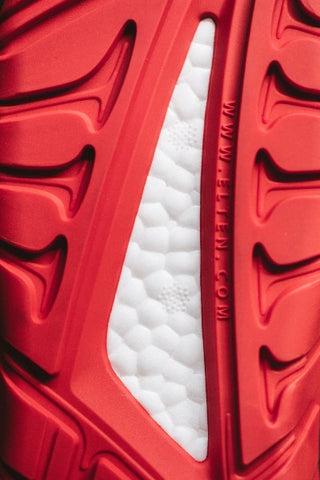
The midsole is the most common application area for ETPU in safety shoes.
Typical constructions include:
Rubber outsole + ETPU midsole
PU outsole + ETPU cushioning layer
ETPU/EVA composite midsole
Benefits:
Absorbs impact during walking and standing
Reduces foot fatigue
Enhances overall comfort
Minimizes stress on knees and lower back during long working hours
Suitable for:
Construction workers
Warehouse and logistics personnel
Distribution center operators
Manufacturing and assembly line workers


1.2 Insoles
Many premium safety shoes incorporate:
ETPU foam insoles
ETPU bead insoles
Advantages:
Long-lasting cushioning
Excellent energy return
Improved breathability
Reduced compression set over time
ETPU vs. PU Insoles
Property | ETPU | PU |
|---|---|---|
Energy Return | 55–70% | 20–40% |
Compression Resistance | Excellent | Moderate |
Service Life | Long | Shorter |
Cushioning Performance | Excellent | Good |

1.3 ESD and Anti-Static Safety Shoes
Certain ESD (Electrostatic Discharge) safety shoes utilize conductive TPU formulations.
Benefits:
Meets ESD protection requirements
Maintains wearer comfort
Provides effective shock absorption
Common applications:
Electronics manufacturing
Semiconductor facilities
Precision equipment assembly
2. Advantages of ETPU Compared with Traditional Safety Shoe Materials
ETPU vs. EVA
Property | ETPU | EVA |
|---|---|---|
Energy Return | ★★★★★ | ★★ |
Fatigue Resistance | ★★★★★ | ★★ |
Low Temperature Performance | ★★★★★ | ★★★ |
Compression Set Resistance | ★★★★★ | ★★ |
Cost | Higher | Lower |
While EVA tends to lose cushioning and compress after several months of use, ETPU maintains its resilience and performance for a significantly longer period.
ETPU vs. PU
Property | ETPU | PU |
|---|---|---|
Cushioning | Excellent | Good |
Hydrolysis Resistance | Excellent | Susceptible to Hydrolysis |
Aging Resistance | Excellent | Moderate |
Weight | Lightweight | Heavier |
Processing Cost | Higher | Lower |
For hot and humid regions such as Southeast Asia, the Middle East, and South America, ETPU offers a significant advantage by eliminating the risk of hydrolysis-related degradation commonly associated with PU midsoles.
3. Common ETPU Safety Footwear Constructions
Option 1: Rubber Outsole + ETPU Midsole
Features:
Outstanding abrasion resistance
Superior cushioning performance
Popular in premium safety footwear
Commonly seen in products from leading safety footwear brands.
Option 2: PU/TPU Dual-Density Sole + ETPU Cushioning Layer
Features:
Balanced cost-performance ratio
Enhanced wearer comfort
Widely adopted in the European market
Option 3: Direct Steam-Molded ETPU Bead Midsole
Similar to the construction used in high-performance athletic footwear.
Features
Exceptional energy return
Superior cushioning
Lightweight structure
Challenges:
Higher mold investment
Increased production costs
4. Manufacturing Processes
4.1 Steam-Chest Molding of ETPU Beads
Production process:
ETPU Pellets → Steam Expansion → Molded Formation → Trimming → Outsole Bonding
Advantages:
Maximum rebound performance
Distinctive bead-foam appearance
4.2 ETPU Sheet Processing
Production process:
ETPU Sheets → CNC Cutting → Die Cutting → Lamination
Advantages:
Lower development costs
Suitable for small-batch production
4.3 Direct Injection Molding
Currently less common in safety footwear applications.
Reasons:
Limited expansion ratio
Higher equipment investmen
A: ETPU (Expanded Thermoplastic Polyurethane) is a high-performance foam material produced by expanding TPU pellets through a supercritical foaming process. It offers excellent resilience, fatigue resistance, and cushioning properties.
A: ETPU is primarily used in three areas:
Midsoles – Provides impact absorption and fatigue reduction
Insoles – Offers long-lasting cushioning and energy return
ESD/Anti-static shoes – Meets electrostatic discharge protection requirements while maintaining comfort
A: ETPU significantly outperforms EVA in key areas:
| Property | ETPU | EVA |
|---|---|---|
| Energy Return | ★★★★★ | ★★ |
| Fatigue Resistance | ★★★★★ | ★★ |
| Low Temperature Performance | ★★★★★ | ★★★ |
| Compression Set Resistance | ★★★★★ | ★★ |
| Cost | Higher | Lower |
While EVA tends to compress and lose cushioning after several months, ETPU maintains its performance for a much longer period.
A: ETPU offers several advantages over PU:
| Property | ETPU | PU |
|---|---|---|
| Cushioning | Excellent | Good |
| Hydrolysis Resistance | Excellent | Susceptible |
| Aging Resistance | Excellent | Moderate |
| Weight | Lightweight | Heavier |
| Processing Cost | Higher | Lower |
For hot and humid regions (e.g., Southeast Asia, Middle East, South America), ETPU eliminates the risk of hydrolysis-related degradation common in PU midsoles.
A: Three typical options:
| Option | Construction | Features |
|---|---|---|
| 1 | Rubber Outsole + ETPU Midsole | Outstanding abrasion resistance, superior cushioning |
| 2 | PU/TPU Dual-Density Sole + ETPU Layer | Balanced cost-performance, enhanced comfort |
| 3 | Steam-Molded ETPU Bead Midsole | Exceptional energy return, super lightweight |
A: Yes. Conductive TPU formulations can meet ESD protection requirements while providing effective shock absorption and comfort. Common applications include electronics manufacturing, semiconductor facilities, and precision equipment assembly.
A: Three main processes:
| Process | Description | Best For |
|---|---|---|
| Steam-Chest Molding | ETPU beads expanded and molded in a steam chest | Maximum rebound, distinctive bead-foam appearance |
| ETPU Sheet Processing | Sheets cut and laminated | Lower development costs, small-batch production |
| Direct Injection Molding | Direct injection of ETPU material | Limited expansion ratio, higher equipment investment |
A: Because safety footwear end-users are increasingly demanding all-day comfort. ETPU delivers superior cushioning, lightweight performance, and long-term durability that traditional materials like EVA and PU cannot match — especially in demanding work environments.
A: Workers who stand or walk for extended periods benefit the most, including:
Construction workers
Warehouse and logistics personnel
Distribution center operators
Manufacturing and assembly line workers
A: Yes, ETPU typically has higher material and processing costs compared to EVA or PU. However, the improved comfort, longer service life, and reduced worker fatigue often justify the higher investment, particularly in premium safety footwear segments.


