
Views: 20 Author: Site Editor Publish Time: 2026-08-21 Origin: Site


When footwear brands talk about lightweight shoes, the conversation often focuses on the upper, but the outsole and midsole can have an equally important influence on the final weight of a shoe.
For footwear manufacturers, reducing sole weight is not simply about making a product “lighter.” It can affect material consumption, shipping efficiency, wearing comfort, cushioning, durability and even the positioning of the final product.
With global footwear production reaching 23.9 billion pairs in 2024, according to the World Footwear Yearbook 2025, even small improvements in component efficiency can become significant when multiplied across large production volumes. Global footwear production increased 6.9% in 2024, while worldwide footwear exports reached 14.8 billion pairs.
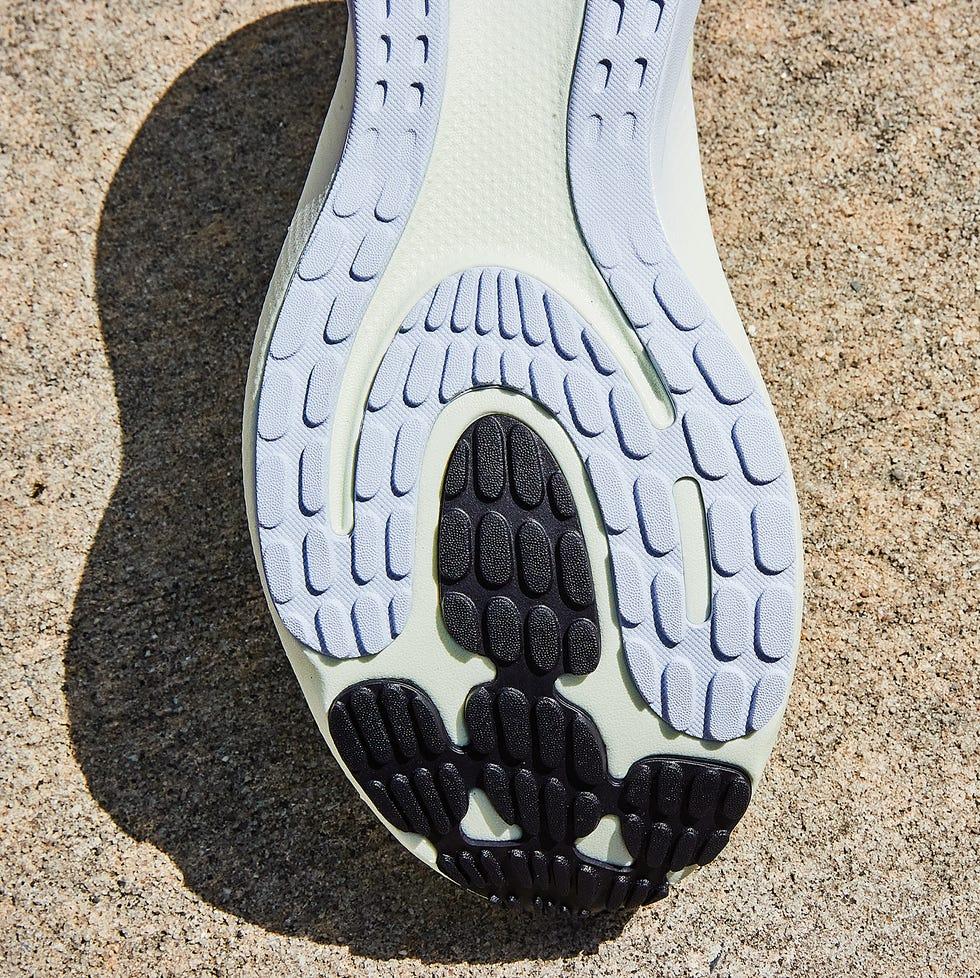
It needs to provide cushioning, traction, flexibility and stability, while also surviving repeated compression, bending and abrasion. Making a sole lighter without considering these factors can easily create new problems.
Research on running footwear has found a positive relationship between shoe mass and the metabolic cost of running. A systematic review and meta-analysis also found that lighter footwear had a small but statistically significant advantage in running economy compared with heavier footwear.
Another controlled study involving trained runners compared shoes with different added masses. Adding 100 g to each shoe significantly worsened running economy at higher running intensities, with the study reporting increases of approximately 7.4% and 10.2% under two testing conditions.
This does not mean every shoe should simply be made as light as possible. Instead, it highlights an important principle:
Every gram should have a purpose.
Lightweight Does Not Mean “Use Less Material”
One approach is to select a lower-density material. EVA foam, for example, is widely used in sports footwear because its cellular structure provides low weight together with cushioning properties. Research on conventional EVA running-shoe midsoles has reported densities commonly around 150–250 kg/m³.
Another approach is to redesign the sole structure.
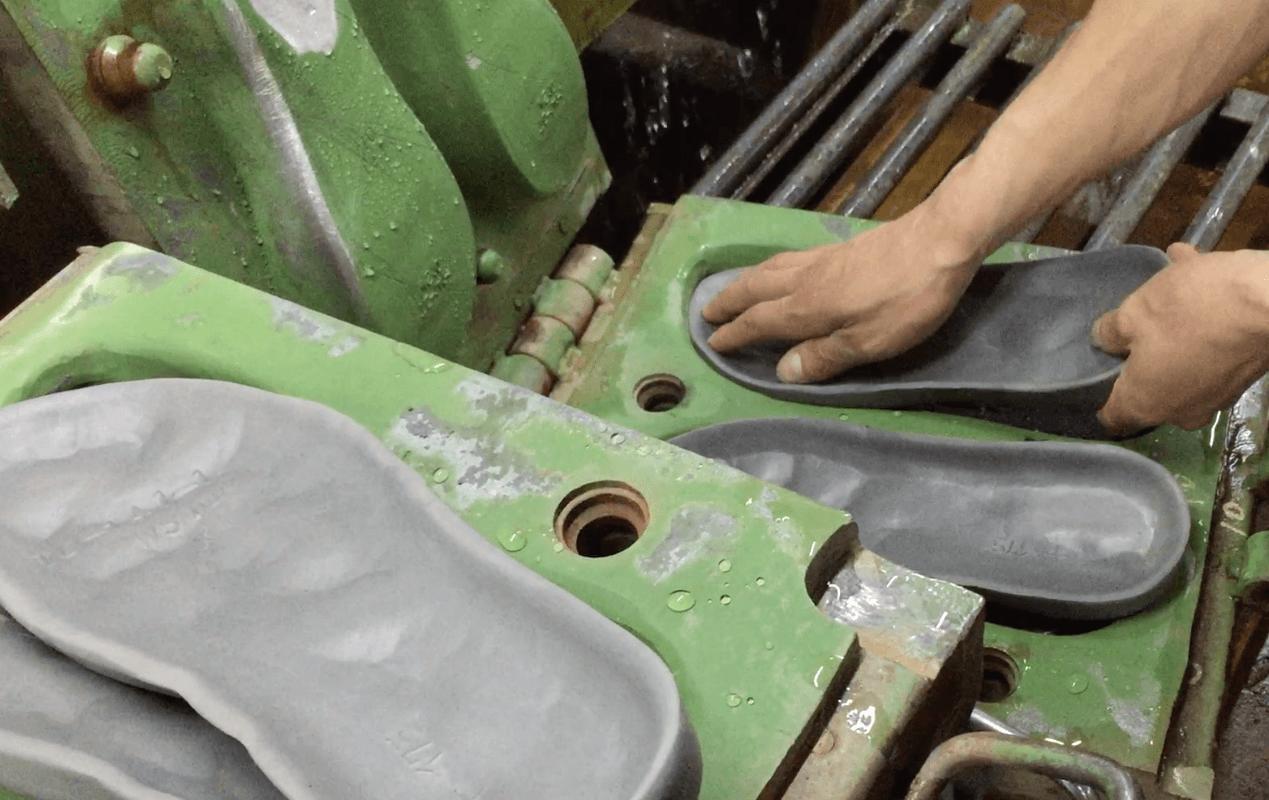
Instead of reducing the thickness everywhere, engineers can remove unnecessary material from low-load areas while maintaining reinforcement in areas that require greater support or abrasion resistance.
This is particularly important for rubber-covered foam soles.
A running shoe may use rubber only in key contact zones while leaving other areas exposed as foam. This can reduce weight while maintaining traction and durability where they are most needed.
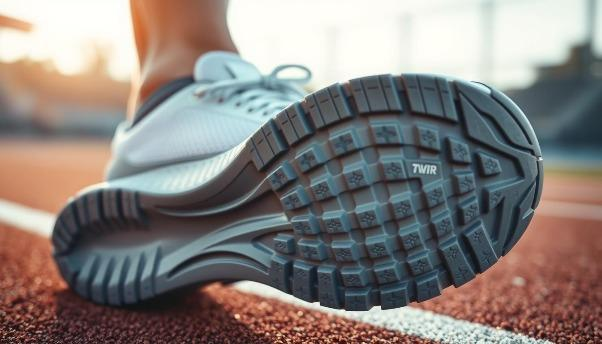
The same principle can be applied to tread design: different areas of the outsole can have different lug shapes, depths and coverage depending on how the shoe is expected to be used.
Lightweight sole development is always a balancing exercise.
A lower-density foam may reduce weight, but it may also influence compression resistance, durability and long-term stability.
For example, research on EVA foam has shown that its mechanical behavior depends strongly on factors such as cellular structure, density and elastic properties.
Recent research has also explored reinforced EVA foam for athletic footwear. In one 2024 study, adding small amounts of graphene nanoplatelets to EVA improved several mechanical properties, including impact energy absorption and abrasion resistance, demonstrating how material engineering can improve performance without simply increasing material volume.
This is why a good lightweight outsole is not simply a thinner outsole.
It is an outsole that has been engineered around the intended use of the shoe.
Weight Also Matters in Manufacturing and Logistics
For footwear factories, the impact of sole weight goes beyond the consumer experience.
Imagine a factory producing 100,000 pairs of shoes.
If the sole construction can be optimized to save just 50 g per pair, the total component weight reduction would be:
100,000 × 50 g = 5,000 kg
That is 5 metric tons of material weight across the production volume.
This simple calculation does not automatically translate into a specific freight saving, because actual logistics costs depend on container utilization, cargo volume, route and carrier pricing. However, it demonstrates why component weight becomes commercially relevant at scale.
For high-volume footwear programs, optimizing sole weight can therefore become part of overall product-cost engineering rather than simply a design decision.
Different footwear categories require different approaches.
For running shoes, the priority may be:
Low density
Cushioning
Energy return
Flexibility
Controlled rubber coverage
For casual footwear, brands may prioritize:
Comfort
Appearance
Moderate weight
Abrasion resistance
Cost efficiency
For outdoor footwear, reducing weight must be balanced with:
Deep traction
Stability
Abrasion resistance
Protection
Terrain-specific performance
For work and safety footwear, the equation can be even more complicated because additional requirements such as oil resistance, anti-slip performance, anti-static properties and durability may apply.
Therefore, there is no universal “best” outsole.
The best outsole is the one that provides the required performance at the lowest practical weight and cost.
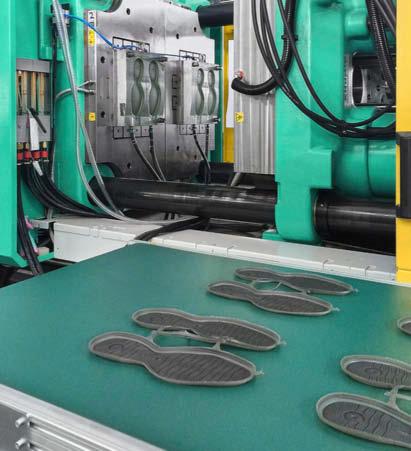
At Huadong Sole, we approach outsole development from a product-engineering perspective rather than simply manufacturing a fixed catalog of soles.
We work with different material systems including EVA, PU, Rubber, TPR/TR, ETPU and PEBA, allowing footwear manufacturers to select different solutions according to their target weight, cushioning, durability, appearance and price level.
Our engineering team can also adjust:
Sole density
Hardness
Thickness
Tread structure
Rubber coverage
Cushioning
Rebound
Abrasion resistance
Flexibility
Overall sole weight
For customized projects, customers can provide drawings, samples or 3D files, and the outsole can be developed from the initial concept through prototype, mold development, testing and mass production.
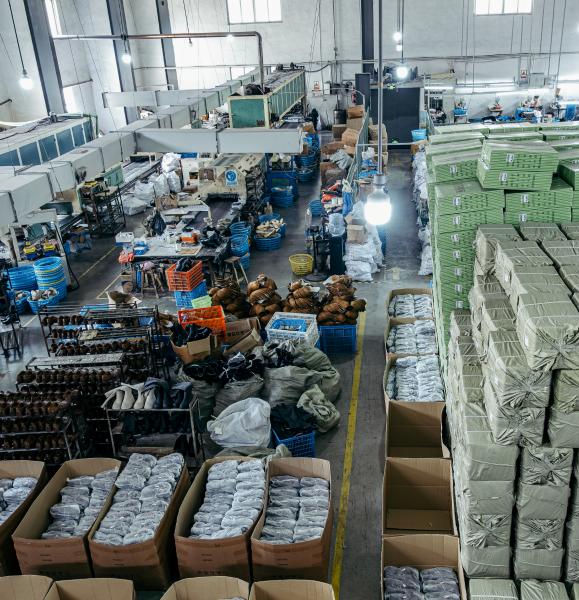
This is particularly useful for footwear factories developing new lightweight sneakers, running shoes, casual shoes or other performance-oriented footwear.
The goal is not simply to make the lightest outsole possible.
The goal is to find the right balance between:
Weight + Comfort + Durability + Performance + Cost.
In a global footwear market producing billions of pairs every year, even a small improvement in every pair can create a meaningful difference at production scale.
That is why, when developing a new shoe, it is worth asking a simple question:
How much does every gram of the sole need to do?
1. Does a lighter outsole always mean a better shoe?
No. Lower weight can improve comfort and, in performance footwear, may contribute to better running economy. However, excessive weight reduction can compromise durability, stability or cushioning. The correct target depends on the shoe category and intended use.
2. Which materials are commonly used for lightweight shoe soles?
EVA is widely used because of its lightweight foam structure and cushioning characteristics. PU, ETPU and PEBA-based foams can also be used for different performance requirements, while rubber and TPR are often selected where traction, abrasion resistance or structural performance is important.
3. Can Huadong Sole develop a lightweight customized outsole?
Yes. Huadong Sole can develop customized outsole solutions based on the customer's design, sample or 3D drawing. Material selection, density, hardness, tread structure, weight and other performance requirements can be evaluated during development before moving to mold production and mass manufacturing.


