
Views: 32 Author: Site Editor Publish Time: 2026-03-21 Origin: Site


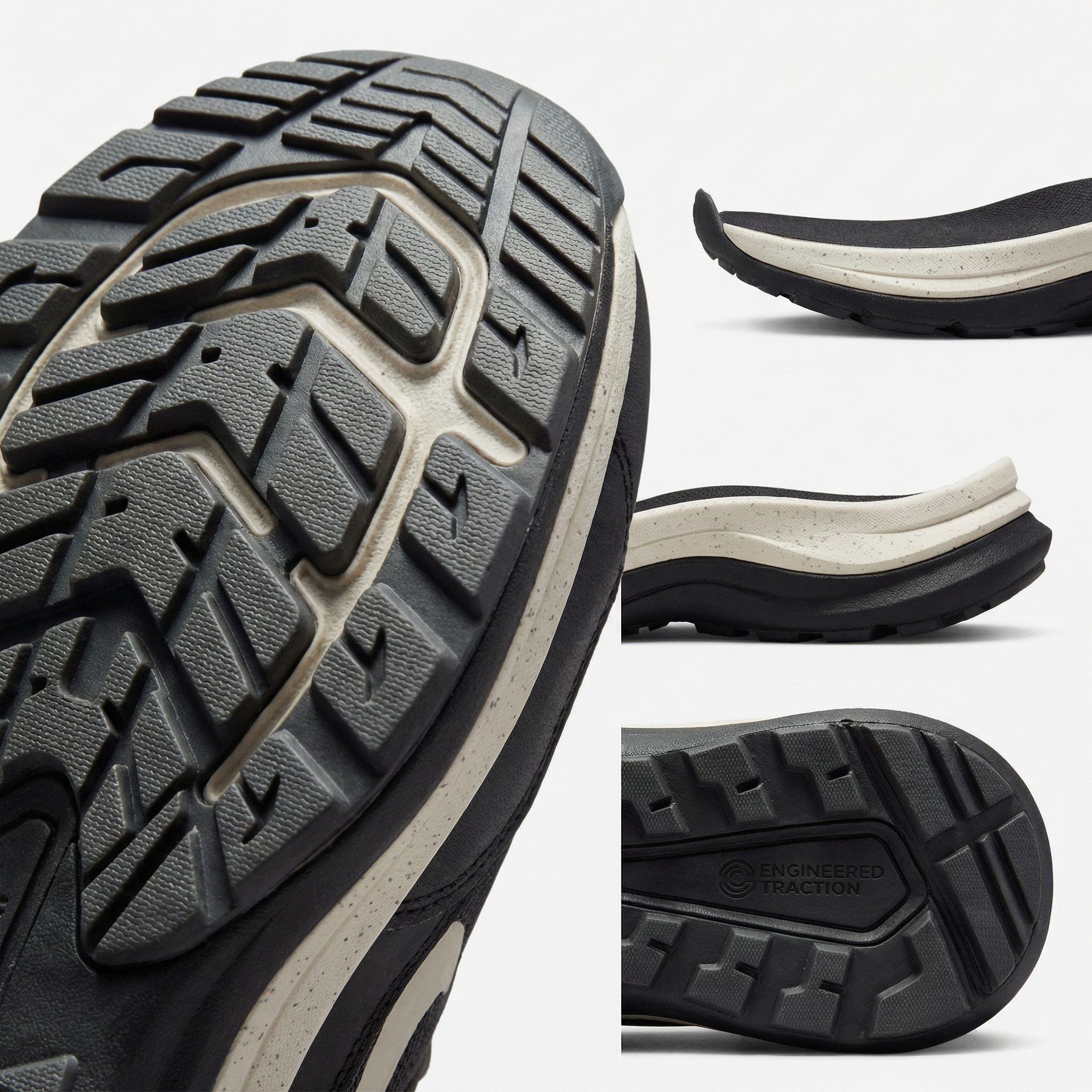
The outsole is the foundation of every shoe — literally and commercially. It determines durability, comfort, weight, grip, and how your product holds up over its entire lifespan. Yet for many footwear brands and importers, finding the right custom shoe soles manufacturer remains one of the least structured parts of the supply chain.
Most buyers have a clear picture of what they want the end product to feel like. Far fewer have a solid framework for evaluating OEM suppliers, comparing materials, setting realistic lead time expectations, or protecting themselves through sampling and mold development.
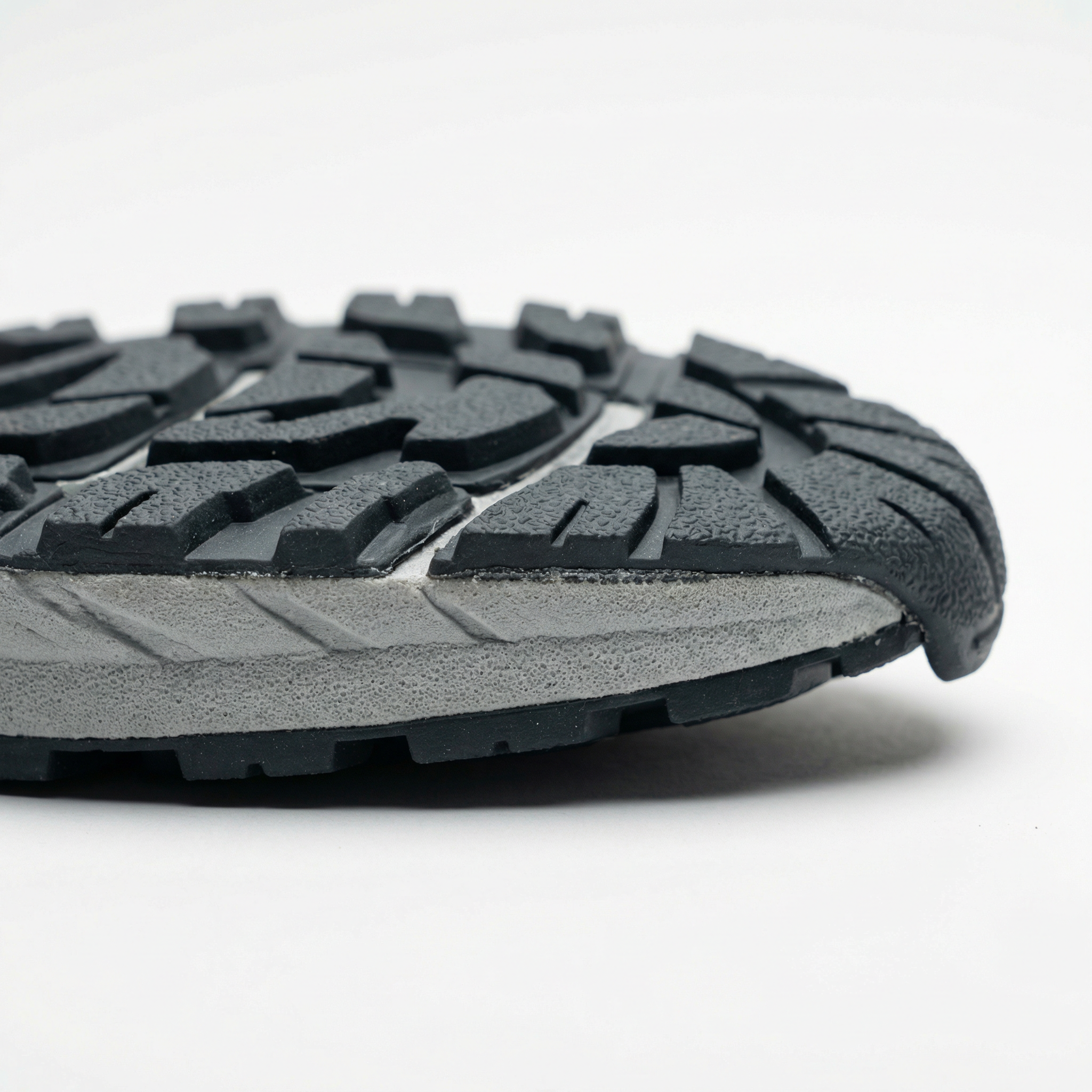
This guide covers all of it. Whether you're launching a new footwear line, switching suppliers, or scaling an existing product, here's how to source custom outsoles the right way.
What "Custom" Actually Means in Outsole Manufacturing
Before you start reaching out to factories, it's worth getting clear on what you're actually asking for — because "custom shoe soles" can mean very different things depending on context.
OEM vs. ODM: Know the Difference
OEM (Original Equipment Manufacturing) means you bring the design and the manufacturer produces it to your specifications. You own the design, you control the tooling, and the factory executes.
ODM (Original Design Manufacturing) means the manufacturer already has existing designs, molds, or product templates you can adopt — sometimes with modifications — and brand as your own. It's faster and cheaper to start, but you may share mold access with other buyers unless you negotiate exclusivity.
For brands building a distinct product identity, OEM is usually the right path. For importers who need to move quickly with lower upfront investment, ODM can be a practical starting point.
What Goes Into a Custom Outsole
A truly custom outsole involves:
• Material selection — the compound that determines performance, weight, and cost
• Mold design and casting — the tooling that shapes the sole
• Tread pattern — grip, aesthetics, and functional design
• Color and finish — branding and visual identity
• Construction compatibility — how the sole attaches to the upper (cemented, injection-molded, stitched, etc.)
Each of these decisions has downstream effects on price, lead time, and minimum order quantities. Understanding them before you approach a supplier will save you significant time.
Choosing the Right Sole Material
Material is the most consequential technical decision in outsole sourcing. It affects performance, price, weight, sustainability profile, and which manufacturing processes are available to you.
Here's a practical breakdown of the most common options:
Rubber
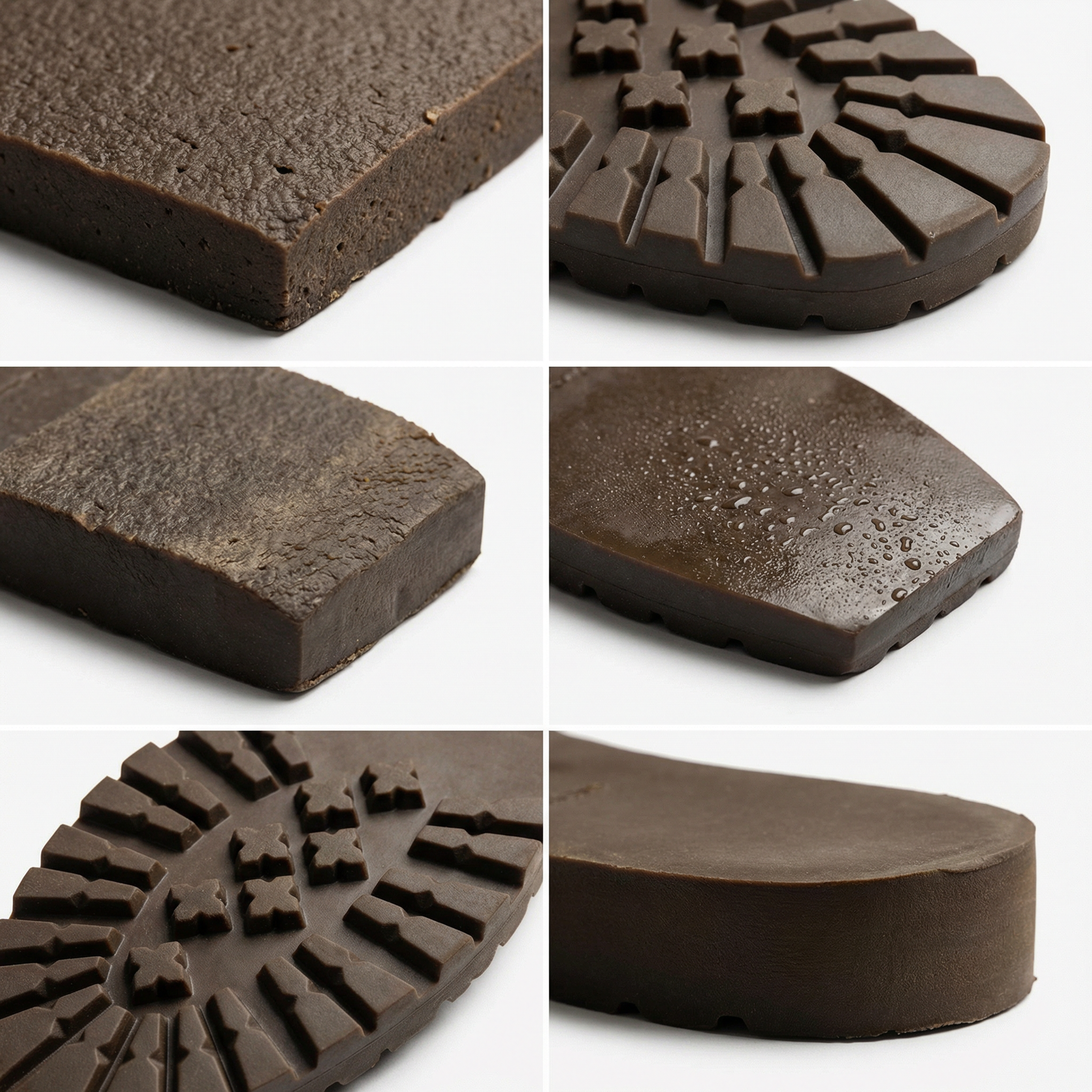
The classic outsole material. Natural or synthetic rubber delivers excellent grip, abrasion resistance, and durability — the standard for hiking boots, dress shoes, and work footwear. It's heavier than foam-based alternatives, but trusted for performance in demanding conditions.
Best for: Outdoor, work, dress, and heritage footwear categories.
EVA (Ethylene-Vinyl Acetate)
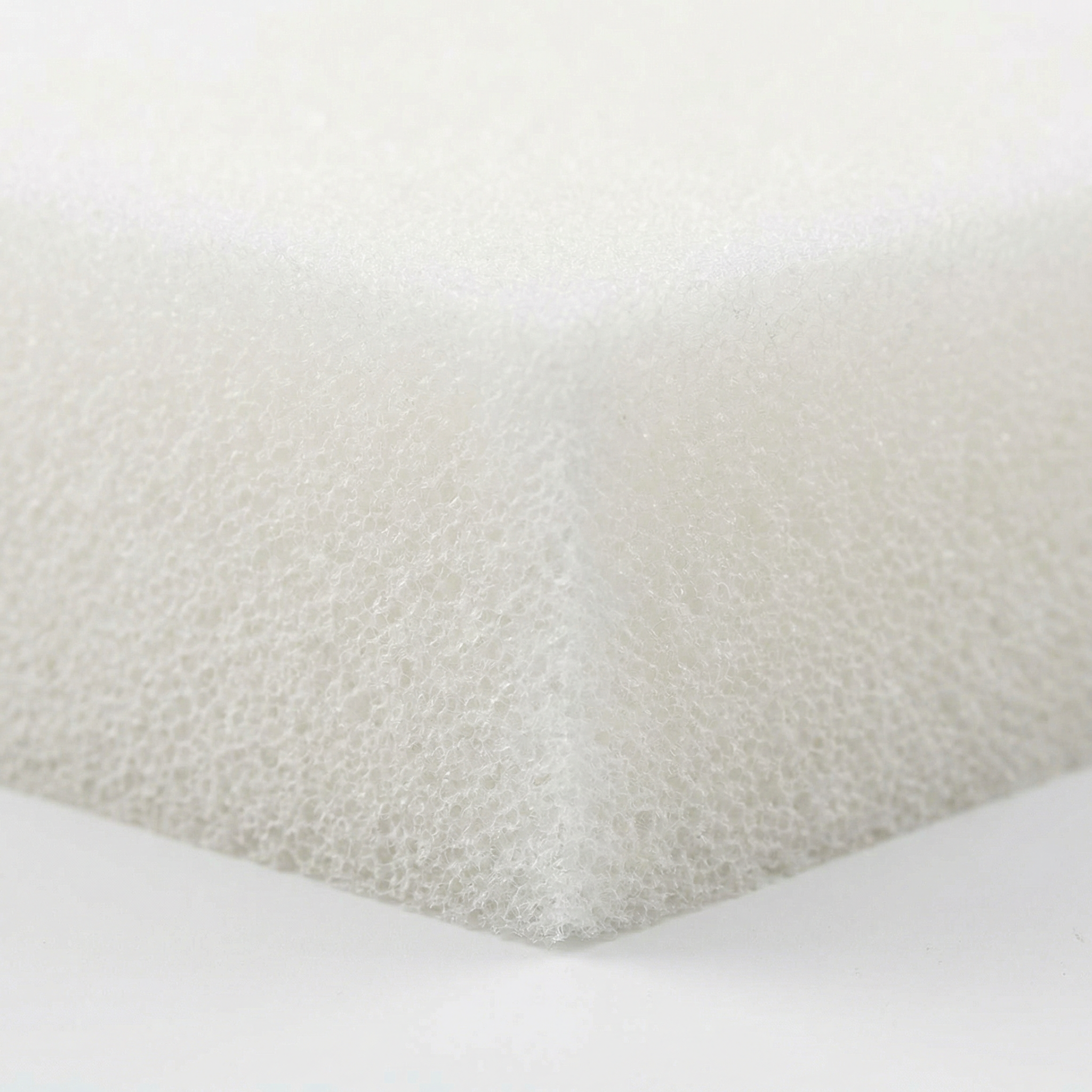
Lightweight and highly cushioned, EVA is the workhorse of athletic and casual footwear. It's easy to mold, cost-effective at scale, and available in a wide range of densities. The tradeoff is compression over time and less ground-feel than rubber.
Best for: Running shoes, casual sneakers, sandals, and everyday comfort footwear.
PU (Polyurethane)
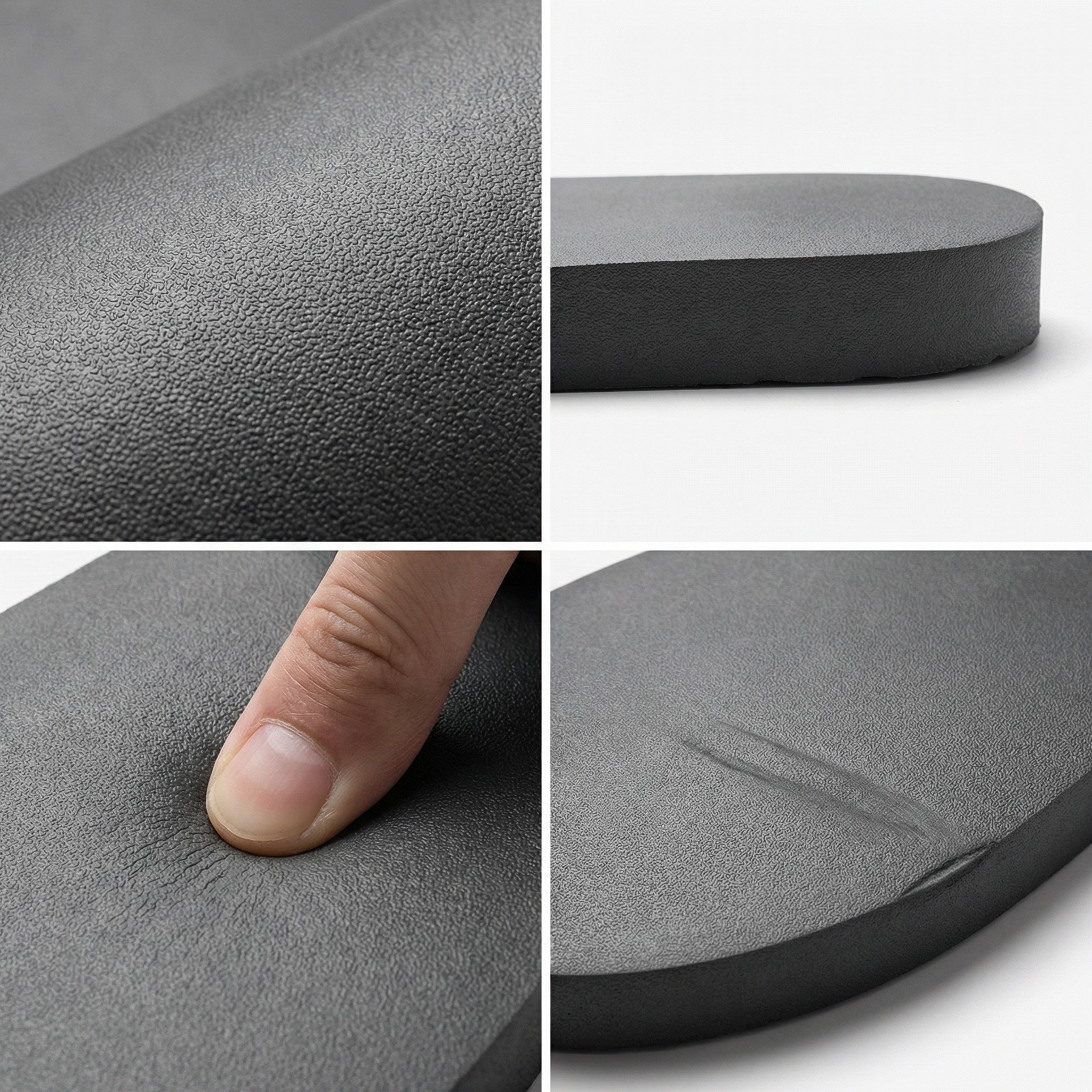
Denser than EVA with better long-term resilience. PU soles hold their cushioning longer and offer a premium feel underfoot. They're heavier and more expensive to produce, but the durability payoff is real for products positioned at higher price points.
Best for: Premium casual, dress-casual, and occupational footwear.
ETPU (Expanded Thermoplastic Polyurethane)
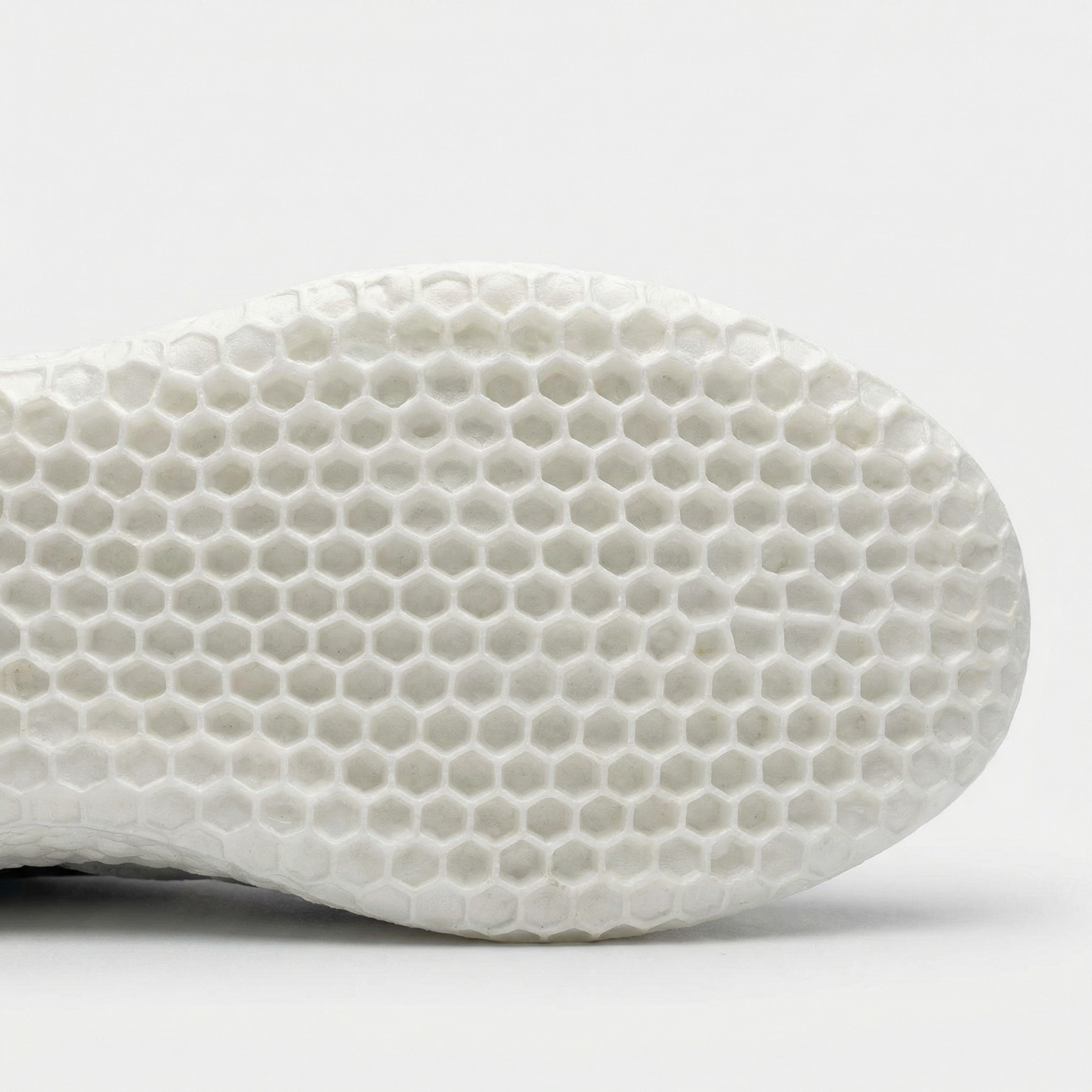
A newer category gaining serious traction. ETPU combines the lightweight properties of EVA with the resilience and energy return of PU. It's used in high-performance running and training footwear and commands a premium at retail, but requires more specialized manufacturing capability.
Best for: Performance athletic footwear, premium running, and lifestyle sneakers.
PEBA (Polyether Block Amide)
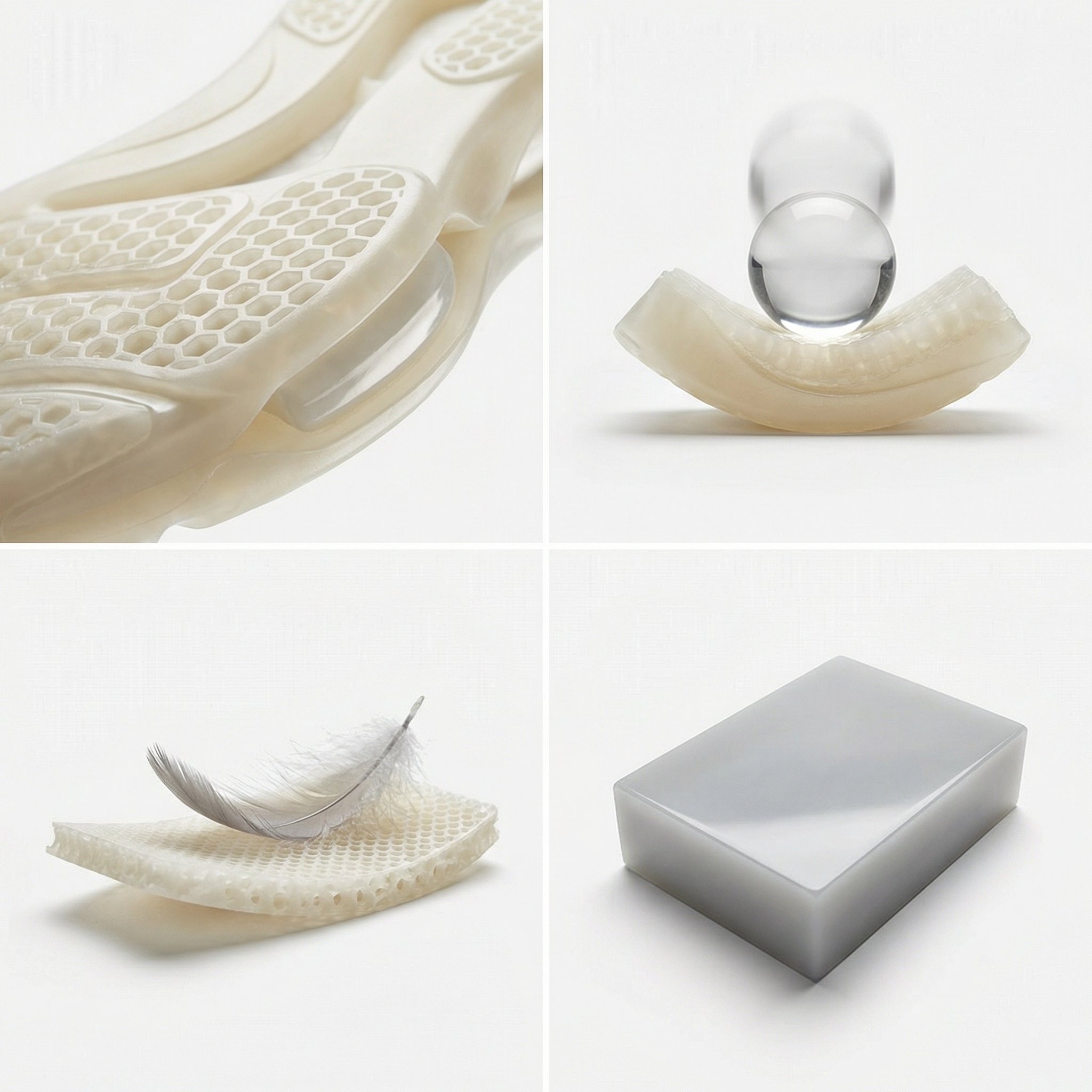
The material behind some of the most talked-about running shoes in recent years. PEBA offers exceptional energy return and is extremely lightweight, but comes at a significantly higher material cost. Brands using it are typically targeting serious performance runners or premium market positioning.
Best for: Elite running footwear and high-performance athletic applications.
TPR (Thermoplastic Rubber)
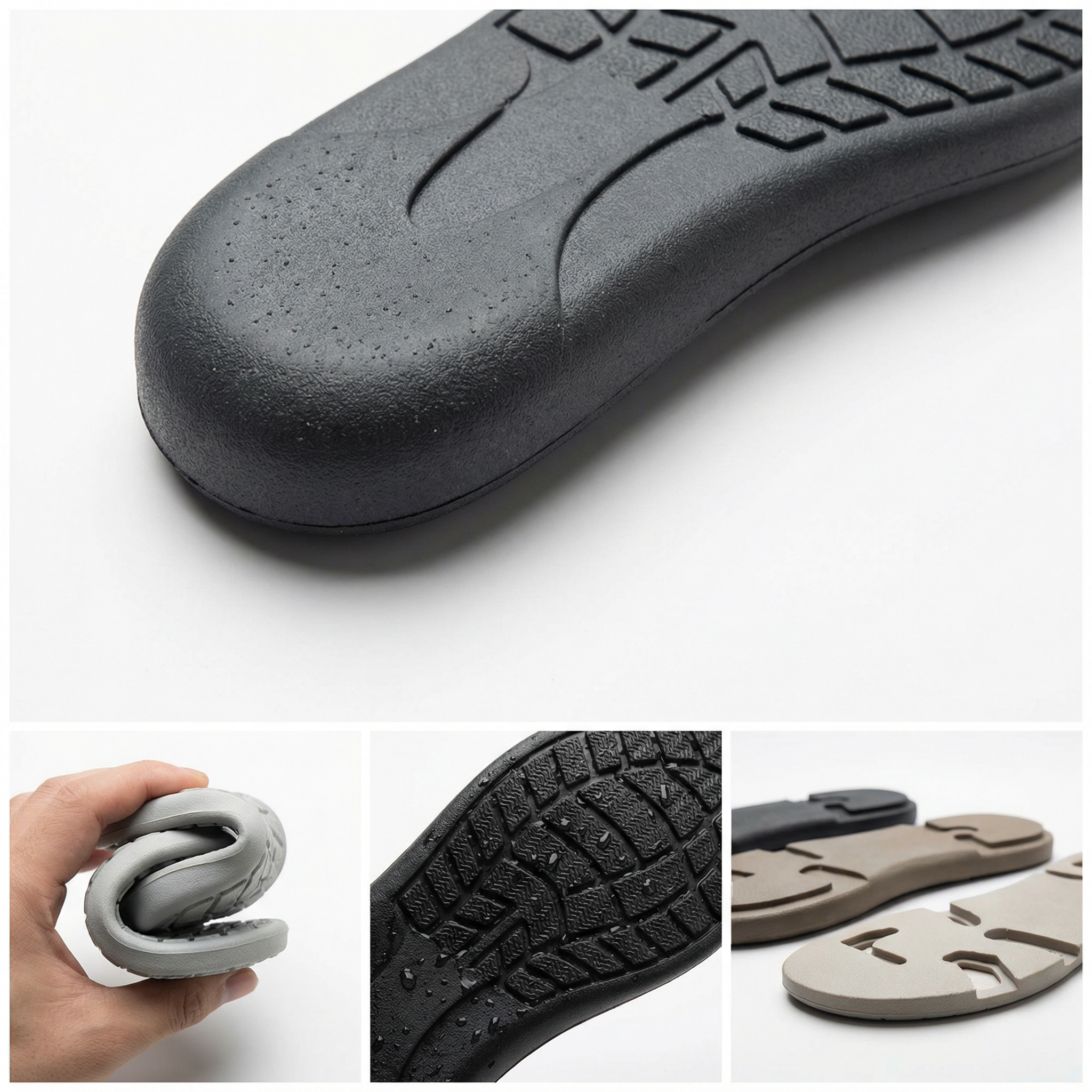
A blend of rubber and plastic properties. TPR is flexible, slip-resistant, and cost-effective — widely used in children's shoes, casual footwear, and fashion boots. It's easy to process and available in many colors.
Best for: Children's footwear, fashion shoes, and budget-conscious casual lines.
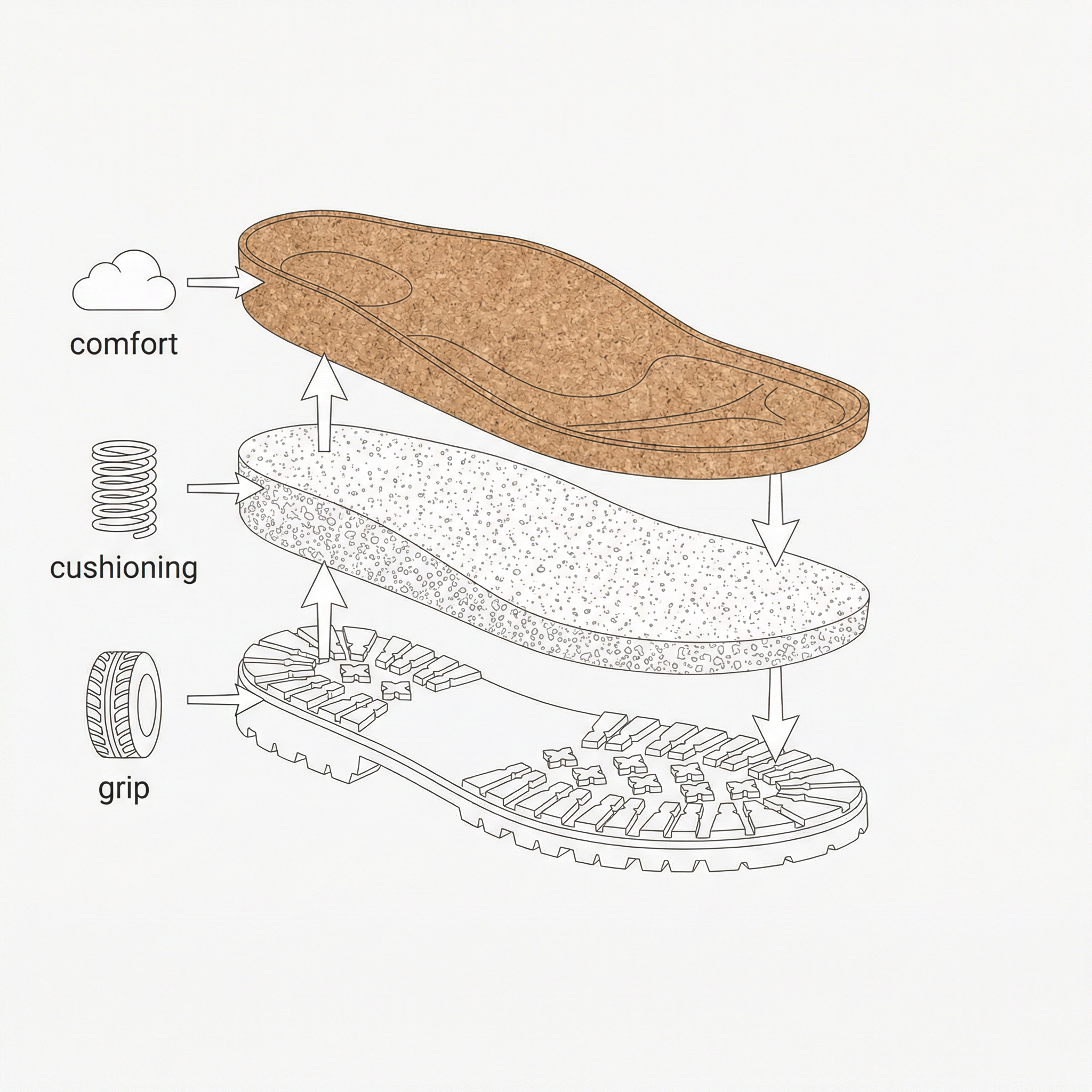
Cork
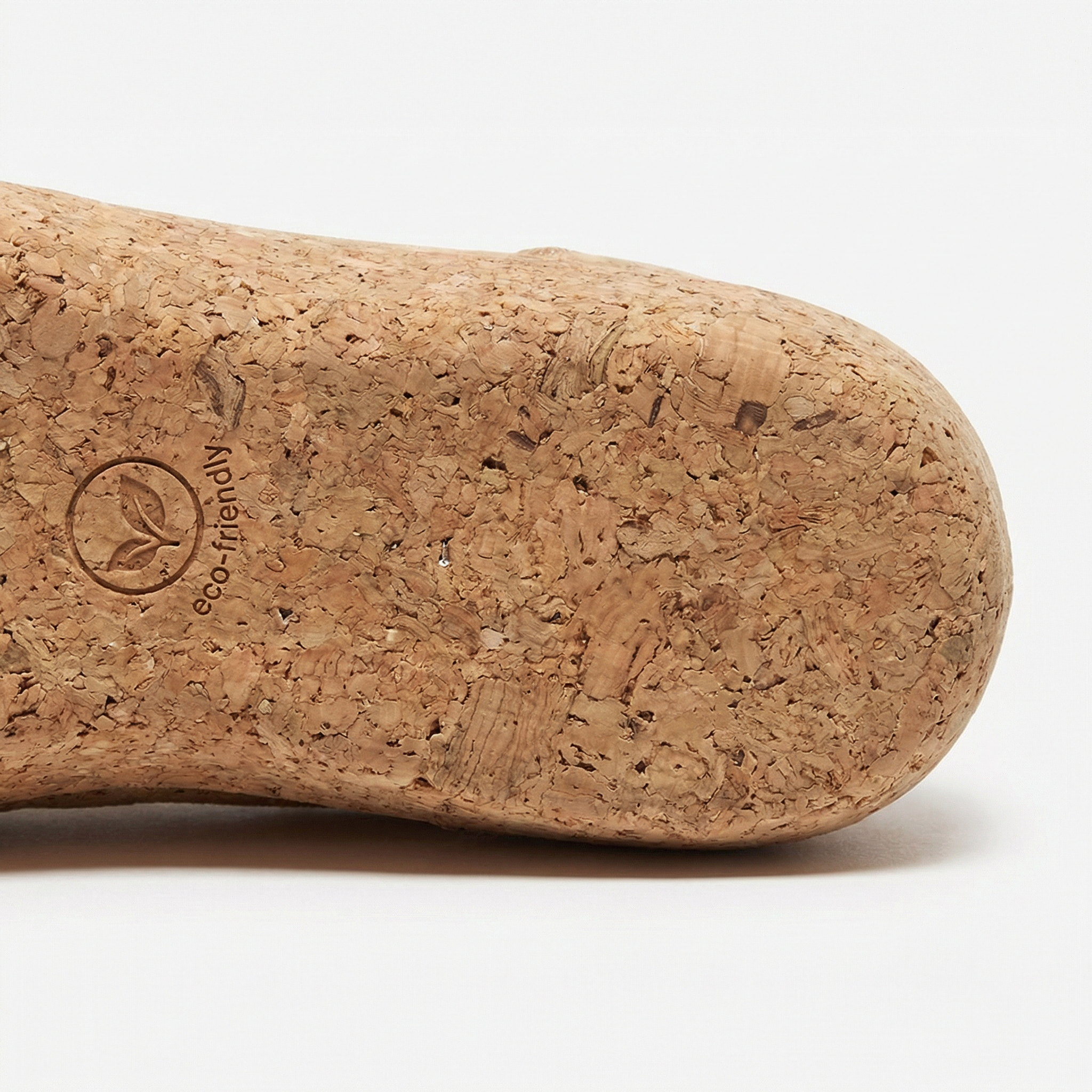
A sustainable, natural material with good cushioning and moisture-wicking properties. Cork appears most often in footbeds and midsoles but can work in outsole constructions for sandals and wellness footwear. Increasingly relevant for brands with a sustainability positioning.
Best for: Sandals, wellness footwear, and eco-conscious product lines.
How the Mold Development Process Works
If you're going OEM, mold development is where the real investment happens — and where many first-time buyers get caught off guard.
Step 1: Design Finalization
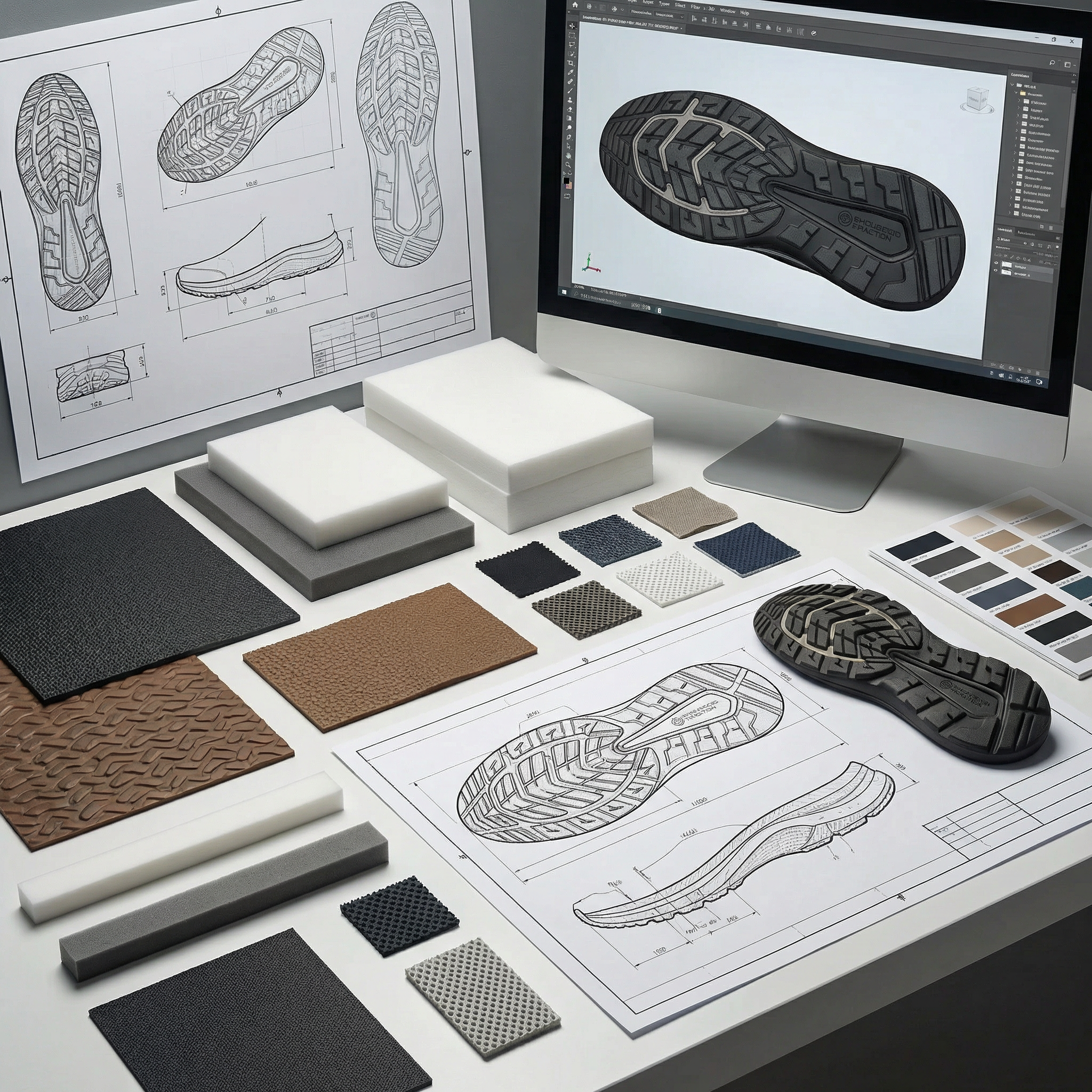
Before any mold is cut, you need a finalized design: a complete 3D file (typically STP or IGS format) or detailed technical drawings with dimensions, tread patterns, and construction callouts. Some manufacturers offer in-house design support, which can significantly reduce back-and-forth if you're still refining your concept.
Step 2: Mold Quotation and Approval
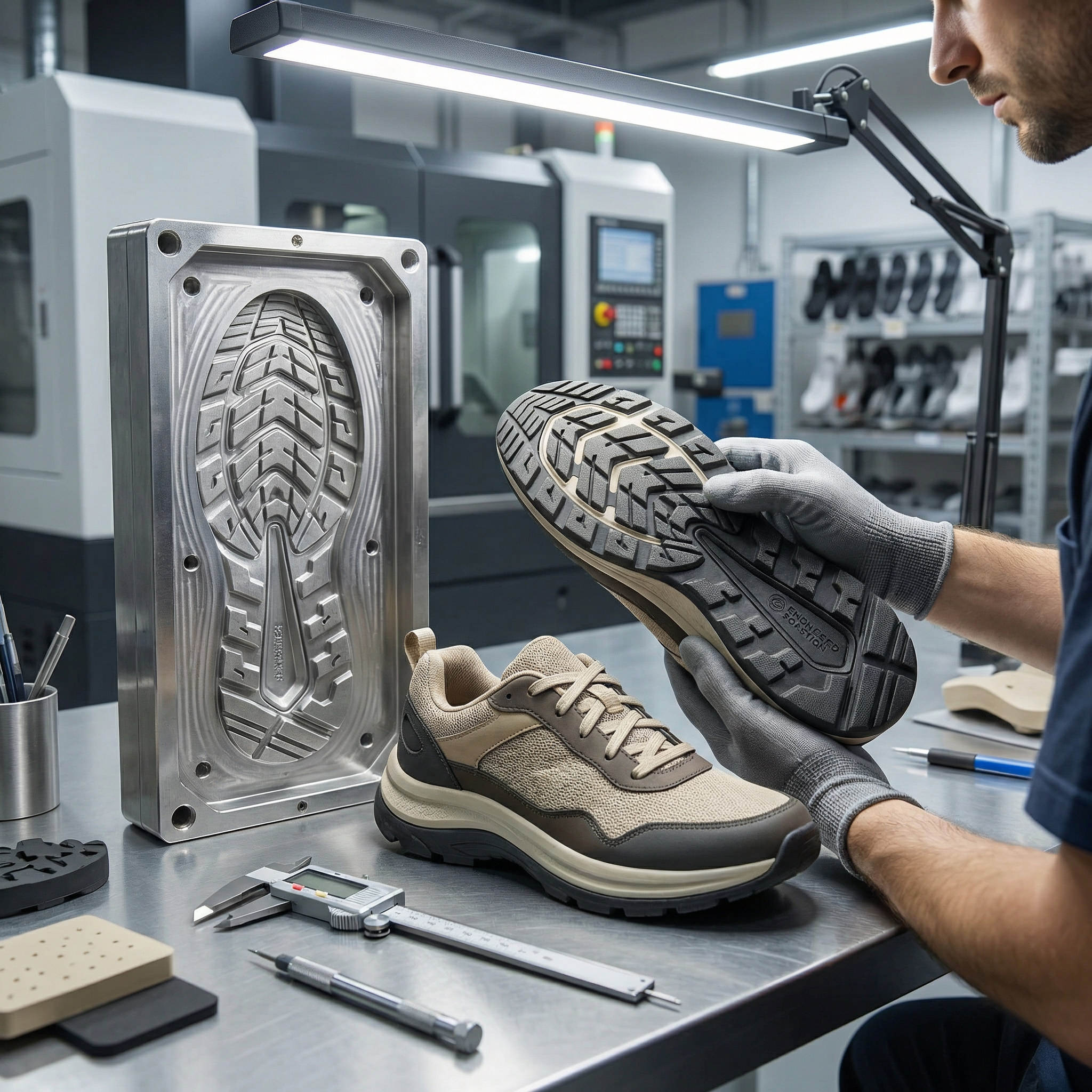
The factory will quote mold costs based on complexity, material (aluminum molds are cheaper and faster; steel molds are more durable for high-volume runs), and the number of size runs required. Mold costs are typically a one-time investment that you own — though it's worth confirming this explicitly in your contract.
Step 3: Sample Production

Once the mold is cast, the factory produces physical samples for your approval. Expect at least one round of revisions. Check dimensions, weight, flexibility, color accuracy, and tread depth against your spec sheet. Don't approve a sample you're not fully confident in — changes after bulk production begins are expensive.
Step 4: Bulk Production
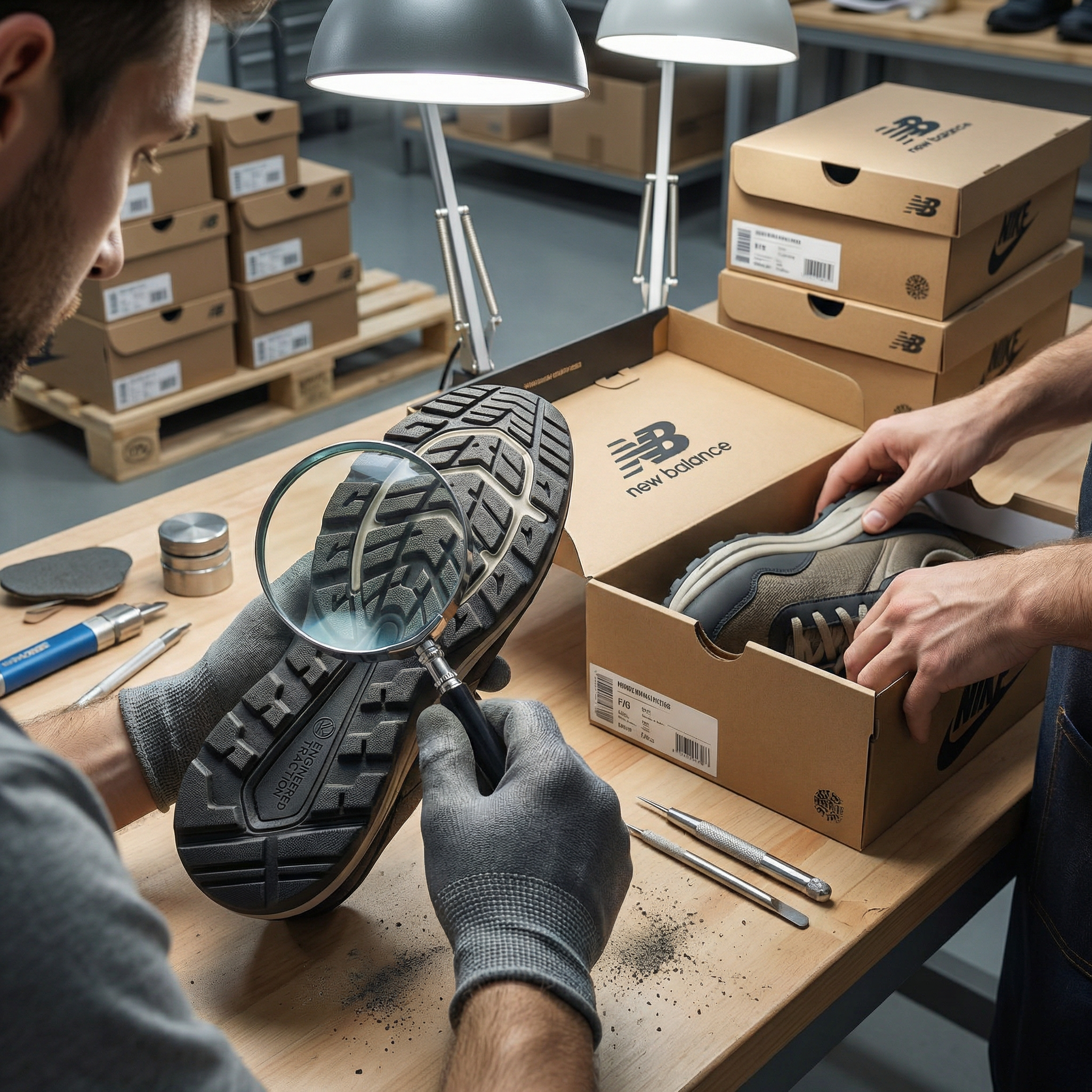
After sample sign-off, bulk production can begin. Lead times from mold approval to finished goods typically run 45 to 90 days depending on order volume and factory capacity.
What to Look for in a Custom Outsole Supplier
Not all shoe sole factories are equivalent. Here's what actually separates a reliable manufacturing partner from a frustrating one.
Material Range and In-House Capability
A supplier that handles multiple materials under one roof gives you flexibility as your product line evolves — and means you're not coordinating between separate vendors for different SKUs. Look for manufacturers with genuine in-house mold casting. Outsourced mold production adds lead time and reduces quality control.
Certifications and Quality Standards
ISO 9001:2015 certification is the baseline indicator that a manufacturer has documented quality management systems in place. It doesn't guarantee perfection, but it does mean there are processes for consistency, traceability, and corrective action when things go wrong.
Export Experience and Market Knowledge
A factory that primarily serves domestic buyers may not understand the compliance requirements, labeling standards, or logistics realities of shipping to Europe or North America. Look for suppliers with a demonstrated track record in your target market.
Communication and Responsiveness
This one is underrated. A supplier who takes a week to respond to a technical question will cost you time and money throughout the relationship. Fast, clear communication — especially from an English-speaking team — is a genuine operational advantage.
Minimum Order Quantities
MOQs vary widely. Some factories require 1,000 pairs per SKU; others will work with smaller initial runs. Be upfront about your volume requirements. A supplier who's a poor fit for your scale will create friction at every stage.
New Design Development Capacity
If you plan to launch new styles regularly, you need a manufacturer who can keep pace. Factories with active design pipelines — releasing hundreds of new sole designs annually — give you more options and faster iteration cycles.
Questions to Ask Before You Commit

When evaluating potential suppliers, these questions will surface the information that matters:
1. Do you own your mold casting capability, or do you outsource it?
2. What materials do you work with, and which do you recommend for my application?
3. What is your standard sample lead time, and how many revision rounds are included?
4. What are your MOQs per material and per size run?
5. What quality certifications do you hold?
6. What markets do you currently export to, and what percentage of your output goes there?
7. Can you provide references or case studies from brands in my category?
8. What is your production capacity, and what's your current lead time for new orders?
9. Who owns the molds after they're produced?
10. How do you handle quality issues found after bulk delivery?
A supplier who answers these clearly and confidently is worth working with. Vague or evasive answers are a signal worth taking seriously.
Understanding Pricing and Lead Times
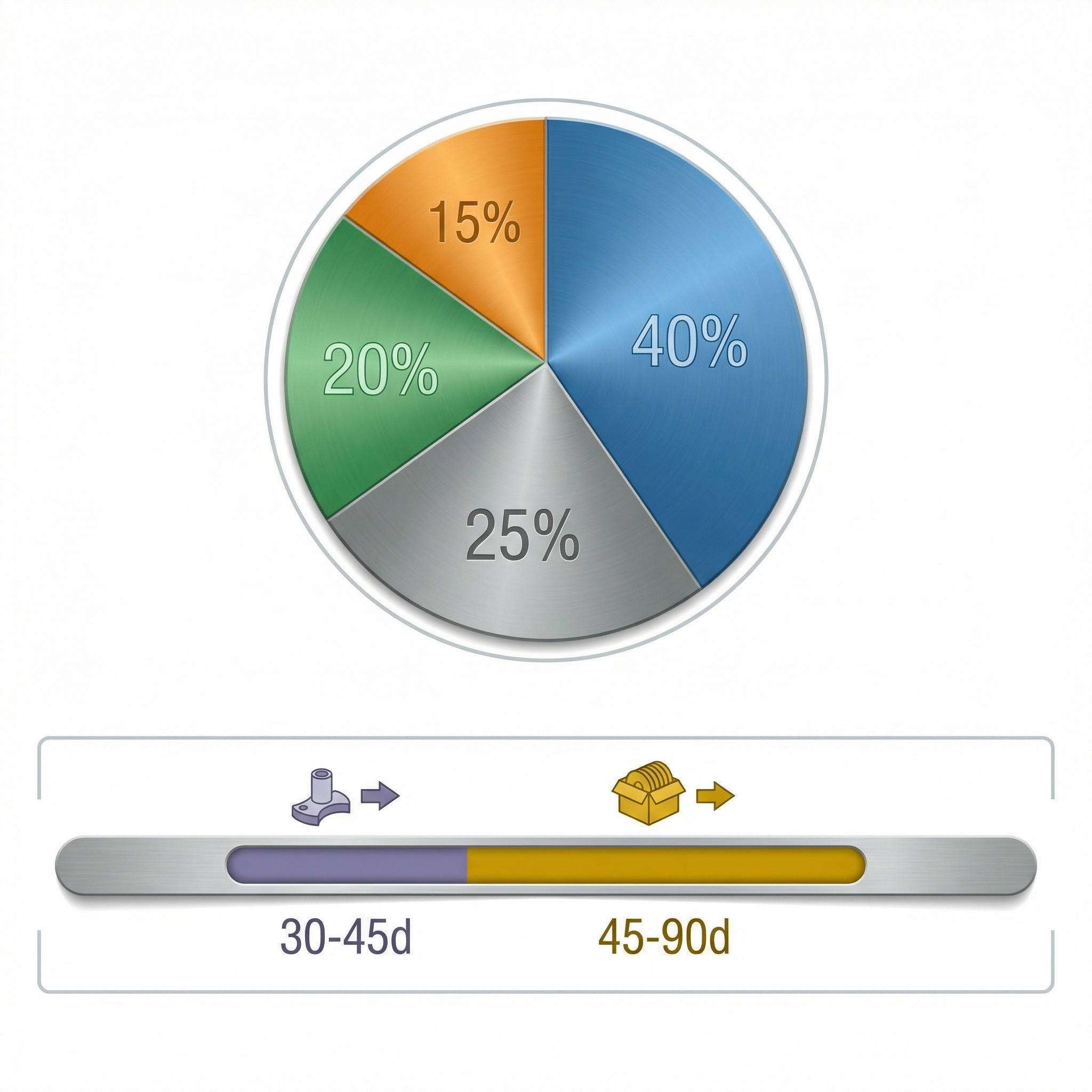
Outsole pricing is driven by four main factors: material, complexity, volume, and mold amortization.
Material is the largest variable. PEBA and ETPU cost significantly more per pair than EVA or TPR, with rubber sitting in the middle. If you're working to a target cost, material choice is the most powerful lever you have.
Complexity affects both mold cost and cycle time. A simple flat outsole with a basic tread pattern is faster and cheaper to produce than a multi-component sole with varying densities or embedded hardware.
Volume affects unit cost directly. More pairs per run means lower per-unit cost — and more negotiating leverage on material pricing and lead time priority.
Mold amortization is a one-time cost spread across your initial order. Higher-volume orders amortize mold costs faster, reducing effective per-pair cost. It's worth modeling this before you set your MOQ expectations.
On lead times: expect 30 to 45 days for sample production and 45 to 90 days for bulk, depending on factory load and order complexity. Factories with annual capacities in the tens of millions of pairs can often prioritize orders more flexibly than smaller operations.
Red Flags to Watch For
Not every factory that presents well online delivers well in production. Watch for:
• No physical samples before bulk commitment. Any reputable manufacturer will produce samples. Skipping this step is a risk you shouldn't take.
• Pricing that doesn't align with material costs. Margins have to come from somewhere. If a quote seems too good, ask specifically what material grade is being used.
• Slow or inconsistent communication during the inquiry phase. If they're hard to reach before you've placed an order, it won't improve after.
• No clear documentation of quality processes. Verbal assurances aren't enough. Ask for QC procedures in writing.
• Mold ownership ambiguity. Make sure your contract explicitly states that you own the molds produced for your designs.
Why Footwear Brands Choose Huadong Soles
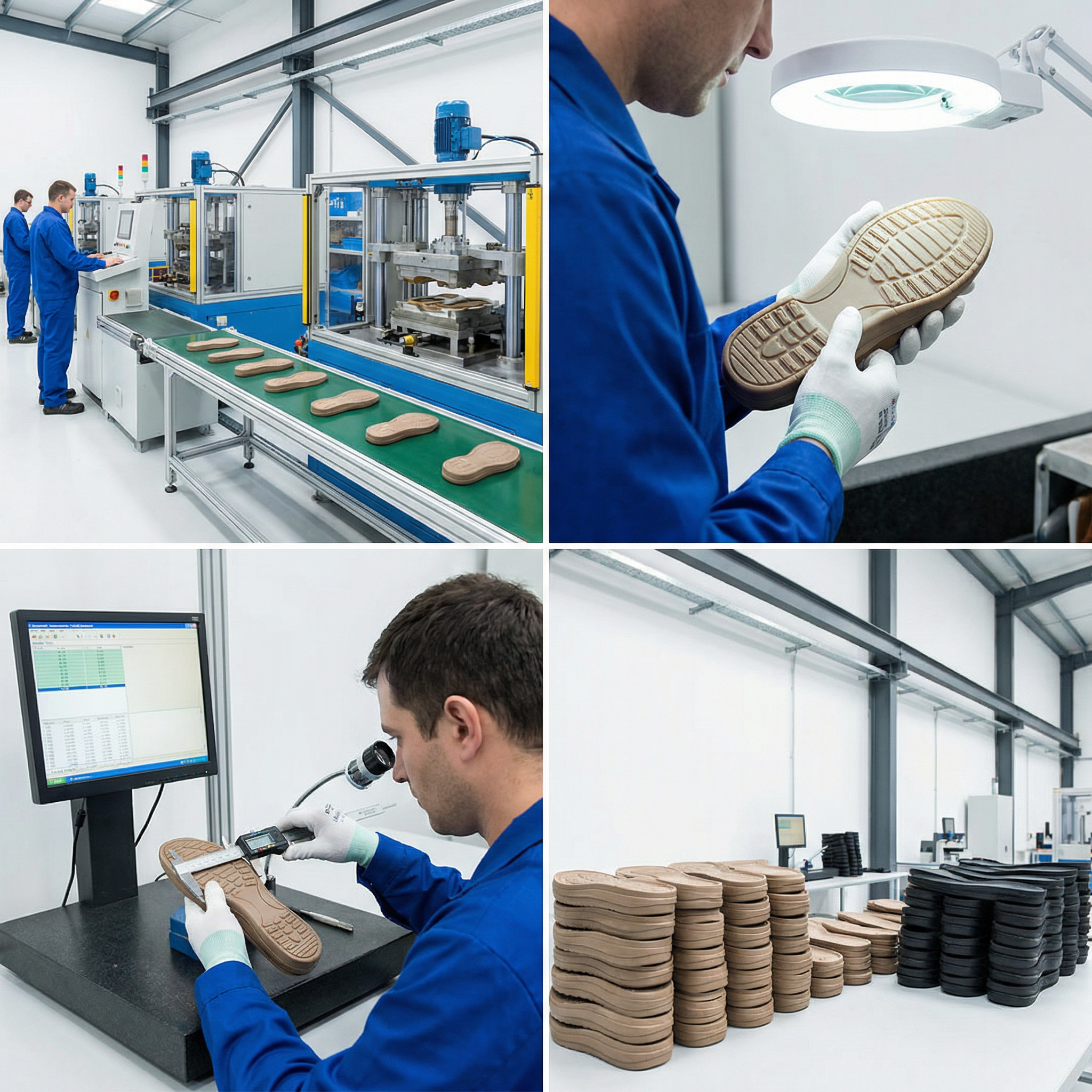
Huadong Soles manufactures custom shoe soles and shoe molds with in-house design and mold casting capability across the full material spectrum — rubber, PU, EVA, ETPU, cork, PEBA, and TPR.
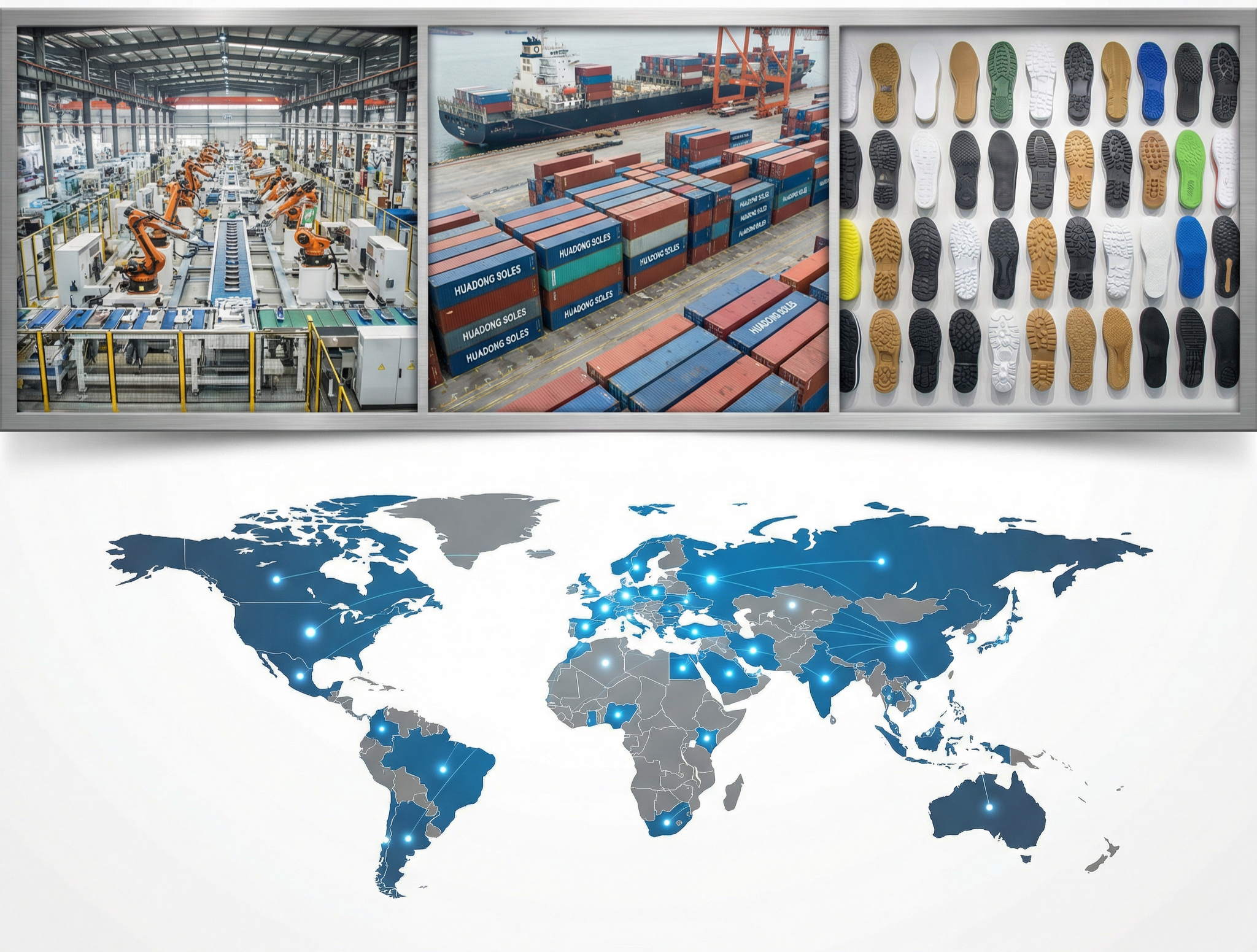
With an annual production capacity of 20 million pairs and export operations spanning 60+ countries, Huadong serves footwear brands and importers primarily across Europe and North America. The company is ISO 9001:2015 certified, with an English-speaking team that responds within 24 hours.
A few things that make Huadong a practical choice for sourcing teams:
• One-stop sourcing. Sole production and mold manufacturing under one roof means no coordination gaps between vendors.
• OEM and ODM options. Whether you're bringing a finished design or need to adapt an existing template, both paths are supported.
• Active design development. Hundreds of new sole designs released annually, giving brands more options and faster iteration.
• Specialty capability. Soccer cleat soles and specialty athletic constructions alongside standard categories.
• Sustainability integration. Manufacturing practices aligned with the growing compliance and consumer expectations around responsible production.
If you're in active procurement mode or evaluating suppliers for an upcoming line, it's worth a direct conversation.
Source Smarter, Not Just Cheaper
The best outsole supplier isn't always the cheapest one — it's the one who can consistently deliver the right material, the right quality, and the right lead time at a price that works for your margin structure.
Getting that right means doing the work upfront: understanding your material requirements, asking the right questions, validating through samples, and choosing a manufacturer with the capacity and communication standards to be a genuine long-term partner.
The outsole is too central to your product's performance and your brand's reputation to treat as a commodity procurement decision.
If you're sourcing custom shoe soles for your footwear brand and want to work with a manufacturer built for global brands, learn more at huadongsoles.com.


