
Views: 6 Author: Site Editor Publish Time: 2026-10-22 Origin: Site


Professional kitchens are demanding workplaces. Chefs and kitchen staff may spend eight to twelve hours standing, walking, and working on floors exposed to water, grease, food residues, and cleaning solutions. The right work shoes should provide comfort, reliable slip resistance, and suitable electrical properties.
EVA injection chef shoes are a popular option for occupational footwear because EVA (ethylene-vinyl acetate) is lightweight, flexible, and suitable for molded footwear designs. Depending on the formulation and product construction, EVA can help reduce shoe weight and provide cushioning during long working shifts.
For restaurants, hotels, catering companies, and food-processing facilities, however, lightweight construction alone is not enough. When a buyer requires both anti-slip and antistatic performance, these functions must be considered from the beginning of product development.
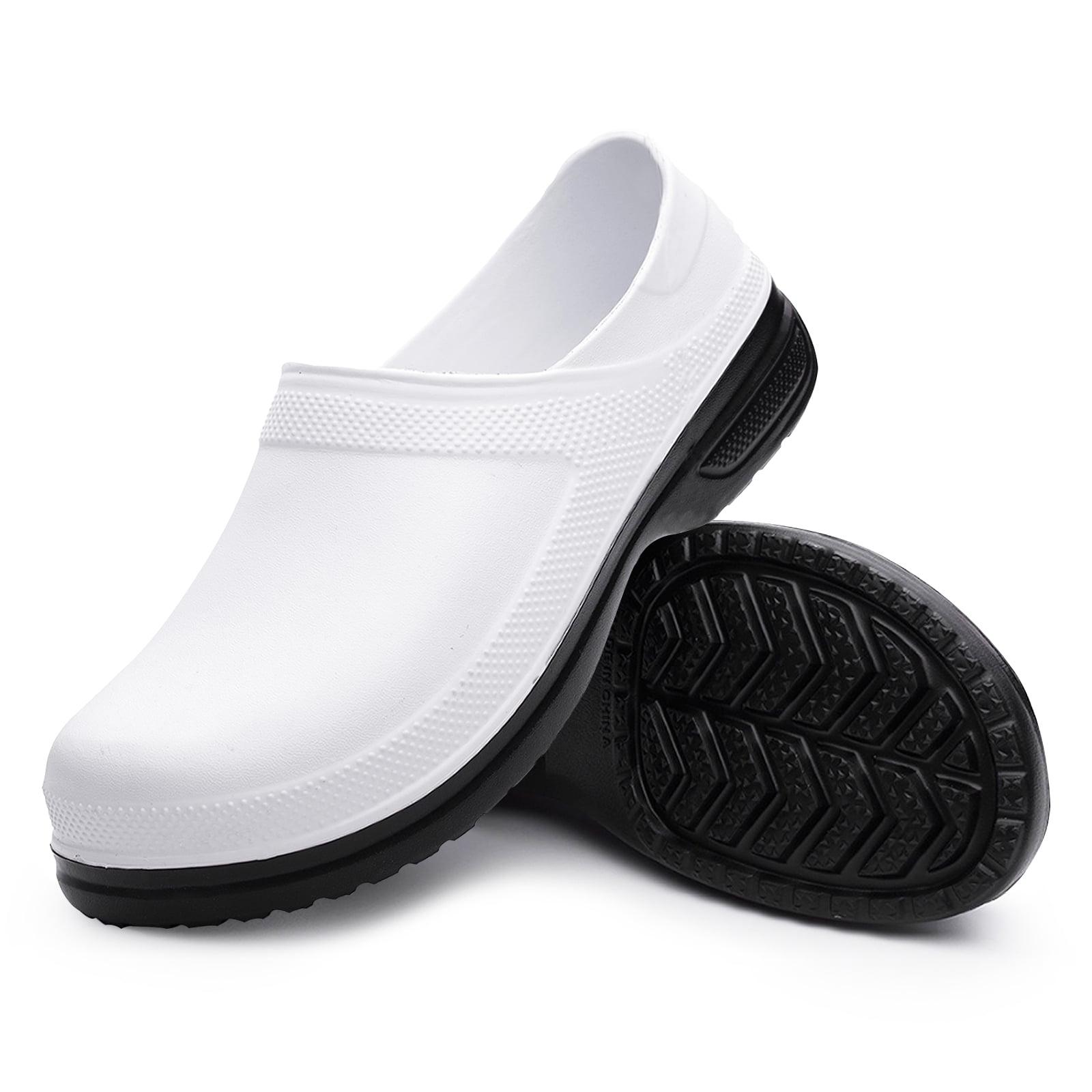
Foamed EVA is widely used in footwear cushioning. Its density, hardness, flexibility, and compression behavior can be adjusted through material formulation and processing.
For chef shoes, a well-designed EVA structure can help reduce the weight carried by the wearer and improve underfoot comfort. The overall result also depends on the shoe's thickness, shape, footbed, and fit.
Many professional kitchen shoes use a closed, simple silhouette with fewer seams and openings. This design can make routine cleaning easier and reduce areas where food residues may accumulate. The actual cleaning performance depends on the upper material, surface finish, and product construction.
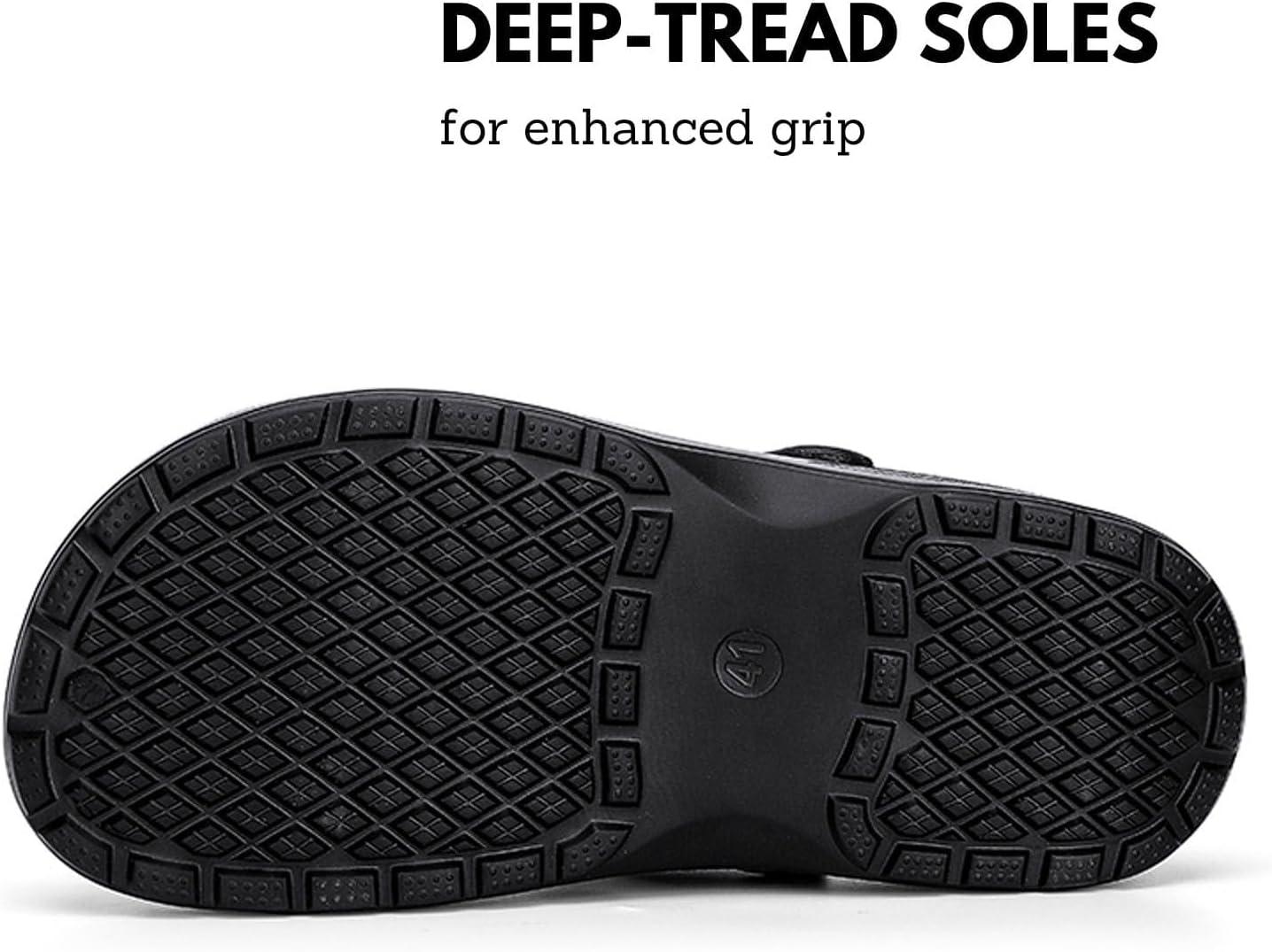
In an injection-molded shoe, material is injected into a mold to form the intended shape. Depending on the selected manufacturing process, the sole and other components may be formed as an integrated structure.
This approach can support consistent production, repeatable dimensions, and customized tread patterns. Before mass production, the mold design and process parameters must be validated to control filling, surface quality, shrinkage, and dimensional stability.
Wet and contaminated floors are common in commercial kitchens. An anti-slip chef shoe therefore needs a suitable outsole design and a material formulation that performs under the intended test conditions.
Important design considerations include:
Tread geometry: Grooves and channels can help manage liquid beneath the outsole and provide effective contact areas.
Outsole material: The compound must be selected and tested for the intended floor conditions.
Contact area: Heel and forefoot geometry can influence how the outsole contacts the floor.
Drainage paths: Properly designed grooves may help move liquids away from contact areas.
Wear resistance: The tread should retain useful geometry during service life.
A shoe that performs well on a dry floor may behave differently on ceramic tiles covered with detergent or on metal surfaces contaminated with other liquids. Visual inspection of the tread is not a substitute for laboratory testing.
The specification provided for this project lists the following requirements under the older SRA/SRB/SRC classification:
Test | Surface and lubricant | Minimum coefficient of friction |
SRA | Ceramic tile with sodium lauryl sulfate solution | Heel ≥ 0.28; flat ≥ 0.32 |
SRB | Steel surface with glycerine | Heel ≥ 0.13; flat ≥ 0.18 |
SRC | Both test conditions | Pass all four requirements above |
These figures are the values in the supplied customer specification, not a claim that every EVA chef shoe meets them.
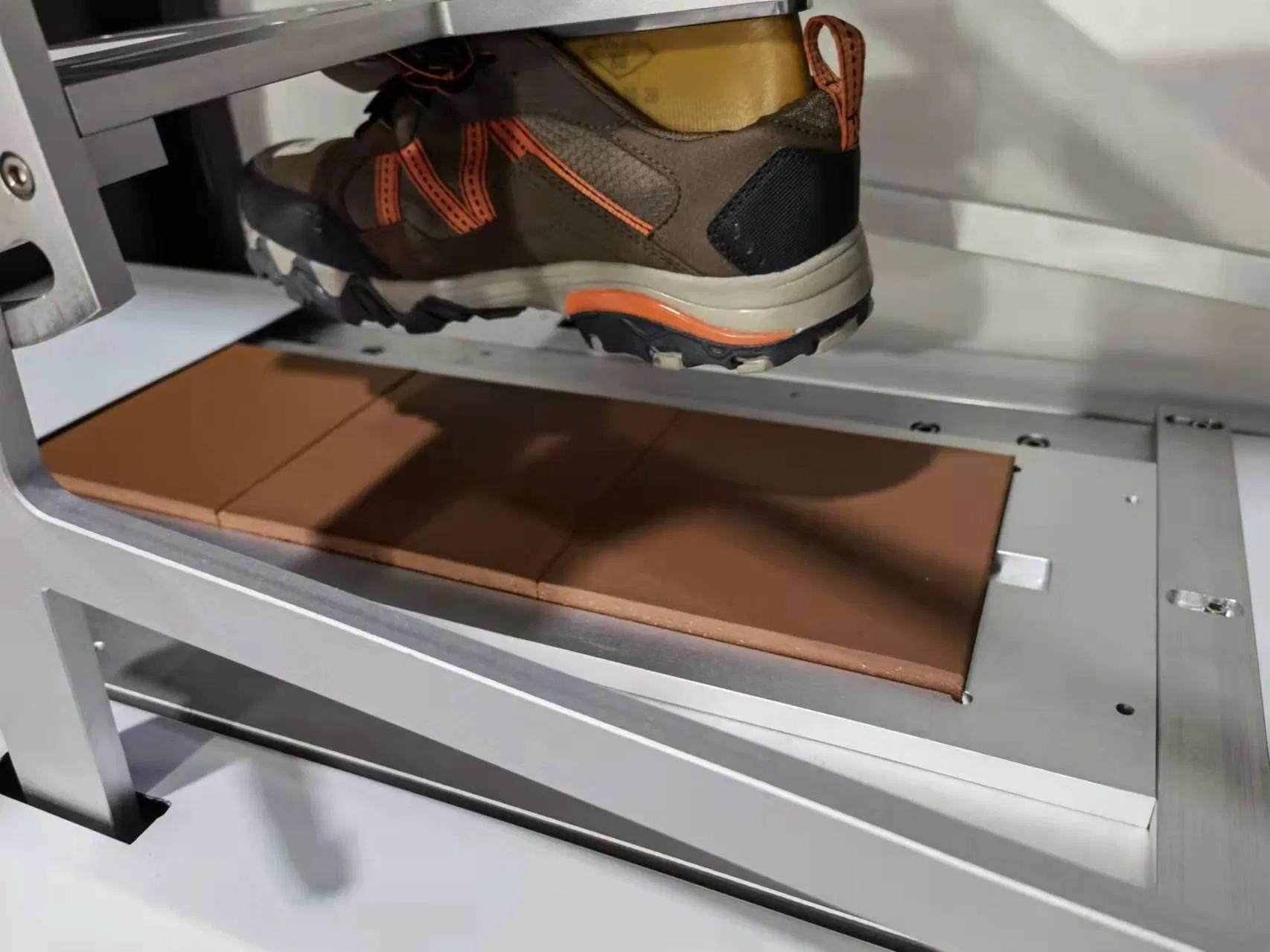
The applicable test method and standard edition should be confirmed before mold development. EN ISO 20347:2022 revised the slip-resistance approach compared with the earlier SRA/SRB/SRC system. The test report must match the customer's required standard and target market. Reference: ISO 20347 occupational footwear standard .
Antistatic footwear is designed to help dissipate accumulated static electricity. This can be important in workplaces where electrostatic discharge needs to be controlled, such as certain food-production, packaging, and electronic-processing environments.
According to the supplied specification, the required electrical resistance is between 0.1 MΩ and 1,000 MΩ. This range should be confirmed against the customer's applicable standard and test method.
Antistatic performance cannot be guaranteed simply by choosing EVA. The material system, conductive or dissipative additives, construction, and electrical contact path can all affect the final result. Changes in formulation may also influence mechanical properties and processing behavior.
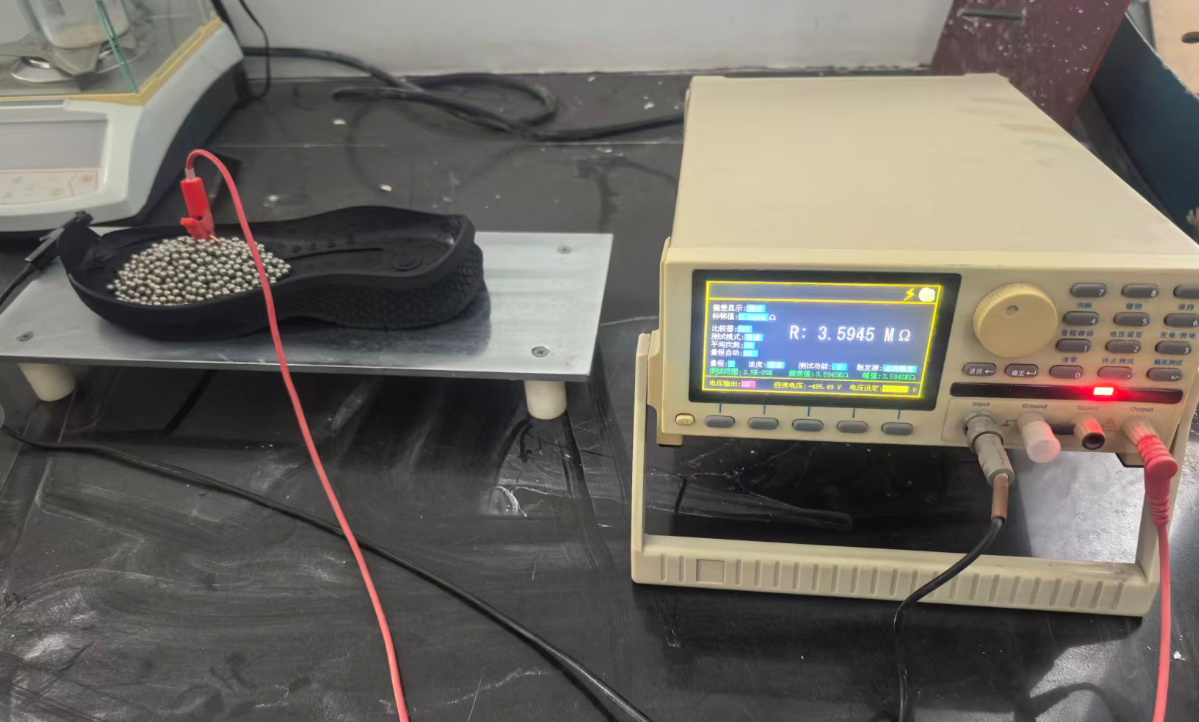
For this reason, electrical resistance should be measured on the finished footwear under the specified test conditions. The customer should also clarify whether the requirement applies to the complete shoe, the sole component, or both.
Antistatic footwear is not the same as electrically insulating footwear and should not be described as protection against electric shock. Reference: IEC 61340-4-3 footwear electrical-resistance test method .
For buyers developing a private-label or custom chef shoe, the manufacturing process should begin with a clear technical brief.
Define the target market, size range, shoe shape, color, expected order quantity, anti-slip test conditions, antistatic resistance range, and any additional requirements.
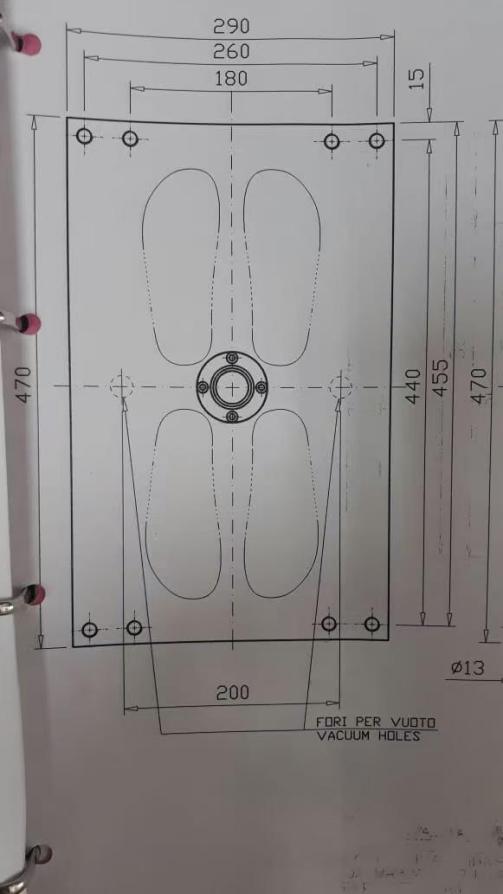
The mold is developed according to the approved shoe geometry and manufacturing process. Tread depth, groove layout, wall thickness, heel structure, and material flow should be considered together. A custom mold allows the design to be tailored to the intended product rather than relying on an unsuitable existing shape.
The EVA formulation should be evaluated for weight, flexibility, cushioning, dimensional stability, and compatibility with the required electrical properties. If antistatic performance is mandatory, it must be treated as a development target from the beginning.
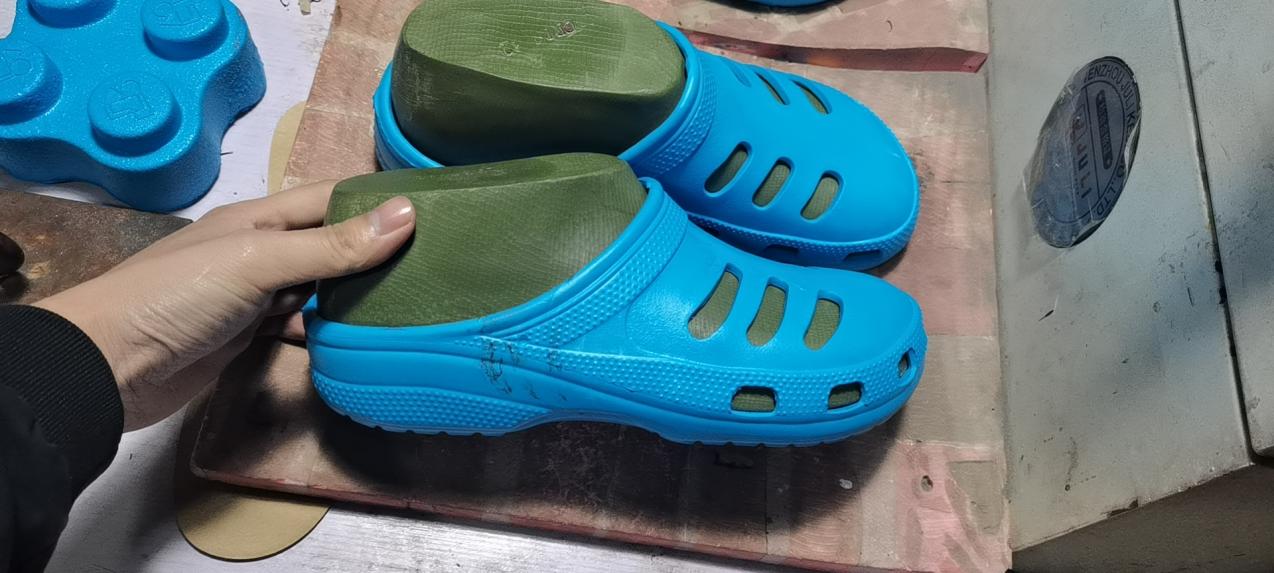
Trial molding helps identify issues such as incomplete filling, surface defects, shrinkage, deformation, and fit. The outsole pattern and finished shoe should then be reviewed before final approval.
Samples should be tested against the agreed slip-resistance and electrical-resistance requirements. Heel energy absorption, durability, and other requested properties should also be verified where applicable.
The supplied specification lists heel energy absorption of at least 20 joules. This is a measurable performance target, not a guaranteed result of EVA construction. Test the finished footwear using the applicable method before making a compliance claim.
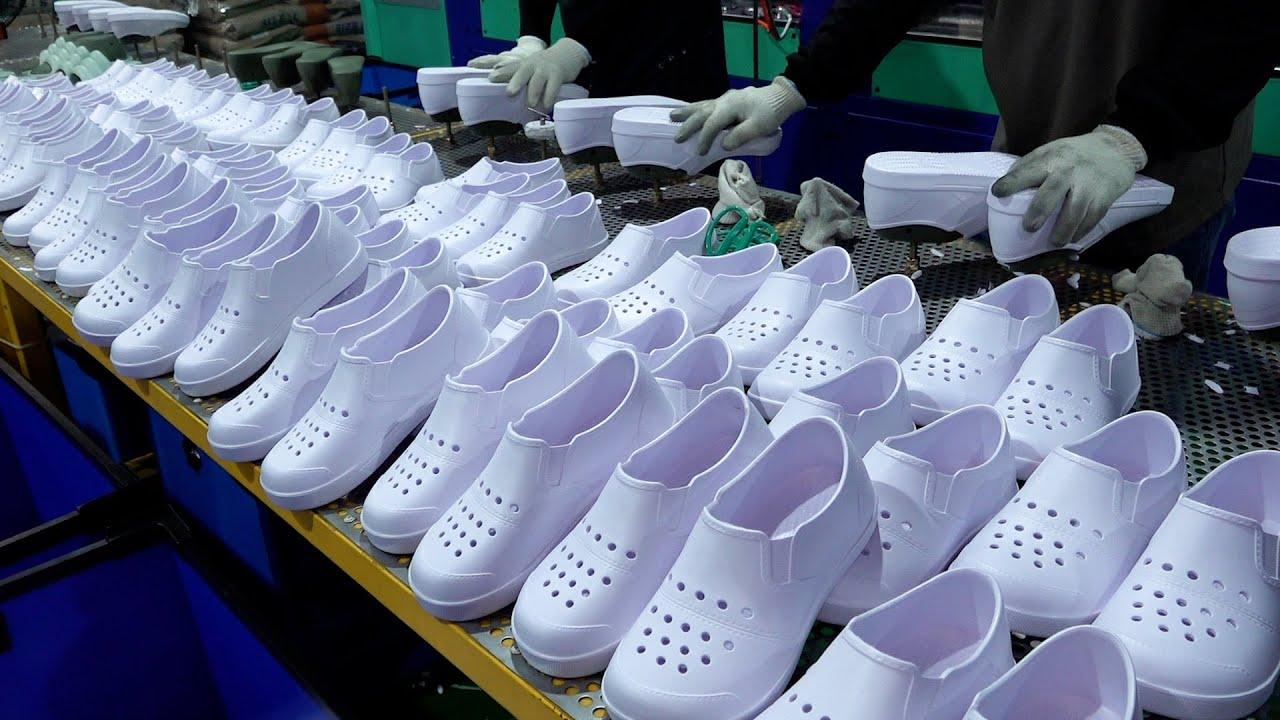
After sample approval, establish inspection criteria for dimensions, appearance, weight, molding quality, and any required performance checks. Production records and test reports help maintain consistency between approved samples and mass-produced shoes.
At Huadong, custom footwear development can be approached as a complete project covering mold design, material selection, injection molding, sample evaluation, and production planning. Early technical communication helps reduce unnecessary mold changes and makes it easier to align product performance with the buyer's target cost and order quantity.
For buyers sourcing anti-slip and antistatic EVA injection chef shoes, the most effective starting point is a clear specification, including the required test standard, size range, design references, and estimated order quantity.
A successful chef shoe is not defined by lightweight material alone. Its design, mold, formulation, and verified test results must work together to meet the demands of professional kitchens.
Yes, this can be a development objective. However, the material formulation and shoe construction must be designed for both functions, and the finished shoes must pass the specified tests.
A custom mold is usually needed when you require a unique shoe shape, tread pattern, branding, or size configuration. An existing mold may be suitable if its design and dimensions match your requirements.
Please provide your design reference, size range, target quantity, destination market, required slip-resistance standard, antistatic resistance range, and any applicable certification or testing requirements. This information helps the manufacturer assess tooling needs, material options, sample development, and production costs.


