
Views: 101 Author: Site Editor Publish Time: 2026-05-22 Origin: Site


The following uses classic canvas shoes (cold-bonded process) as an example to introduce the complete manufacturing process of a finished shoe, from upper processing to final packaging. The process record you provided mainly includes key steps such as upper marking, glue application, drying, cold bonding and pressing, shaping, and packaging.
After the upper is made, the first step is to "mark positioning lines."
Main functions:
Determine the sole bonding position
Ensure symmetry between the left and right shoes
Determine the glue application area
Facilitate subsequent sole pressing
Common methods:
Manual marking,Laser positioning,Template positioning
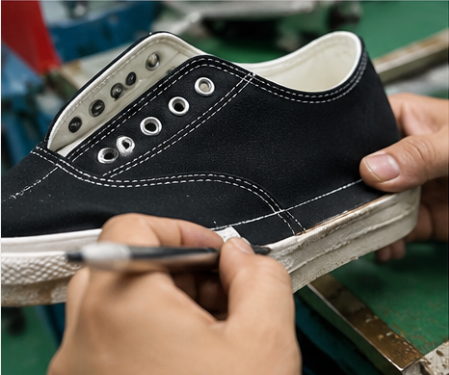
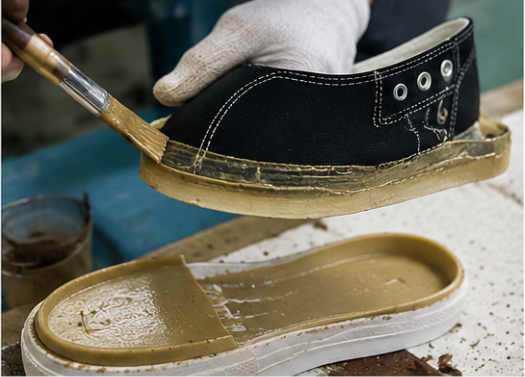
This is one of the most crucial steps in the cold-bonding process.
Workers will evenly apply a treatment agent and glue to:
The upper edge and the sole bonding surface.
Shoe sole adhesive application temperature: approximately 60℃
Shoe upper processing temperature: approximately 80℃
Purpose:
Activate the adhesive,Enhance bonding strength,Prevent later separation
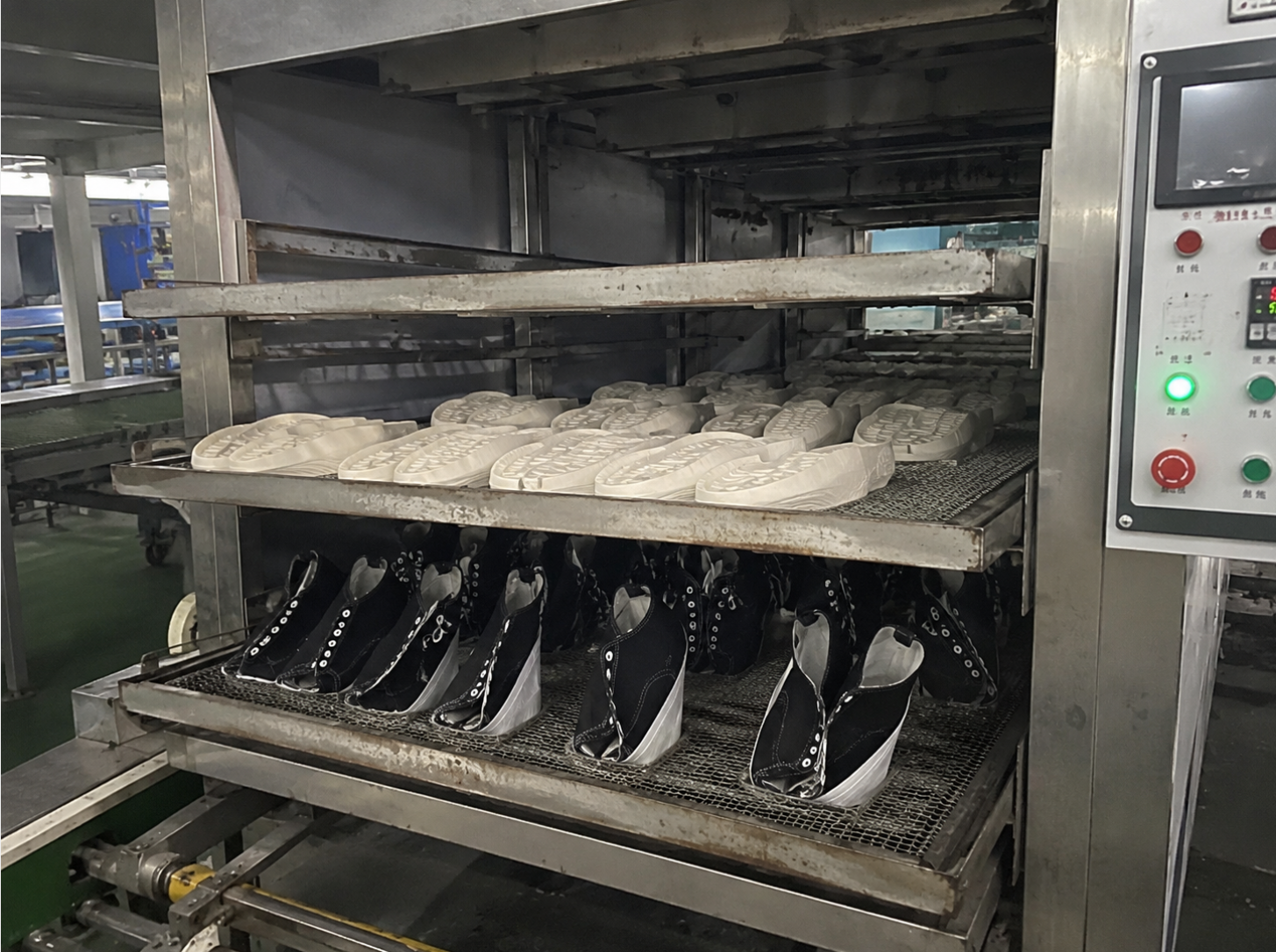
After adhesive application, the shoe upper and sole need to be activated in an oven.
Function:
Volatile solvents
Activate the adhesive layer
Improve bonding performance
Under normal circumstances:
Temperature should not be too high
Time should not be too long
Prevent adhesive failure
This is a crucial step determining the bonding strength.
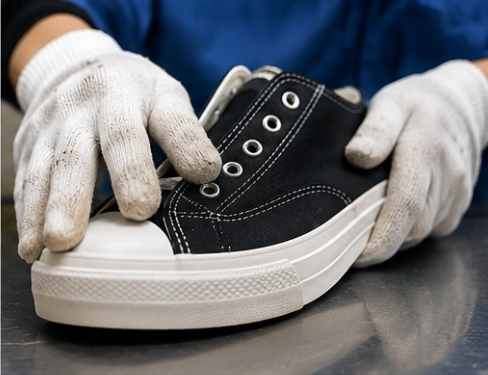
After drying, the formal bonding of the sole begins.
Workers will:
Precisely align the shoe upper and sole before cold bonding.
This step requires:
Accurate positioning
Successful bonding on the first attempt
Preventing misalignment
Cold bonding technology is widely used in:
Canvas shoes
Casual shoes
Sports shoes
EVA shoes
After the sole is bonded, the first pressing is performed.
Main Equipment:
Forefoot Pressing Machine
Heel Pressing Machine
Side Pressing Machine
Function:
Initially fix the sole
Remove air
Improve fit
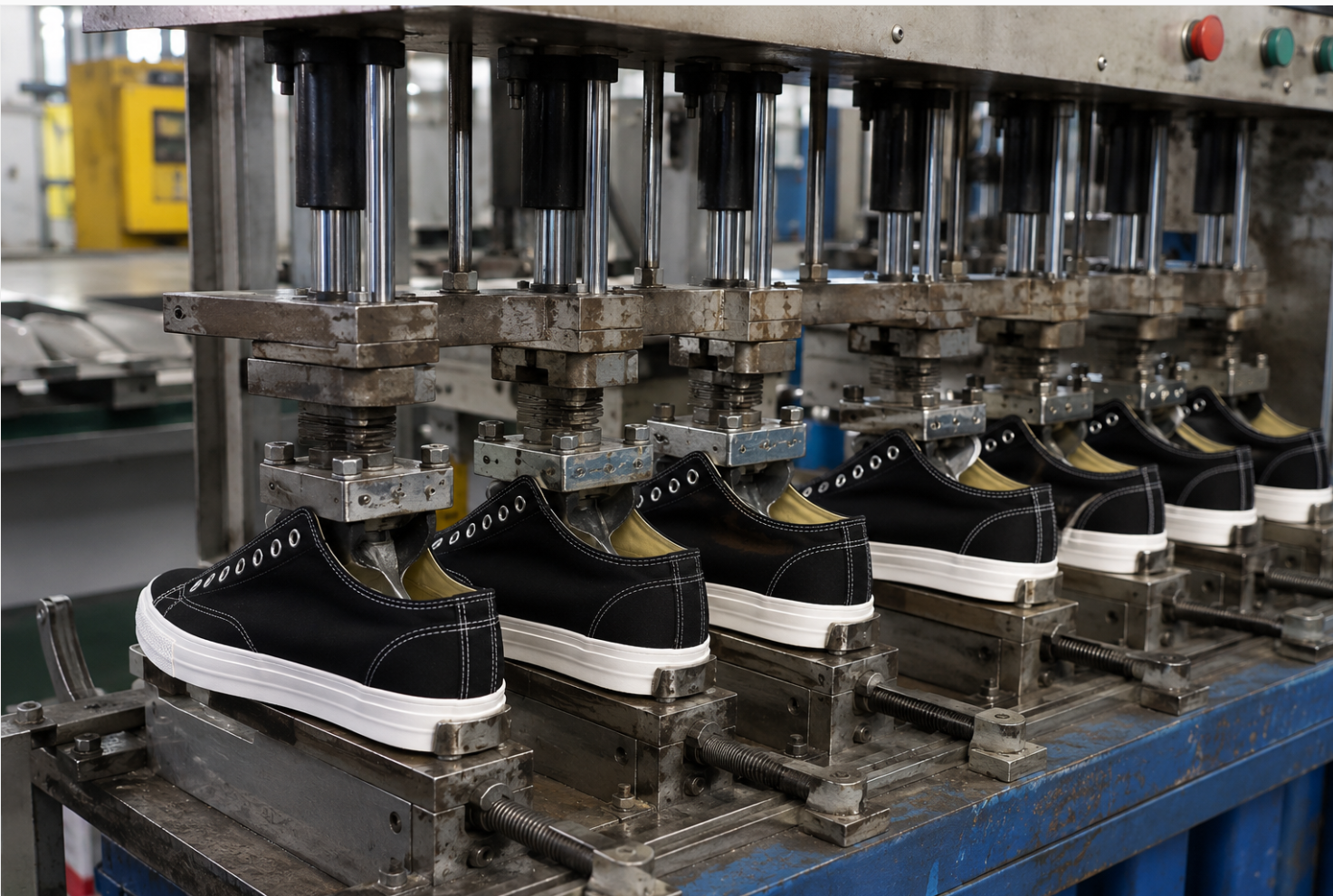
After the first pressing, the shoe undergoes a second heating process in a small oven.
Purpose:
Further activate the adhesive layer
Improve bonding strength
Enhance sole stability
This step effectively reduces:
The incidence of problems such as glue separation, edge lifting, and sole detachment.
Pressure is applied again using the pressing equipment.
After the second pressing:
The sole and upper are more tightly bonded
The bonding strength is further improved
The finished product has better stability
This is a process used by many high-quality shoe factories.
After pressing, the shoe enters the shaping stage.
Main Content:
Adjusting the shoe shape
Eliminating deformation
Stabilizing the structure
After shaping, the shoe's:
Appearance
Curves
Wearing comfort
will be more stable.
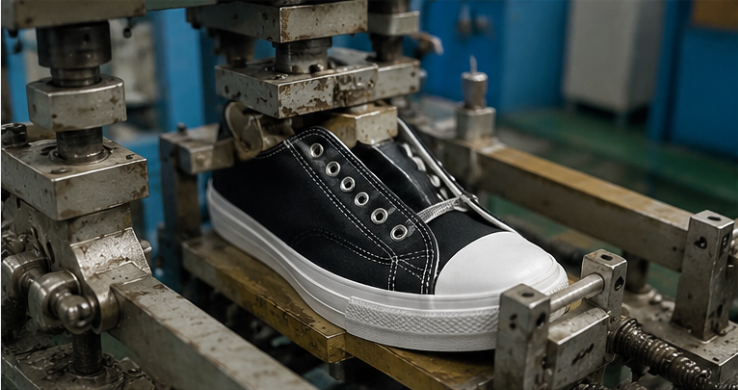
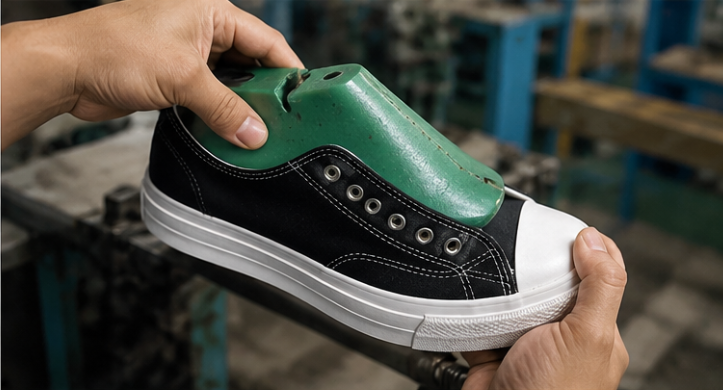
The shoes need to cool and dry naturally.
Then proceed to:
Appearance inspection
Adhesive strength inspection
Size inspection
Cleaning
Ensure compliance with shipping standards.
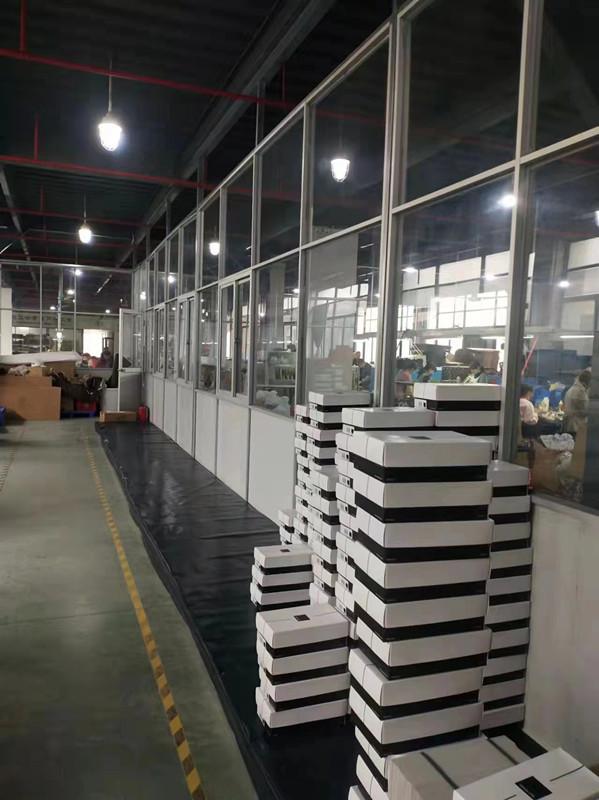
Final Completion:
Washing shoes
Installing paper supports
Packaging into shoe boxes
Packaging
Warehoused
At this point, a complete pair of canvas shoes is officially produced.
Summary
Although the production process of cold-bonded canvas shoes seems simple, it places high demands on:
Glue formulation
Temperature control
Pressing time
Worker operation
Especially:
Glue application
Drying
Sole pressing
These steps directly determine the durability of the shoes and whether they will come unglued.
Modern shoe factories typically use:
Automatic glue application machines
Automatic sole pressing machines
Automatic drying line
To improve product stability and production efficiency.
The cold-bonding process bonds the upper and sole using adhesives at room temperature, without heat vulcanization. It is widely used for canvas shoes, casual shoes, sports shoes, and EVA shoes.
Positioning lines help determine the sole bonding position, glue application area, ensure left-right shoe symmetry, and facilitate accurate sole pressing.
Sole glue application temperature: approx. 60℃
Upper processing temperature: approx. 80℃
Incorrect temperatures can affect adhesive activation and bonding strength.
First heating + pressing: Initially activates the adhesive, fixes the sole, and removes air.
Second heating + pressing: Further activates the adhesive, improves bonding strength, and reduces defects like sole separation or edge lifting.
The most common defects are glue separation, edge lifting, and sole detachment. Main causes include:
Poor adhesive formulation
Incorrect temperature or time control
Uneven glue application
Insufficient pressing pressure
Modern shoe factories typically use:
Automatic glue application machines
Automatic sole pressing machines
Automatic drying lines
Standardized temperature and pressure control processes
Shaping corrects deformation from previous steps, stabilizes the shoe structure, and improves appearance, curves, and wearing comfort.
Inspections include:
Appearance inspection
Adhesive strength inspection
Size inspection
Cleaning


