
Views: 73 Author: Site Editor Publish Time: 2026-08-14 Origin: Site


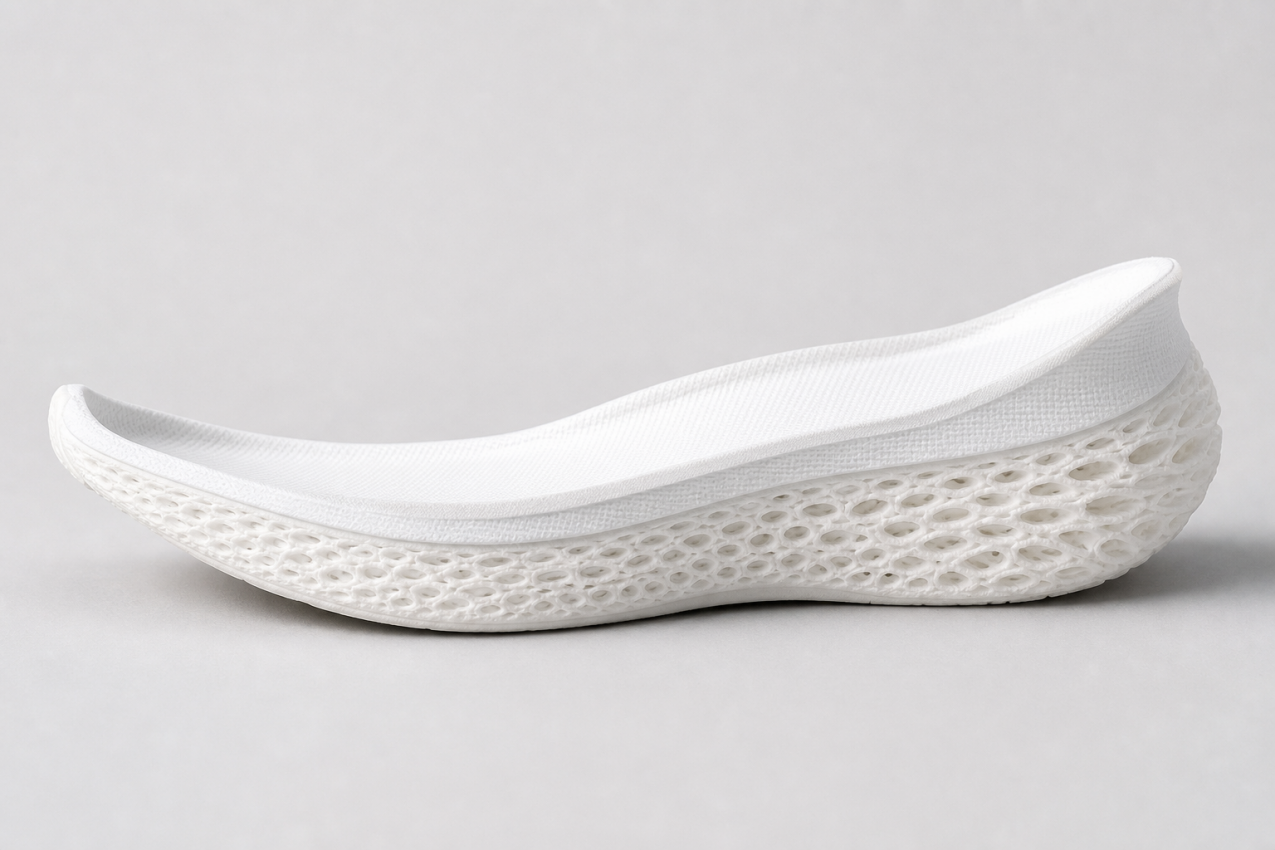
PEBAX supercritical foam shoe soles are high-performance sole components made from polyether block amide, also known as PEBA or TPE-A. This material is widely used in premium running shoes and racing footwear because it can deliver an excellent balance of lightweight cushioning, high rebound, low energy loss, and stable flexibility.
For footwear brands, PEBAX is not only a soft foam material. Its real value comes from the combination of material selection, formulation control, supercritical foaming technology, molding accuracy, and final quality inspection. When these factors are controlled correctly, PEBAX foam soles can support lightweight racing shoes, training shoes, basketball structures, and customized performance footwear projects.
PEBAX is a block copolymer structure made from hard polyamide segments and soft polyether segments. The hard segments provide structural support, tear resistance, low-temperature toughness, and shape stability. The soft segments provide high rebound, low hysteresis loss, lightweight comfort, and a more responsive underfoot feel.
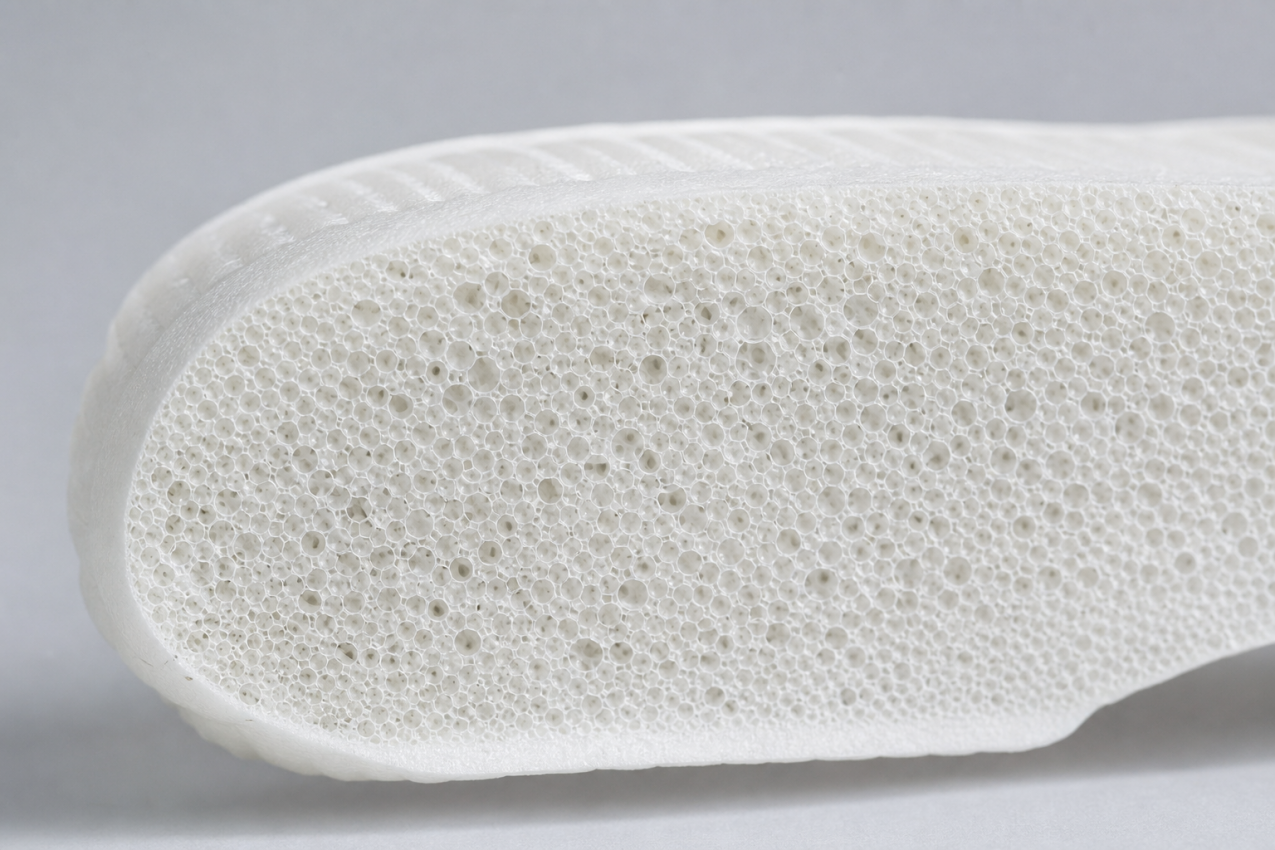
Compared with many TPU and TPEE foam systems, PEBAX has several clear performance advantages:
• Lower material density, which helps reduce the final weight of the shoe sole.
• High rebound and low energy loss, making it suitable for racing and performance running shoes.
• Good flexibility in cold environments and better thermal stability than many general-purpose foams.
• Soft and elastic cushioning, which improves comfort and responsiveness.
However, PEBAX also has limitations. Its surface abrasion resistance is weaker than some outsole materials, repeated compression may cause long-term deformation if the formula is not optimized, and production control is more demanding than standard EVA or TPU foam.
Different PEBAX grades should be selected according to the shoe type, sole structure, density target, hardness requirement, and durability target. For ultra-light racing shoes, softer grades are often preferred. For training shoes or support layers, higher-hardness grades or modified formulas may be used to improve long-term stability.
PEBAX Grade | Typical Hardness | Suitable Application |
MH2033 | Around 33D | Ultra-light racing running soles and low-density responsive foam structures |
MH2533 | Around 38D | Training shoes, basketball cushioning layers, and balanced performance structures |
MH3533 | Around 48D | Support layers, composite bottom layers, and durability-enhanced sole structures |
For performance footwear, high-hardness grades should not be used blindly. If the hardness is too high after foaming, the shoe sole may feel stiff and lose the soft, responsive character expected from PEBAX foam.
A high-quality PEBAX foam sole should keep the PEBAX system as the main material instead of relying on heavy fillers or low-cost blends. In premium running shoe soles, the formula usually focuses on original PEBAX material, high-temperature lubricant, hydrolysis stabilizer, anti-yellowing UV stabilizer, and compatible toughening agents.
The following practices should be avoided in high-performance PEBAX foam sole production:
• Adding large amounts of calcium carbonate, talc, or other inorganic fillers, because these fillers can reduce rebound and energy return.
• Blending too much EVA or TPU, because excessive blending changes the low-hysteresis performance of the PEBAX system.
• Using recycled PEBAX material for premium performance footwear, because molecular chain degradation may lead to poor compression resistance and unstable quality.
For training shoes that require better durability, a modified structure can be considered. For example, a softer PEBAX grade can be combined with a higher-hardness PEBAX grade and a suitable toughening agent. This helps improve compression resistance while keeping rebound loss within an acceptable range.
There are two common production routes for PEBAX supercritical foam shoe soles: bead or preform foaming for larger-scale production, and sheet foaming with CNC cutting for development samples, small batches, or complex structures.
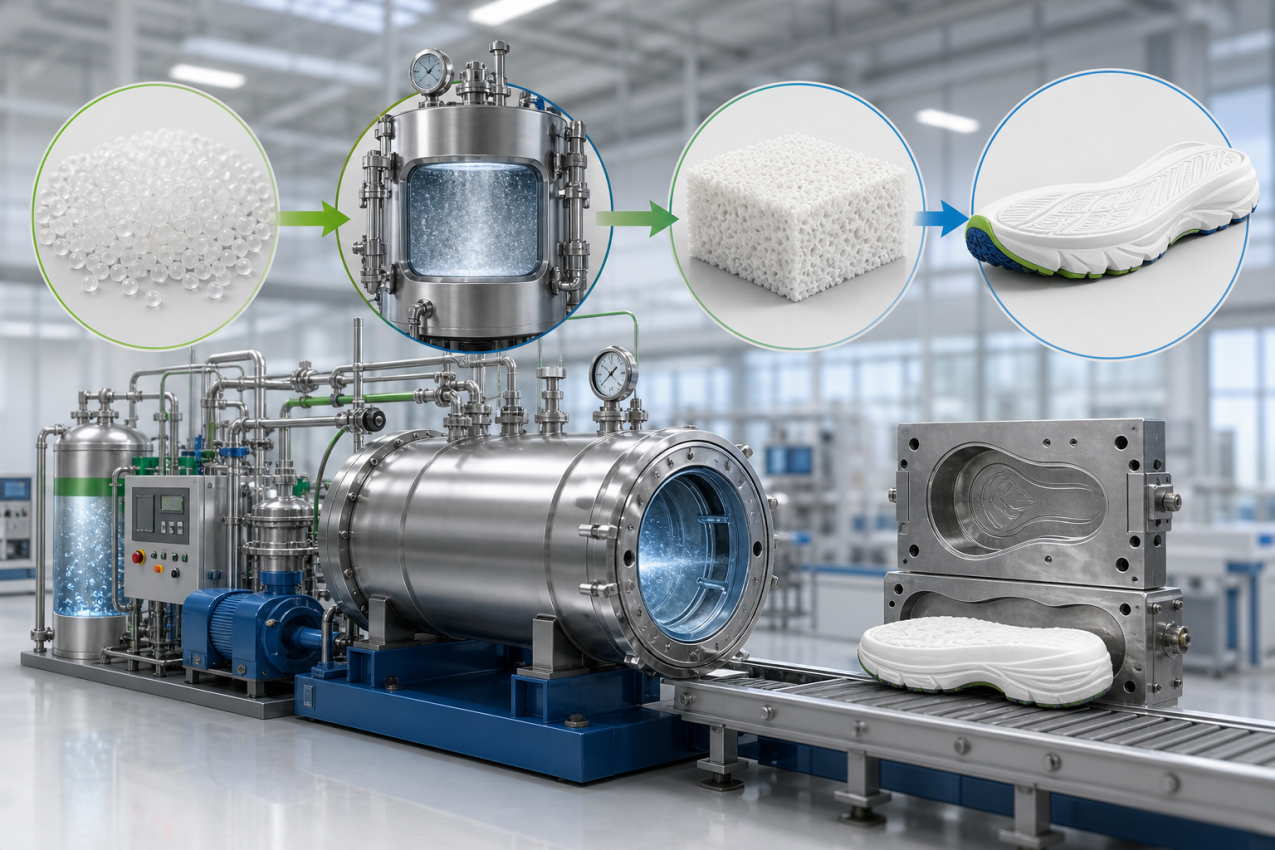
This route is suitable for stable bulk production. The process normally includes material drying, compounding or preform preparation, supercritical CO2 saturation, controlled pressure release, thermal stabilization, secondary molding, cooling, and final trimming.
• Material drying: PEBAX must be dried properly before foaming. Excess moisture can cause internal bubbles, delamination, and unstable foam cells.
• Compounding or preform preparation: Screw temperature should be controlled carefully because overheating can damage the polymer and reduce rebound.
• Supercritical CO2 foaming: Pressure, temperature, holding time, and pressure release speed directly affect density, cell structure, and rebound consistency.
• Thermal stabilization: After foaming, the material needs time to release internal stress and reduce later shrinkage.
• Secondary molding: Proper molding can improve shape accuracy, reduce bead gaps, and improve surface quality.
Sheet foaming is often used for prototype development, small-batch production, and complex midsole structures. A large foam sheet is produced first, then CNC cutting is used to create the final sole geometry based on 3D drawings. This route gives more design flexibility, but it requires strict density control across the sheet and precise cutting to avoid tearing, burrs, or heat damage.
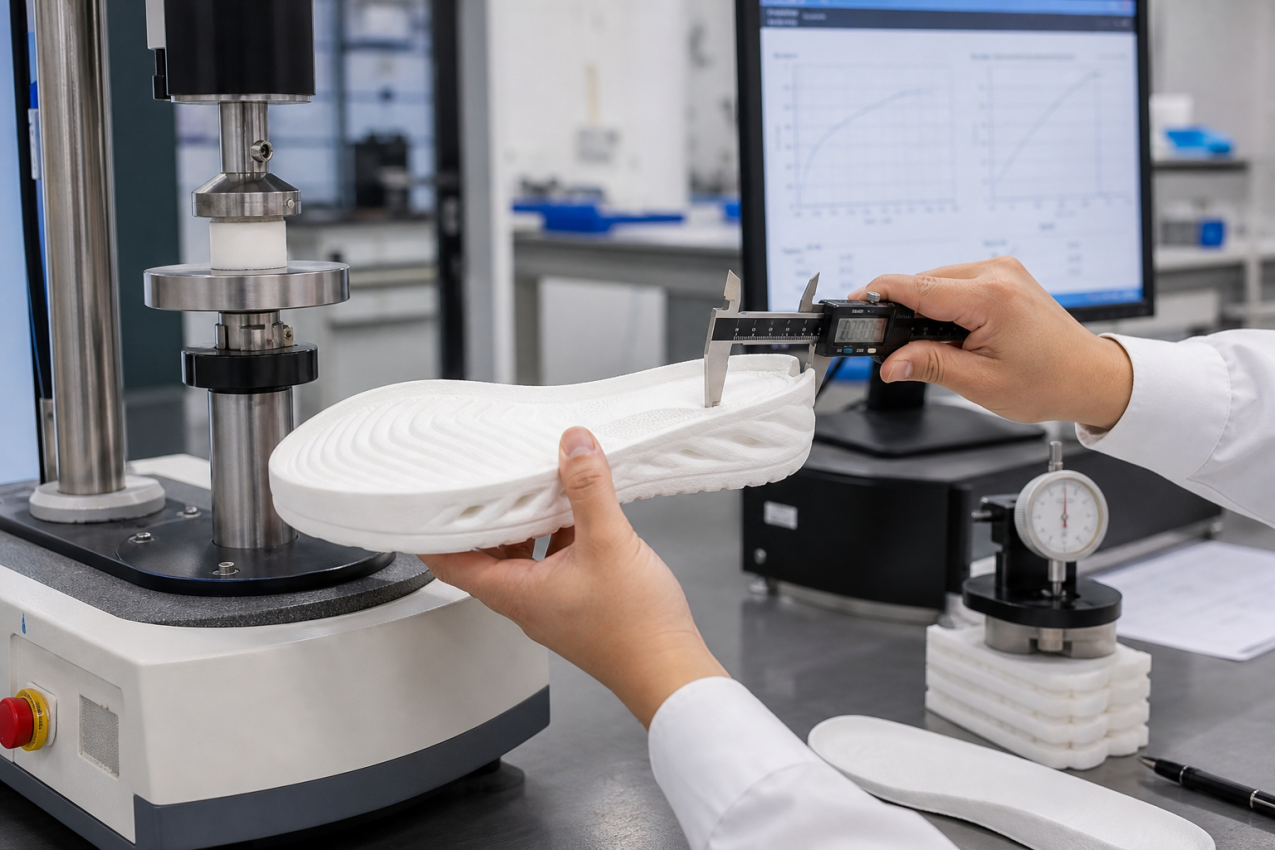
For buyers, PEBAX foam quality should not be judged only by softness or weight. A professional inspection should include density, hardness, rebound, compression set, tensile strength, low-temperature bending, surface quality, and bonding performance.
Quality Item | What to Check | Why It Matters |
Density | Whether the sole reaches the target lightweight range | A density that is too high feels heavy; too low may reduce support |
Hardness | Surface and overall hardness consistency | Incorrect hardness affects comfort, stability, and shoe feel |
Rebound | Ball rebound or dynamic energy return | This is the core performance value of PEBAX foam |
Compression set | Thickness recovery after repeated compression | Poor results may lead to long-term sole collapse |
Cell structure | Fine and uniform closed-cell structure | Large cells or connected pores reduce durability and consistency |
Bonding strength | Adhesion with outsole, upper, or plate components | Poor bonding can cause delamination or sole separation |
How to Identify High-Quality and Low-Quality PEBAX Foam Soles
A high-quality PEBAX foam sole should rebound quickly after compression, maintain its thickness after repeated use, stay flexible in cold weather, and show a fine, uniform cell structure when cut. The surface should be compact, clean, and free from large holes, cracks, yellowing, bead gaps, or powdering.
Low-quality PEBAX foam soles often show delayed rebound, obvious collapse after use, uneven density, large internal voids, surface tearing, powdering, or poor temperature stability. These problems may come from recycled material, too much filler, incorrect drying, unstable foaming pressure, fast pressure release, poor secondary molding, or excessive blending with other materials.
Common Production Defects and Their Causes
• Large internal bubbles or delamination: often caused by insufficient drying, unstable temperature, or insufficient CO2 saturation.
• Uneven density or weight difference: usually related to unstable foaming pressure, temperature variation, or inconsistent preform size.
• Surface tearing or burrs: may be caused by weak foam strength, dull CNC tools, overheating during cutting, or poor formulation toughness.
• Bead gaps, water seepage, or powdering: often related to insufficient secondary molding temperature, pressure, or fusion time.
• Yellowing or discoloration: may come from insufficient UV stabilizer, excessive processing temperature, or material oxidation.
• Permanent pressure marks: can appear when molded parts are stacked before sufficient cooling or stabilization.
How to Improve PEBAX Sole Durability in Bulk Production
PEBAX foam has outstanding rebound and lightweight performance, but durability must be engineered through structure, formula, process, and quality control. A practical production solution is to use layered composite construction: a high-rebound PEBAX foam layer for cushioning, combined with a harder PEBAX layer, TPU film, carbon plate, or abrasion-resistant rubber outsole depending on the final shoe design.
For bulk production, manufacturers should also use closed-loop control for foaming temperature and pressure, sample density and rebound regularly, optimize the toughening system, and protect the foam surface when the sole is used in high-wear applications.
Factory Control Points for Custom PEBAX Shoe Sole Manufacturing
A reliable PEBAX shoe sole factory should control the complete process from raw material verification to final inspection. Important control points include raw material certificate checking, moisture control before foaming, temperature and pressure stability, controlled pressure release, post-foaming stabilization, secondary molding, cooling time, and batch-by-batch physical testing.
For custom projects, the buyer should confirm the target density, hardness, rebound, color, structure, mold design, outsole bonding method, MOQ, production lead time, and inspection standard before bulk production. This helps reduce sampling delays and avoids performance differences between samples and mass production.
PEBAX vs ATPU and Other Foam Materials
PEBAX supercritical foam is positioned as a premium material for flagship racing and high-performance running shoes. Its main strengths are low weight, high rebound, and strong energy return. The main limitations are higher material cost, more difficult processing, and moderate abrasion resistance if used without a protective structure.
ATPU foam is more commonly used in mid-range sports footwear because it has balanced cost, durability, and processing stability. EVA remains cost-effective for general footwear, while TPEE and other modified foams can be selected for specific performance or cost targets. The best material choice depends on the shoe category, target market, price level, and performance requirement.
Custom PEBAX Supercritical Foam Sole Solutions
Huadong Soles supports custom shoe sole development for performance running shoes, training shoes, sports footwear, and other customized footwear projects. We can discuss material selection, sole structure, mold development, outsole combination, hardness target, density target, color, surface texture, tread pattern, and bulk production requirements based on your drawings or samples.
If you are developing lightweight running shoe soles or high-rebound foam sole components, contact our team with your design files, samples, or technical requirements. We can help evaluate a suitable sole solution for your project.
FAQ About PEBAX Supercritical Foam Shoe Soles
1.Is PEBAX suitable for high-performance running shoe soles?
Yes. PEBAX is suitable for high-performance running shoe soles because it offers low weight, high rebound, and responsive cushioning when the material and foaming process are properly controlled.
2.What makes PEBAX different from TPU or EVA foam?
PEBAX usually provides lower energy loss and stronger rebound than many standard TPU or EVA foam systems. TPU and EVA can still be better choices for cost control or general footwear, but PEBAX is preferred when lightweight performance and energy return are the main goals.
3.Can PEBAX foam soles be used directly as outsoles?
PEBAX foam is better used as a midsole or cushioning structure. If the shoe needs strong ground-contact abrasion resistance, it is usually combined with rubber, TPU film, or another protective outsole layer.
4.What causes PEBAX foam soles to collapse or lose rebound?
Common causes include poor raw material quality, excessive filler, overheating during processing, insufficient foaming control, poor cell structure, and weak compression resistance in the final formula.
5.How should buyers check PEBAX foam sole quality?
Buyers should check density, hardness, rebound, compression set, cell uniformity, surface integrity, bonding strength, and batch consistency before confirming bulk production.
6.Can PEBAX shoe soles be customized by mold and formula?
Yes. PEBAX shoe soles can be customized by mold shape, structure, density, hardness, color, outsole combination, logo, tread pattern, and formula direction depending on the product target.
7.Is PEBAX more expensive than EVA or TPU?
Yes. PEBAX is generally more expensive than standard EVA or TPU materials because the raw material cost is higher and the supercritical foaming process requires stricter production control.
8.What information should I provide for a custom PEBAX sole project?
You can provide drawings, 3D files, physical samples, target density, hardness, color, shoe type, outsole requirement, expected order quantity, and testing standards. This helps the manufacturer evaluate the best production route.
9.Backend Copy Notes
When uploading this article to the website backend, use the article title as H1/page title. Use each main section as H2 and each FAQ question as H3. Add the two images near the introduction and process section. Use the provided alt text for image SEO. After publishing, submit the final URL in Google Search Console and track impressions, clicks, CTR, average ranking, and inquiries.


