
Views: 19 Author: Site Editor Publish Time: 2026-08-26 Origin: Site


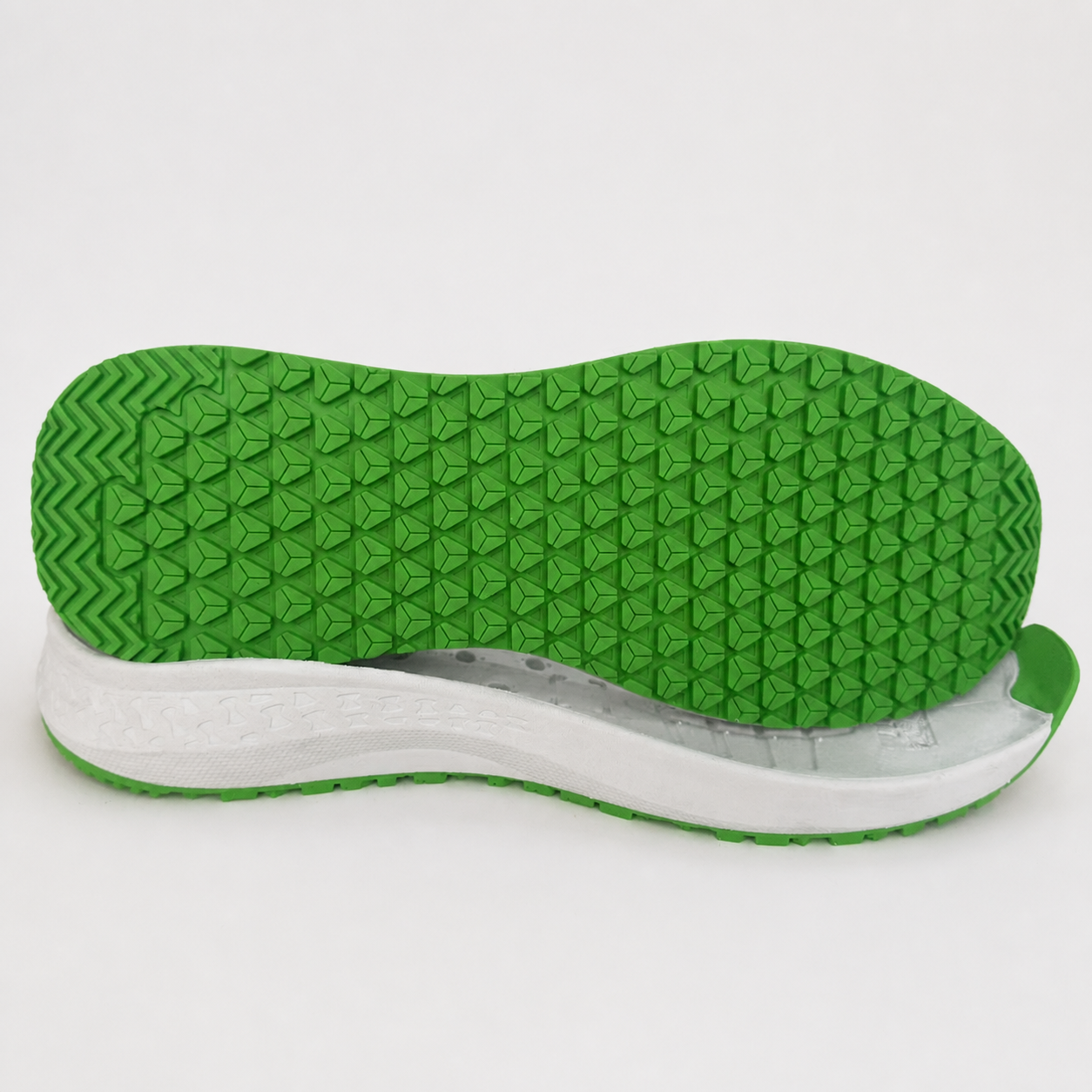
A safety shoe outsole can pass a standard slip resistance test and still perform differently in real-world conditions. This does not necessarily mean that the test result is wrong or that the outsole is defective.
For safety footwear manufacturers, importers, distributors, and brands, understanding the difference between laboratory slip resistance performance and real-world traction is essential.
So, why can a shoe slip even when its outsole has passed a slip resistance test?
The answer is that slip resistance is influenced by much more than the outsole material alone.
Standardized slip resistance tests are designed to provide repeatable and comparable results.
Depending on the test method, the outsole may be tested against a specified surface under controlled conditions, such as:
A defined test surface
A specified contaminant or lubricant
Controlled pressure
Controlled sliding speed
A specified contact angle
A defined test temperature
A standardized test procedure
This means a passing test result demonstrates that the outsole met the requirements under the tested conditions.It does not mean that the shoe will have the same coefficient of friction on every floor, under every temperature, with every contaminant, or for every user.This distinction is particularly important for safety shoes used in factories, warehouses, construction sites, kitchens, hospitals, and outdoor environments.
One of the most important factors affecting slip resistance is the floor itself.
A safety shoe outsole may perform well on one surface but differently on another.
Common workplace surfaces include:
Ceramic tile Concrete Steel Stainless steel Painted floors Epoxy floors Stone Wet concrete Smooth industrial floors
Surface roughness, hardness, texture, cleanliness, and contamination can all affect the interaction between the outsole and the ground.
Therefore, a shoe that passes a laboratory test should not automatically be considered equally slip-resistant on every type of flooring.
A dry floor and a contaminated floor are completely different environments for an outsole.
Water can form a thin film between the outsole and the floor. Oil, grease, detergent, mud, dust, and other contaminants can further reduce traction.
For example, a tread pattern designed primarily for dry surfaces may not perform as well in an oily industrial environment.
For safety footwear, outsole design should therefore consider the actual working environment, rather than relying only on a general slip resistance test.
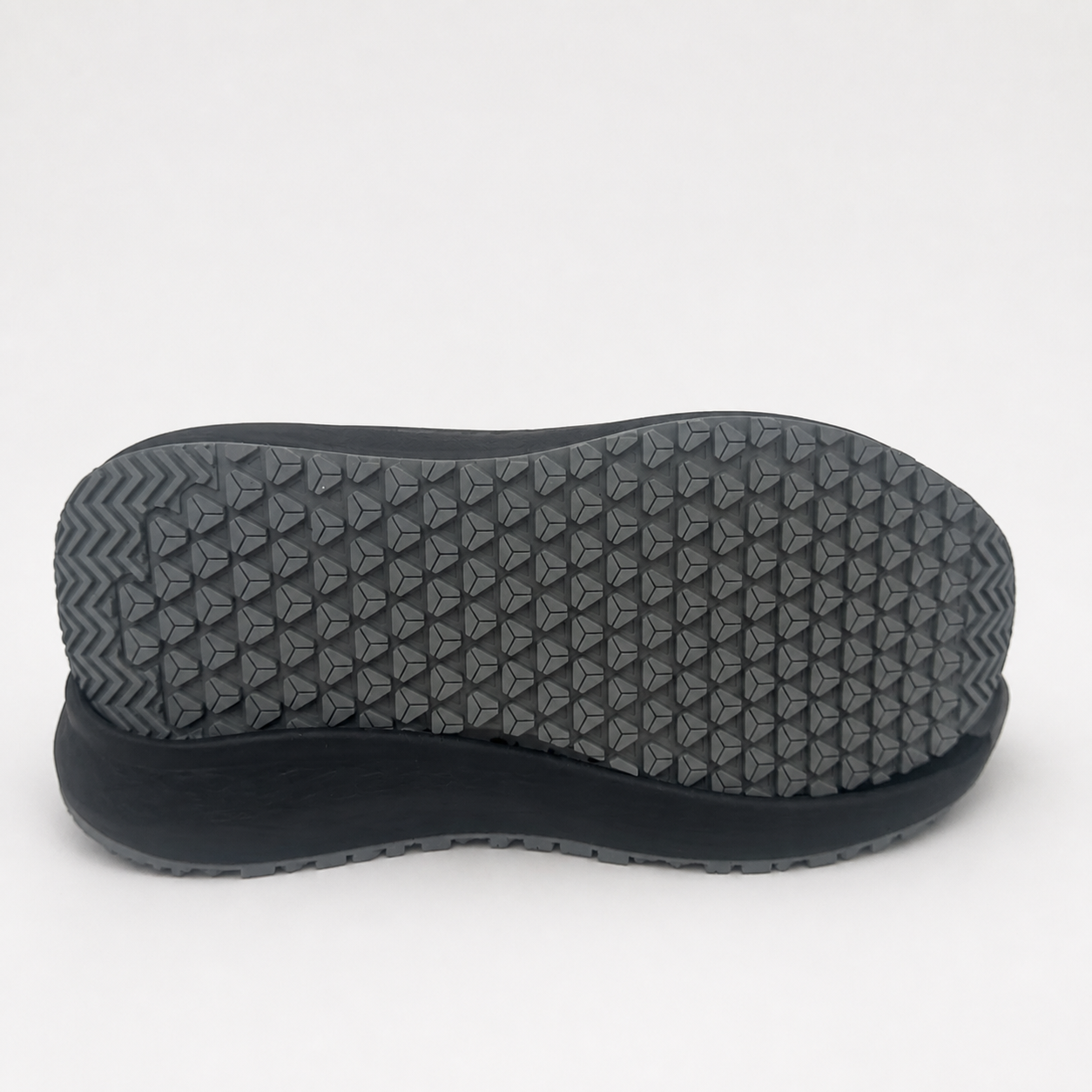
Slip resistance is not determined only by the rubber, PU, TPU, TPR, or other outsole material.
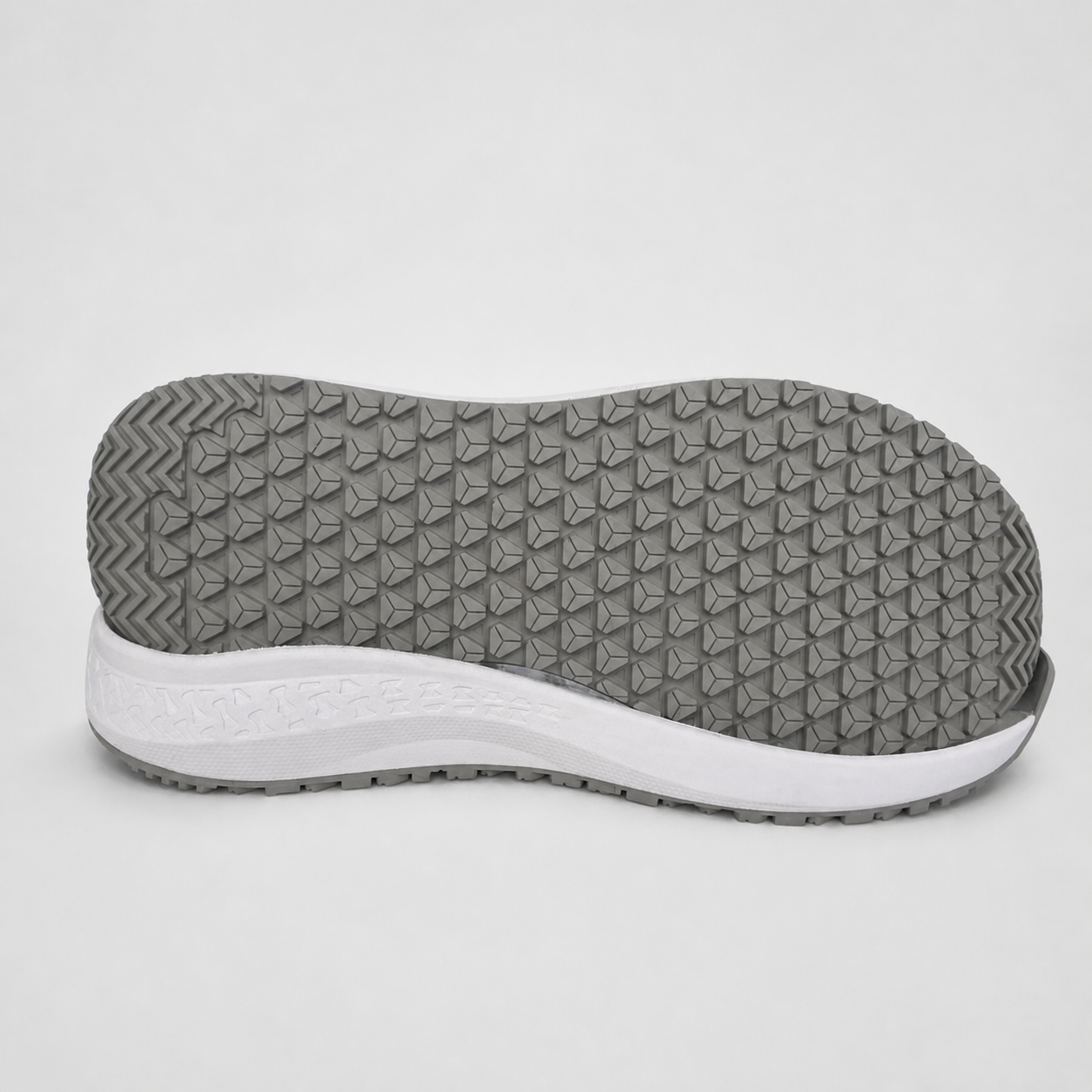
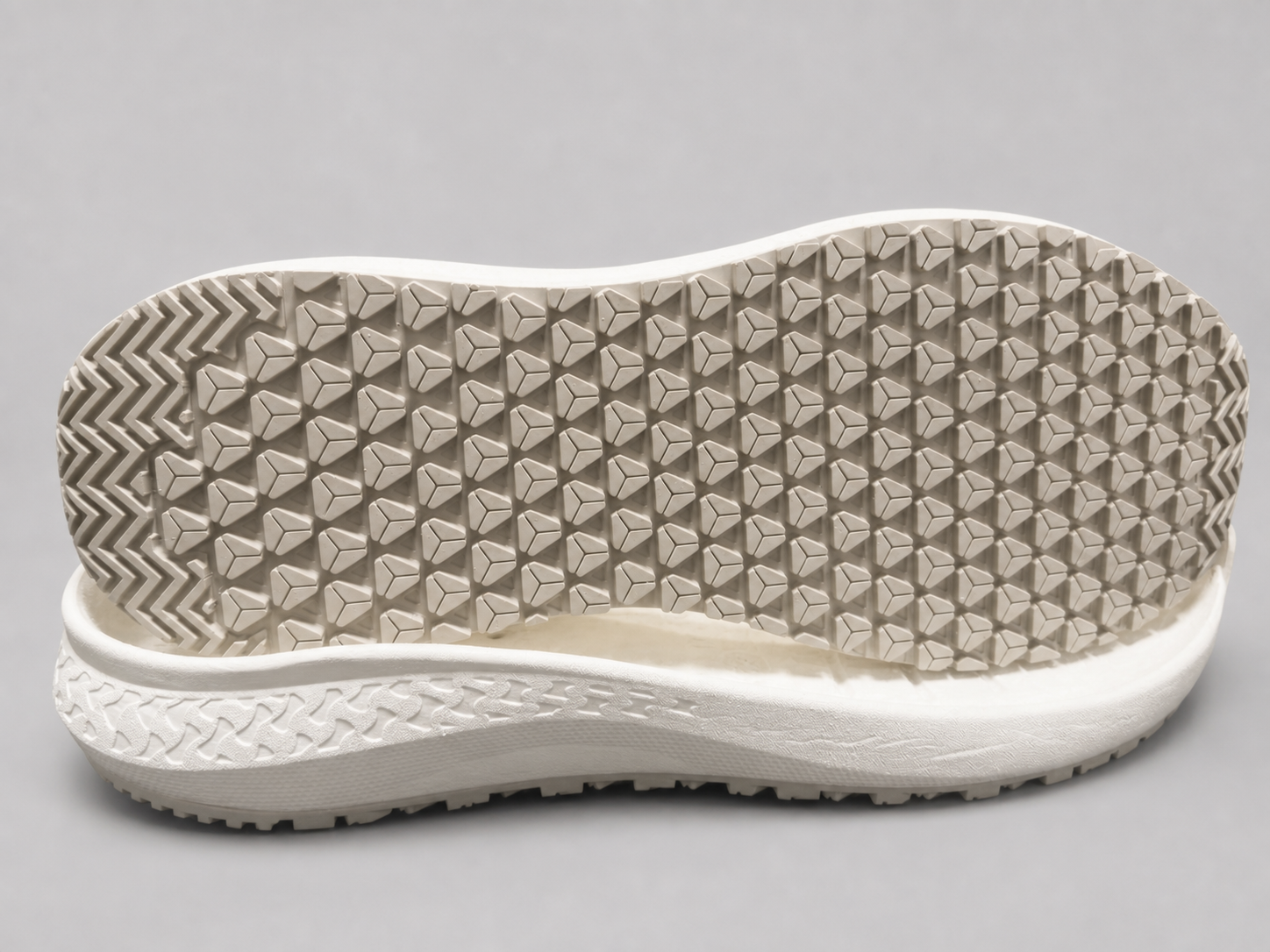
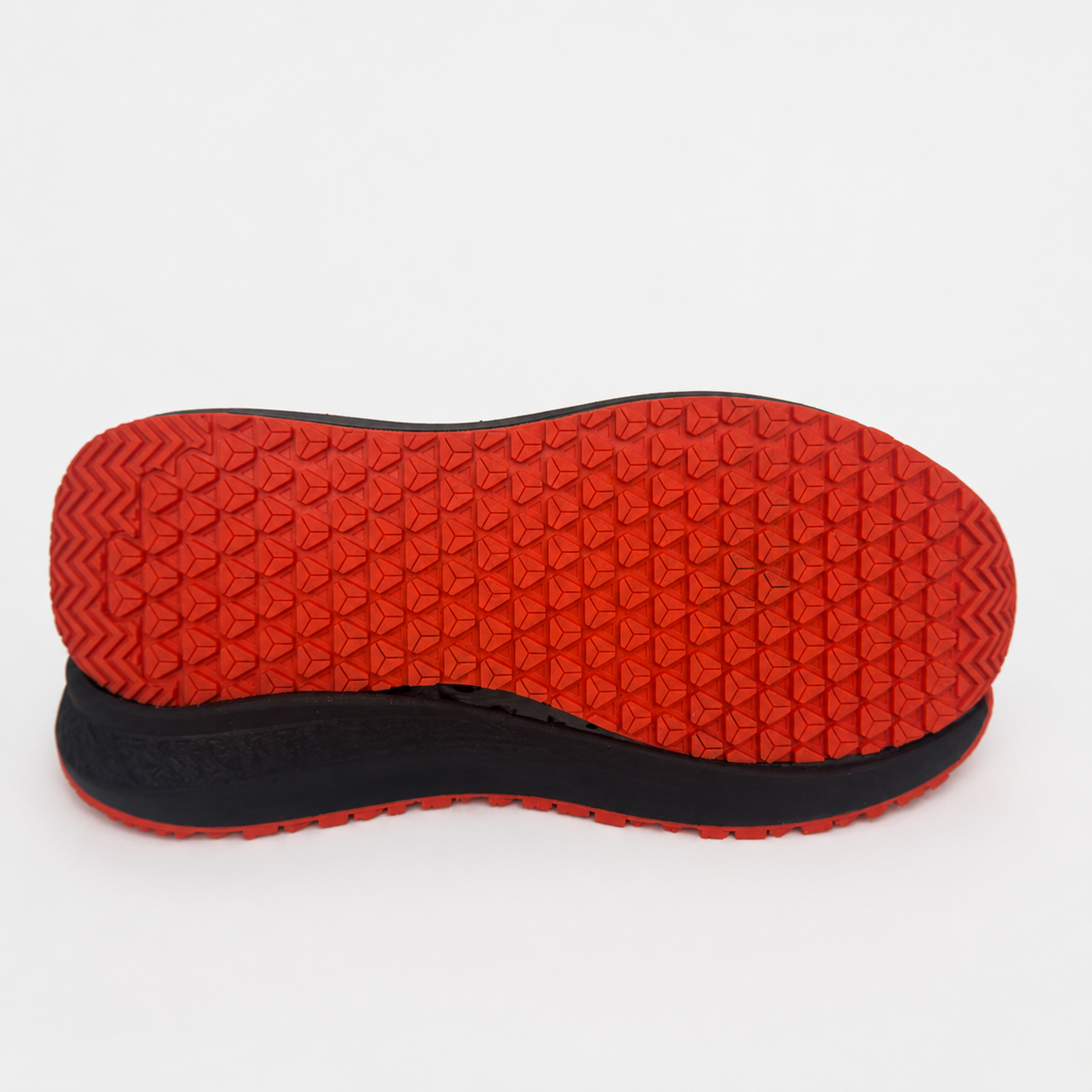
The tread pattern is equally important.
A good slip-resistant outsole may need to provide:
Effective water evacuation Good contact with the floor Sufficient tread depth Stable edges Appropriate groove spacing Resistance to clogging Good flexibility during walking
The geometry of the tread can determine how efficiently water, oil, mud, and other contaminants are removed from the contact area.
This is why two outsoles made from similar materials can have noticeably different traction performance.
Outsole hardness is another factor that should be considered.
If an outsole is too hard, it may have less ability to conform to certain floor irregularities.
If it is too soft, other problems may occur, such as excessive wear, deformation, or tread clogging.
The ideal hardness depends on the application, outsole material, tread design, temperature, and expected working environment.
For this reason, outsole development should consider material + hardness + tread geometry + application as a complete system.
A laboratory test is normally performed on a specific test specimen under defined conditions.
However, the performance of a shoe can change after it has been worn for weeks or months.
As the outsole wears:Tread depth decreases Sharp tread edges become rounded Drainage channels become less effective Contact geometry changes The outsole may become smoother Heavy wear can therefore reduce the traction available to the user.
For safety footwear, it is important to evaluate not only the initial performance of the outsole but also its expected durability during actual use.
Another common misunderstanding is to evaluate only the outsole.
In reality, the complete footwear system can affect how a person interacts with the floor.
Factors can include:Outsole design Outsole material Midsole structure Shoe flexibility Heel geometry Footwear weight Fit Walking pattern User movement Load distribution
For example, a worker carrying a heavy load may place substantially different forces on the outsole compared with a person walking normally.
The same outsole can therefore experience different traction conditions depending on how the footwear is being used.
Temperature is another factor that should not be ignored.
Different outsole materials respond differently to temperature changes.
At low temperatures, some materials can become harder and less flexible. At high temperatures, some materials can become softer.
This can influence the way the outsole contacts the floor.
If the footwear is intended for cold storage, outdoor winter use, hot industrial environments, or other extreme conditions, these conditions should be considered during outsole material selection and testing.
This is one of the most important points for footwear buyers and manufacturers.
Slip-resistant does not mean slip-proof.
No outsole can guarantee that a wearer will never slip.
The purpose of slip resistance testing is to evaluate outsole performance under defined test conditions. It is not a guarantee against every possible slip-and-fall accident.
Real-world slip risk depends on many variables, including:
Outsole + Floor + Contamination + Temperature + Wear + Walking Conditions + User Behavior
This is why safety footwear manufacturers should avoid describing a product as completely “slip-proof.”
Instead, technical claims should accurately reflect the applicable test method and test conditions.
This situation can be frustrating for both footwear brands and outsole manufacturers.
If a customer reports that workers slipped while the outsole has passed a laboratory test, the correct response is not simply to conclude that either the customer or the laboratory is wrong.
A technical investigation should first collect additional information.
Useful information includes:
Product Information
Exact outsole model Material Hardness Production batch Shoe size Manufacturing date Tread design
Usage Information
Where the shoe was used Type of flooring Dry or wet condition Presence of oil or grease Presence of detergent or chemicals Temperature Frequency of use
Product Condition
New or worn outsole Approximate wearing time Tread wear Damage or deformation Contamination on the outsole
Evidence
Photos and videos of the actual outsole can be extremely useful.
If possible, manufacturers should also obtain information about:
Number of affected pairs Number of users reporting the problem Whether the problem occurred in the same location Whether the problem occurred under the same conditions Whether different shoe sizes were affected
This information can help determine whether the problem is related to the outsole itself, the footwear construction, the working environment, or a combination of factors.
For a new safety shoe project, the best approach is to consider slip resistance from the beginning of product development.
A footwear manufacturer can evaluate:
Material Selection
Choose an outsole material suitable for the intended application, such as rubber, PU, TPU, or TPR.
Tread Design
Optimize grooves, edges, contact areas, drainage channels, and tread depth.
Hardness
Select an appropriate hardness according to the working environment and material characteristics.
Environmental Conditions
Consider whether the shoe will be used on:
Wet floors Oily floors Concrete Ceramic Metal Outdoor surfaces Cold environments High-temperature workplaces
Laboratory Testing
Use an appropriate standardized test method to evaluate and compare outsole performance.
Real-World Evaluation
Where possible, conduct field trials under the actual conditions in which the footwear will be used.
This combination of laboratory testing and practical evaluation provides a much more complete understanding of outsole performance.
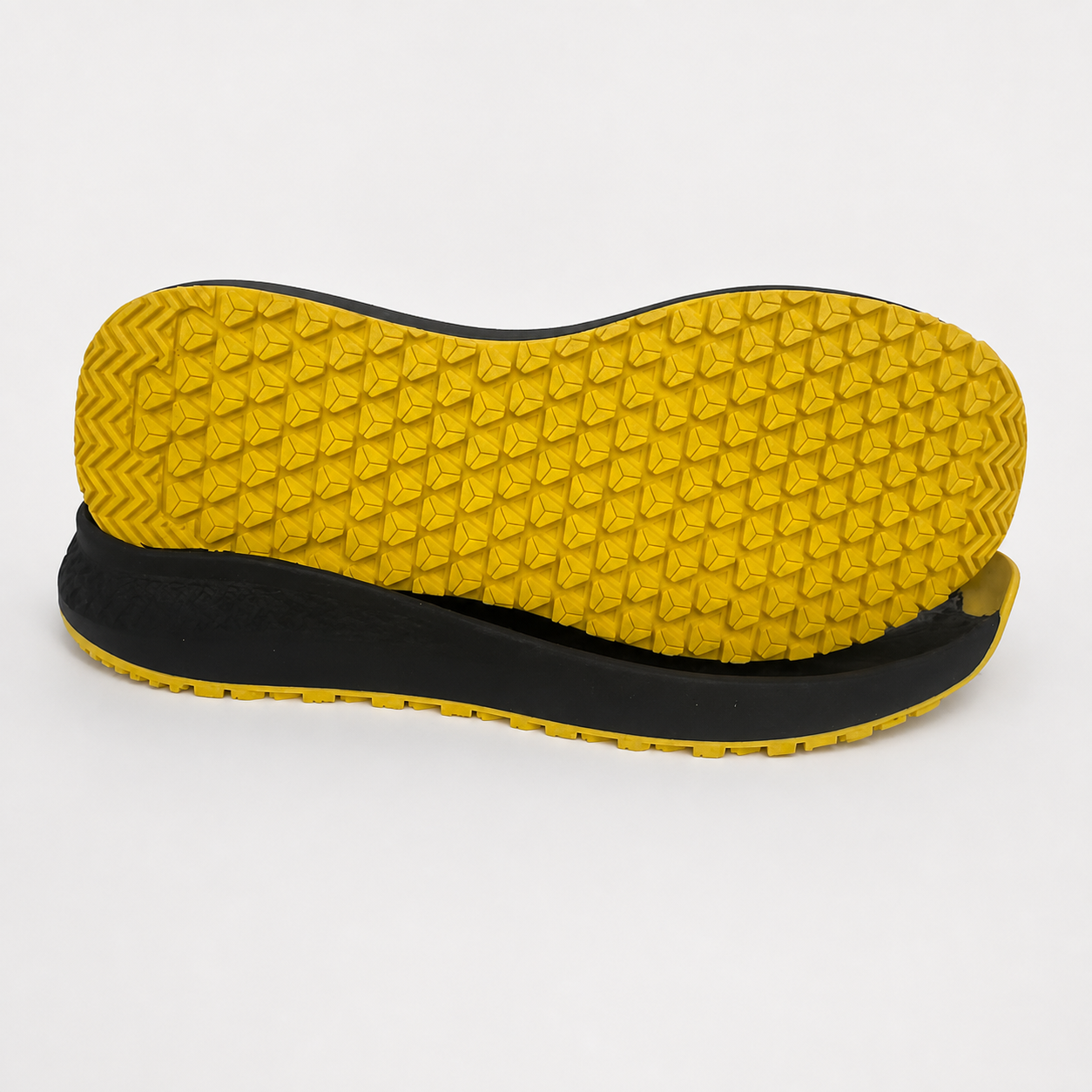
For safety footwear brands and distributors, choosing an experienced outsole manufacturer can make a significant difference.
A capable outsole supplier should be able to provide more than a tread pattern.
The development process should ideally include:
Concept → 3D Design → Material Selection → Mold Development → Prototype → Laboratory Testing → Wear Testing → Optimization → Mass Production
An experienced manufacturer can help customers evaluate outsole material, tread design, hardness, production process, and testing requirements before moving into mass production.
This is particularly important for safety shoes, work boots, industrial footwear, and other products where traction is a critical performance requirement.
Conclusion
A safety shoe outsole can pass a slip resistance test and still perform differently in actual working environments.
The reason is simple: laboratory testing evaluates performance under specific conditions, while real-world footwear is exposed to many changing variables.
Floor type, water, oil, contamination, temperature, tread design, outsole hardness, wear, footwear construction, and user behavior can all influence traction.
Therefore, the best approach is not to ask only:
“Did the outsole pass the slip resistance test?”
A better question is:
“Is this outsole designed, tested, and validated for the actual conditions in which the footwear will be used?”
For footwear brands and safety shoe manufacturers developing custom outsoles, working with an experienced OEM/ODM outsole manufacturer can help integrate material selection, tread design, mold development, testing, and mass production into one development process.
A properly engineered outsole does not simply aim to pass a laboratory test. It aims to deliver reliable performance for the specific footwear application and working environment.

Q1: Why can a safety shoe slip even when the outsole has passed a slip resistance test?
A: A slip resistance test evaluates outsole performance under specific controlled conditions, such as a defined test surface, contaminant, pressure, sliding speed, and temperature. A passing result demonstrates that the outsole met the requirements under those tested conditions—but it does not guarantee the same performance on every floor, with every contaminant, at every temperature, or for every user. Real-world conditions are far more varied than laboratory settings.
Q2: Does a slip-resistant test result mean the shoe is completely slip-proof?
A: No. Slip-resistant does not mean slip-proof. No outsole can guarantee that a wearer will never slip. The purpose of slip resistance testing is to evaluate outsole performance under defined conditions, not to guarantee against every possible slip-and-fall accident. Real-world slip risk depends on many variables, including the outsole, floor, contamination, temperature, wear, walking conditions, and user behavior.
Q3: What factors can cause the same outsole to perform differently in real-world conditions?
A: Many factors can influence real-world traction, including:
Floor type: Different surfaces (ceramic, concrete, steel, epoxy, etc.) have different roughness, texture, and hardness
Contaminants: Water, oil, grease, mud, dust, and chemicals can all reduce traction
Temperature: Materials can become harder in cold environments or softer in hot environments
Tread design: The geometry of grooves, edges, and drainage channels affects how contaminants are evacuated
Outsole hardness: Can affect how the sole conforms to floor irregularities
Wear: Tread depth decreases and edges become rounded over time, reducing traction
User behavior: Walking pattern, load distribution, and movement all affect traction
Q4: Why might a safety shoe perform well on a dry floor but poorly on a wet or oily floor?
A: Water, oil, grease, and other contaminants can form thin films between the outsole and the floor, significantly reducing friction. A tread pattern designed primarily for dry surfaces may not effectively evacuate liquids or channel contaminants away from the contact area. This is why outsole development should consider the actual working environment rather than relying only on a general slip resistance test.
Q5: Does outsole material alone determine slip resistance?
A: No. Slip resistance is influenced by much more than the outsole material. The tread pattern is equally important—factors such as water evacuation, tread depth, edge geometry, groove spacing, and resistance to clogging all affect traction. Two outsoles made from similar materials can have noticeably different traction performance depending on their tread design.
Q6: Does outsole hardness affect slip resistance?
A: Yes. If an outsole is too hard, it may have less ability to conform to floor irregularities, reducing contact area. If it is too soft, other problems may occur, such as excessive wear, deformation, or tread clogging. The ideal hardness depends on the application, outsole material, tread design, temperature, and expected working environment.
Q7: Can a new safety shoe and a worn safety shoe perform differently?
A: Yes. As the outsole wears over time, tread depth decreases, sharp tread edges become rounded, drainage channels become less effective, contact geometry changes, and the outsole may become smoother. Heavy wear can significantly reduce the traction available to the user. This is why it is important to evaluate not only the initial performance of the outsole but also its expected durability during actual use.
Q8: Does the complete shoe affect slip performance, not just the outsole?
A: Yes. The complete footwear system can affect how a person interacts with the floor. Factors such as midsole structure, shoe flexibility, heel geometry, footwear weight, fit, walking pattern, and load distribution all influence traction. For example, a worker carrying a heavy load places substantially different forces on the outsole compared with a person walking normally.
Q9: How does temperature affect outsole slip resistance?
A: Different outsole materials respond differently to temperature changes. At low temperatures, some materials can become harder and less flexible. At high temperatures, some materials can become softer. This can influence how the outsole contacts the floor. For footwear used in cold storage, outdoor winter conditions, hot industrial environments, or other extreme conditions, temperature effects should be considered during material selection and testing.
Q10: What information should be collected when a customer reports slipping issues?
A: A technical investigation should collect:
Product information: Outsole model, material, hardness, production batch, shoe size, manufacturing date, tread design
Usage information: Where the shoe was used, floor type, wet/dry conditions, presence of oil/grease/detergent/chemicals, temperature, frequency of use
Product condition: New or worn, approximate wearing time, tread wear, damage or deformation, contamination
Evidence: Photos and videos of the actual outsole
This information helps determine whether the problem is related to the outsole, construction, working environment, or a combination of factors.
Q11: How can manufacturers improve safety shoe slip resistance?
A: A systematic approach includes:
Selecting materials suitable for the intended application (rubber, PU, TPU, TPR, etc.)
Optimizing tread design—grooves, edges, drainage channels, and tread depth
Choosing appropriate hardness for the working environment
Considering environmental conditions—wet floors, oily floors, cold environments, high temperatures
Conducting both laboratory testing and real-world field trials
Using the combination of lab testing and practical evaluation for a complete understanding
Q12: What should I look for in a safety shoe outsole manufacturer?
A: Look for a manufacturer that can provide:
Multiple material options
Professional mold development
Laboratory testing support
Wear testing capability
Experience with safety footwear standards
Technical support during development
Understanding of different working environments
An experienced manufacturer can help evaluate outsole material, tread design, hardness, production process, and testing requirements before moving into mass production.
Q13: What is the most important takeaway about safety shoe slip resistance?
A: The most important takeaway is that a passing slip resistance test result is not a guarantee against slipping in every environment. The best approach is to ask not only "Did the outsole pass the test?" but rather "Is this outsole designed, tested, and validated for the actual conditions in which the footwear will be used?" A properly engineered outsole should deliver reliable performance for the specific footwear application and working environment.


