
Views: 4 Author: Site Editor Publish Time: 2026-07-31 Origin: Site


EVA (Ethylene Vinyl Acetate) soles are widely used in casual shoes, athletic shoes, slippers, and safety shoes due to their lightweight, softness, and excellent cushioning properties. For products using injection EVA soles, many overseas customers encounter a problem: the soles are dimensionally correct during production, but shrink or change size to varying degrees after shipping to certain countries.
In reality, this is not entirely a manufacturing process issue, but rather a result of the combined effects of EVA material hardness, formulation, and the environment in which they are used.

I. Why Do EVA Soles Shrink?
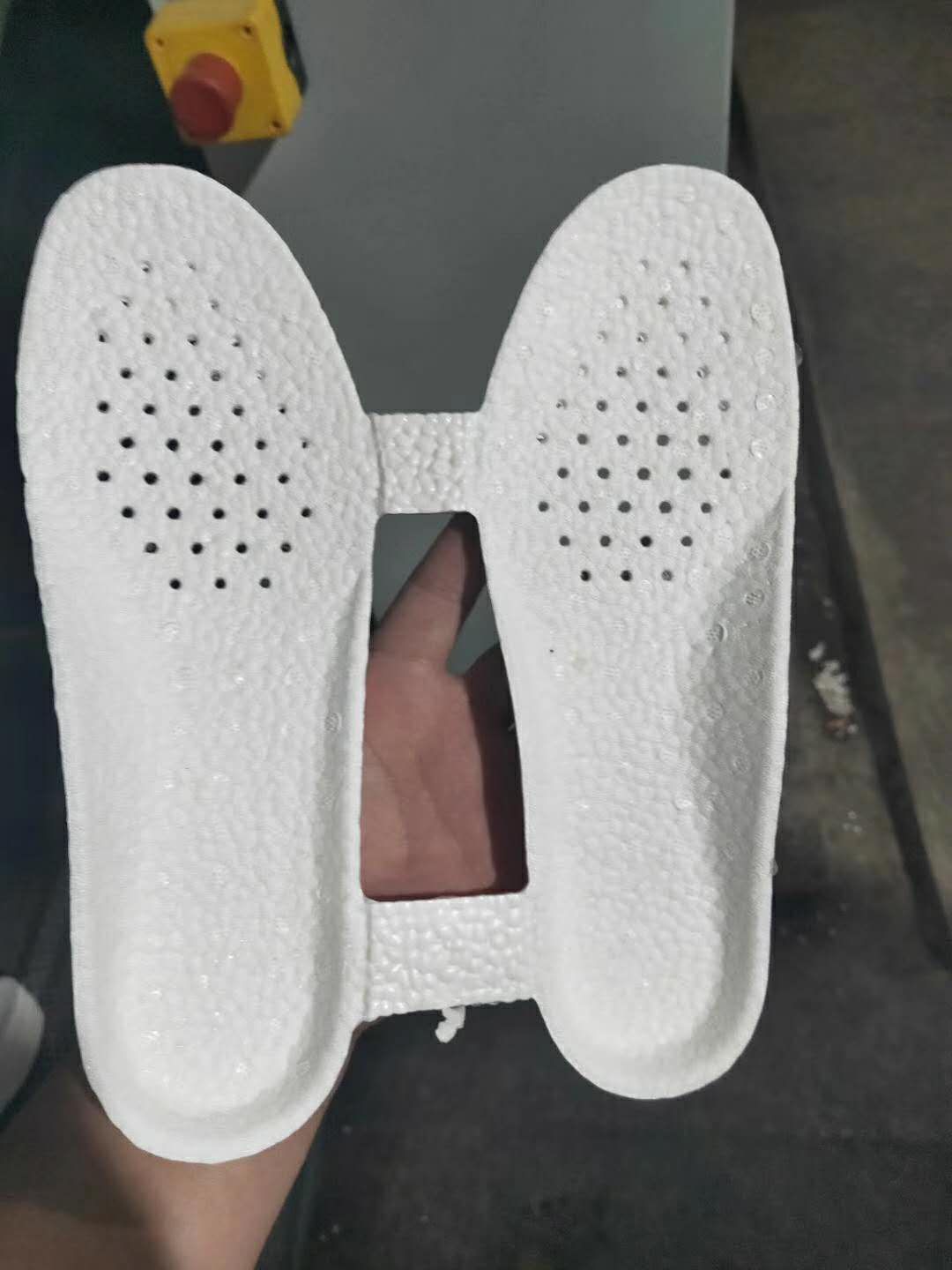
EVA is a foamed material composed of numerous closed-cell air bubbles.
During production, the sole undergoes high-temperature foaming to form a stable structure, but this structure is not absolutely fixed. When the sole is exposed to specific environments for extended periods, the internal air bubbles undergo changes, leading to dimensional variations.
The main factors affecting shrinkage include:
* Ambient temperature
* Humidity changes
* Sea freight time
* Warehouse storage conditions
* EVA material hardness
* Foaming ratio
Among these, **material hardness is the most easily overlooked, yet also one of the most important factors.**
II. Why does a softer material have a higher risk of shrinkage?
Many brands aim for a softer feel in their shoe soles, therefore requiring:
* Shore temperature 45°
* Shore temperature 50°
* Shore temperature 55°
To achieve a softer feel, it's necessary to:
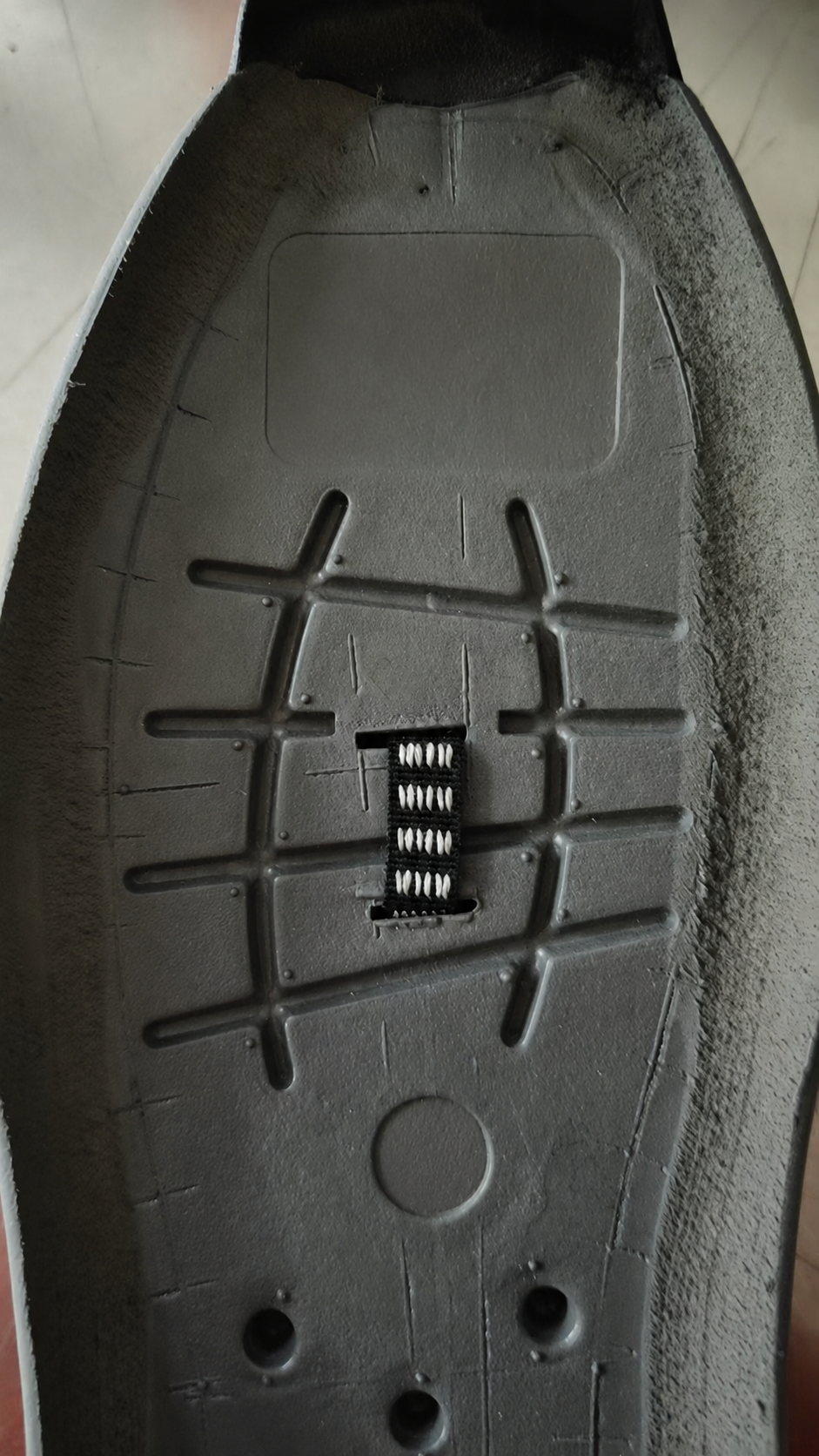
* Increase the foaming ratio
* Reduce material density
* Improve elasticity
However, at the same time:
* Larger internal pores
* Thinner cell walls
* Decreased structural stability
Therefore:
The softer the EVA sole, the more prone it is to shrinkage during transportation.**
Especially in:
* High temperatures in containers
* Long-term sea freight
* Long-term warehouse storage
These will all cause dimensional changes.
III. Why is shrinkage more likely in some foreign countries?
The climate conditions vary greatly between countries.
For example: Middle East
* Summer container temperatures can reach over 60℃
* EVA is continuously heated
* The material continues to release internal stress
* Dimensions tend to shrink.
For example:
* Saudi Arabia
* UAE
* Kuwait
Africa
Many countries experience high temperatures year-round.
For example:
* Nigeria
* Kenya
* Tanzania
After about two months of sea freight and storage in local warehouses, the probability of shrinkage in shoe soles increases significantly.
South American countries
For example:
* Brazil
* Peru
Significant diurnal temperature variations in some regions also affect the dimensional stability of EVA.
IV. How does hardness affect dimensional stability?
Generally speaking:
| EVA Hardness | Dimensional Stability | Comfort |
| Shore C 45 | ★★☆☆☆ | Very Soft |
| Shore C 50 | ★★★☆☆ | Soft |
| Shore C 55 | ★★★★☆ | Balanced |
| Shore C 60 | ★★★★★ | Stable |
Under normal circumstances:
Increasing the hardness by about 5 degrees will significantly improve the dimensional stability of the sole. **
Of course, final testing based on the formula is still necessary.
V. Why do OEM factories recommend against blindly pursuing ultra-softness?
Many customers hope:
"The softer, the more comfortable."
In reality, for export products, softer is not necessarily better.
An experienced shoe sole factory typically considers the following factors when developing new products:
* Customer's sales country
* Shipping time
* Warehousing conditions
* Usage environment
* Sole structure
* Foaming ratio
* Material hardness
For example:
If the product is exported to:
* Africa
* Middle East
* High-temperature regions of South America
Engineers usually recommend:
Increasing the hardness by 2-5 degrees to achieve better dimensional stability without significantly affecting wearing comfort.
This approach effectively reduces:
* Sole shrinkage
* Size deviation
* Difficulty in upper bonding
* Customer complaints
* Rework costs
VI. How to reduce the risk of EVA sole shrinkage?
To ensure product quality, the following measures are recommended:
1. Choose an appropriate EVA hardness**, avoiding blindly pursuing an ultra-soft feel.
2. Optimize the foaming formula** to improve material stability.
3. Perform sufficient aging** to release some internal stress in the sole before leaving the factory.
4. Simulate high-temperature and long-term storage tests** to verify dimensional stability in advance.
5. Adjust material solutions according to target markets**, developing appropriate hardness and formulations for different countries.
Conclusion
A good EVA sole not only needs to be lightweight, soft, and comfortable, but also needs to ensure dimensional stability during long-term use. For products exported to high-temperature, high-humidity, or long-distance sea transport regions, the appropriate selection of material hardness is particularly important.
Excellent sole development is not simply about pursuing the lowest possible hardness, but about finding the optimal balance between **comfort, durability, and dimensional stability**. Only by combining the climate, transportation conditions, and product positioning of the target market with scientifically developed EVA formulations and hardness solutions can we ensure that soles maintain stable performance in different regions around the world, bringing a more reliable product experience to brands and consumers.
Q1: Why do EVA soles shrink after shipping?
A: EVA is a foamed material with a closed-cell structure. During production, it is expanded at high temperatures to form a stable structure, but this structure is not absolutely fixed. When exposed to high temperatures, humidity changes, prolonged sea freight, or warehouse storage, the internal bubbles undergo structural changes, leading to dimensional shrinkage.
Q2: Does softer EVA shrink more easily?
A: Yes. Softer EVA (e.g., Shore C 45°–50°) requires a higher foaming ratio and lower density, resulting in larger internal pores and thinner cell walls. This reduces structural stability, making the sole more prone to shrinkage during transportation and storage.
Q3: Which regions have the highest risk of EVA sole shrinkage?
A: High-risk regions include:
Middle East: Saudi Arabia, UAE, Kuwait (container temperatures can exceed 60°C)
Africa: Nigeria, Kenya, Tanzania (year-round high temperatures)
South America: Brazil, Peru (significant diurnal temperature variations)
Q4: How does hardness affect dimensional stability?
A: Generally, higher hardness improves dimensional stability:
| Hardness | Stability | Comfort |
|---|---|---|
| Shore C 45° | ★★☆☆☆ | Very soft |
| Shore C 50° | ★★★☆☆ | Soft |
| Shore C 55° | ★★★★☆ | Balanced |
| Shore C 60° | ★★★★★ | Stable |
Increasing hardness by about 5 degrees significantly improves dimensional stability.
Q5: What hardness do OEM factories recommend for export products?
A: For products exported to high-temperature regions (Africa, Middle East, South America), engineers typically recommend increasing hardness by 2–5 degrees. This improves dimensional stability without significantly affecting wearing comfort.
Q6: Can shrinkage be completely eliminated?
A: While complete elimination is difficult due to the inherent nature of EVA foam, shrinkage risk can be significantly reduced through proper material selection, optimized formulation, sufficient aging treatment, and simulation testing for high-temperature conditions.
Q7: What testing should be done before mass production for export EVA soles?
A: Recommended tests include:
High-temperature aging tests
Simulated long-term storage tests
Dimensional stability tests under varying humidity
Shipping condition simulations (temperature cycling)
Q8: How long does it take for shrinkage to become noticeable?
A: Shrinkage typically becomes noticeable after prolonged exposure to heat or humidity—often during or after sea freight (approximately 1–2 months) or during extended warehouse storage in high-temperature regions.
Q9: Does shrinkage affect shoe assembly?
A: Yes. Shrinkage can cause dimensional mismatch between the sole and upper, making bonding difficult and potentially leading to delamination or quality issues during shoe assembly.
Q10: What is the best way to balance softness and dimensional stability?
A: The optimal approach is to find the right balance based on the target market. For high-temperature regions, choose slightly higher hardness (Shore C 55°–60°) with optimized foaming formulation. For temperate or domestic markets, softer compounds can be used with less risk.
Q11: Is shrinkage a manufacturing defect?
A: Not entirely. While manufacturing process control matters, shrinkage is largely a result of the combined effects of EVA material properties, formulation choices, and environmental conditions during shipping and storage. Proper material selection and testing can mitigate the risk.
Q12: Can shrinkage be reversed once it occurs?
A: Generally, no. Once EVA material undergoes permanent deformation, it cannot be restored to its original dimensions. Prevention through proper material selection and testing is the most effective strategy.
Q13: What should buyers ask suppliers about EVA sole shrinkage?
A: Key questions for suppliers:
What hardness do you recommend for my target market?
Have you conducted high-temperature aging and dimensional stability tests?
What is your foaming ratio and density for this style?
How do you control consistency across production batches?
Do you offer modified formulations for high-temperature export regions?
Q14: Does adding recycled EVA content affect shrinkage risk?
A: Yes, recycled EVA content can affect material consistency and dimensional stability. It may increase shrinkage risk if not properly formulated. Always validate recycled content formulations through comprehensive testing.
Q15: What's the key takeaway for footwear brands?
A: Excellent EVA sole development is not about pursuing the lowest possible hardness—it's about finding the optimal balance between comfort, durability, and dimensional stability. By combining target market climate, shipping conditions, and product positioning with scientifically developed EVA formulations, brands can ensure consistent performance worldwide.


