
Views: 6 Author: Site Editor Publish Time: 2026-09-15 Origin: Site


With the growth of the athletic shoe, performance shoe, and personalized footwear market, footwear brands are increasingly demanding rapid prototyping, complex structures, and customized soles. 3D printing technology is becoming an important complement to traditional sole development.
Through 3D modeling and additive manufacturing, 3D printed soles can quickly produce prototypes without the need for immediate traditional mold making, providing footwear brands, shoe factories, and design companies with more flexible OEM/ODM development solutions.
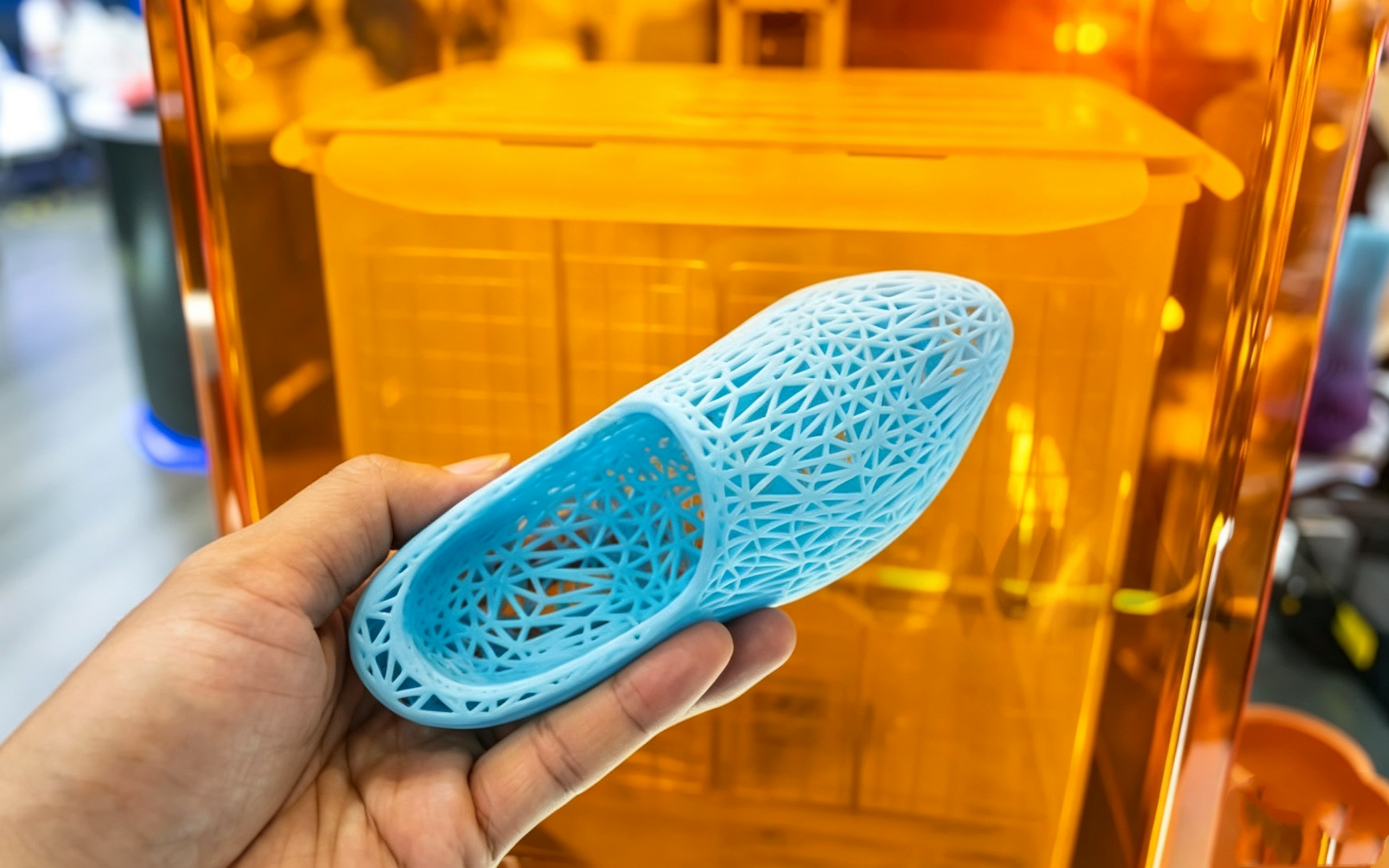
A 3D printed sole is a sole or sole component manufactured layer by layer from a digital 3D model.
Traditional sole development typically requires:
3D modeling → CNC → Mold development → T1 trial molding → Mold modification → Sample confirmation
3D printing simplifies the early stages:
3D modeling → 3D printing → Fitting tests → Design optimization
Therefore, it is particularly suitable for new product development and design verification.
Before formal mold development, 3D printing can quickly create shoe sole samples, allowing for early confirmation of dimensions, appearance, and structure.
If design modifications are needed, simply adjust the 3D model and reprint, eliminating the need for frequent modifications to traditional molds.
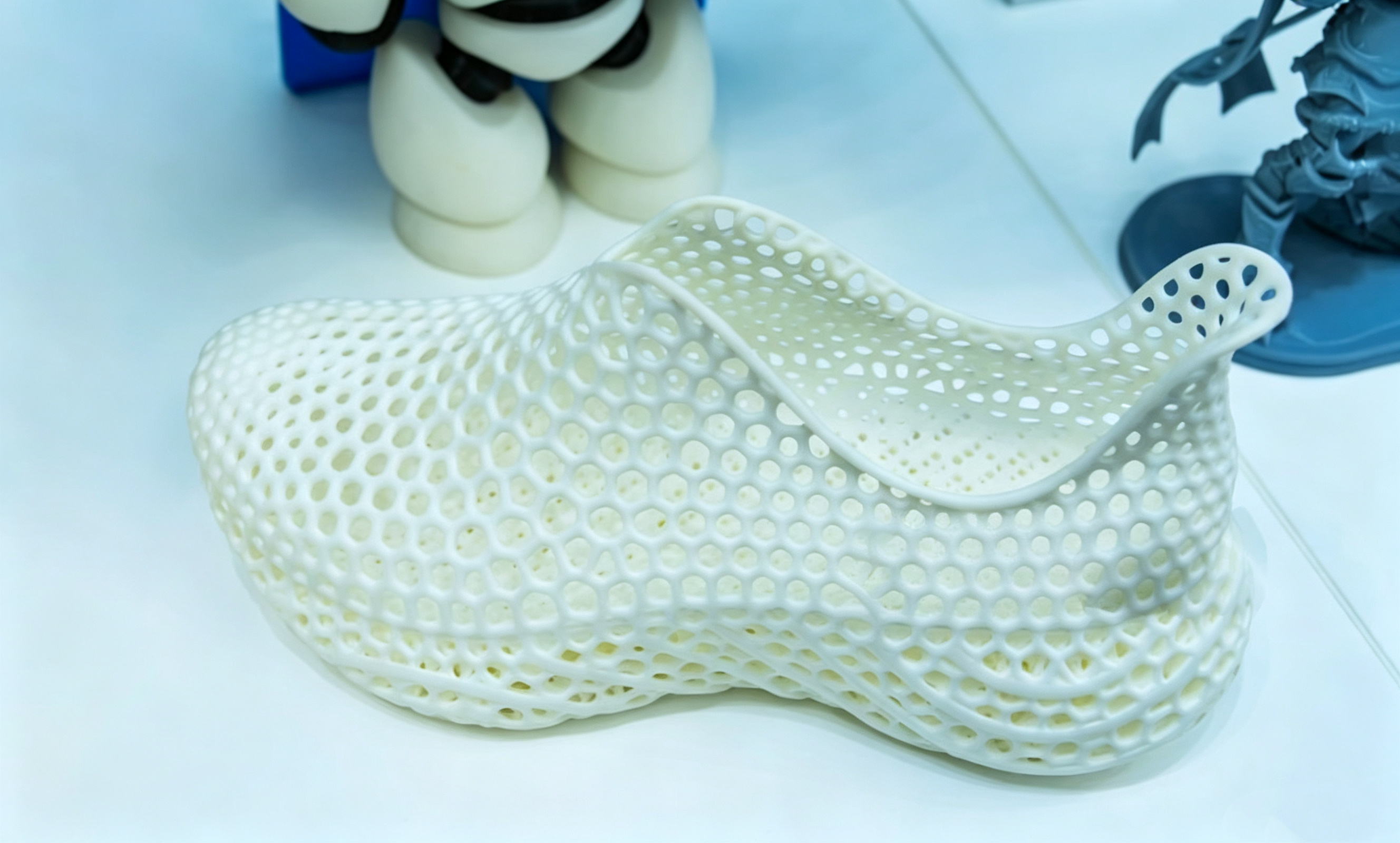
3D printing can achieve structures difficult to process using traditional methods, such as:
Honeycomb structures
Lattice structures
Hollow structures
Multi-layer cushioning structures
Parametric support structures
Therefore, it is ideal for the development of athletic shoes, running shoes, and functional shoe soles.
Combining 3D scanning and digital modeling, the sole structure can be adjusted according to different foot shapes, pressure distributions, and usage requirements, providing a new development approach for custom shoe soles.
Different materials can be selected depending on the printing equipment and product requirements.
TPU: TPU has excellent elasticity, abrasion resistance, and tear resistance, making it suitable for shoe sole samples, functional structures, and athletic shoe component development.
TPE (thermoplastic elastomer) is soft and elastic, suitable for some shoe sole structures requiring flexibility.
Photosensitive Resin is primarily used for appearance and structural verification, such as sole patterns, dimensions, logos, and design models.
It's important to note that the material used for 3D printing samples is not necessarily the same as the material used for the final mass-produced sole. If the product is intended for long-term wear, performance tests such as abrasion resistance, slip resistance, bending, and compression are necessary depending on its intended use.
3D printing does not necessarily replace traditional sole manufacturing processes; both are better suited for different stages.
Therefore, for most shoe sole OEM/ODM projects, a more practical approach is:
3D printing for R&D and verification, and traditional processes for large-scale production.
Depending on the final product requirements, mass production can be achieved through processes such as EVA compression molding, rubber vulcanization, TPU/TPR injection molding, and PU molding.
A complete custom shoe sole project typically includes:
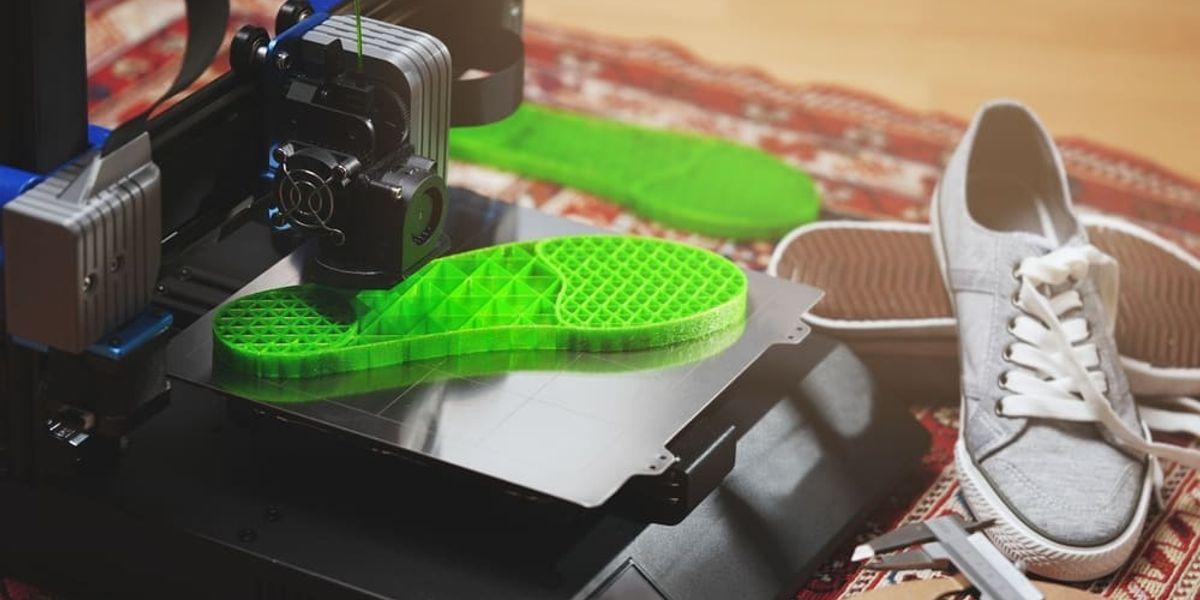
The client provides images, 2D drawings, 3D files, shoe sole samples, or shoe last information.
A shoe sole model is created based on shoe size, thickness, pattern, logo, and functional requirements.
A shoe sole prototype is quickly produced for size and structural verification.
The design is adjusted based on appearance, feel, flex, and last fit.
Performance tests include abrasion resistance, slip resistance, compression, and flexural strength, depending on the product's intended use.
After design confirmation, a suitable traditional production process is selected based on order quantity, materials, and performance requirements, and mold development and mass production commence.
3D printing is particularly suitable for:
Running Shoes
Sports Shoes
Outdoor Shoes
Functional Shoes
Custom Shoes
Limited Edition Shoes
New Shoe Sole Development. For new product projects requiring frequent design modifications, 3D printing significantly improves development flexibility.
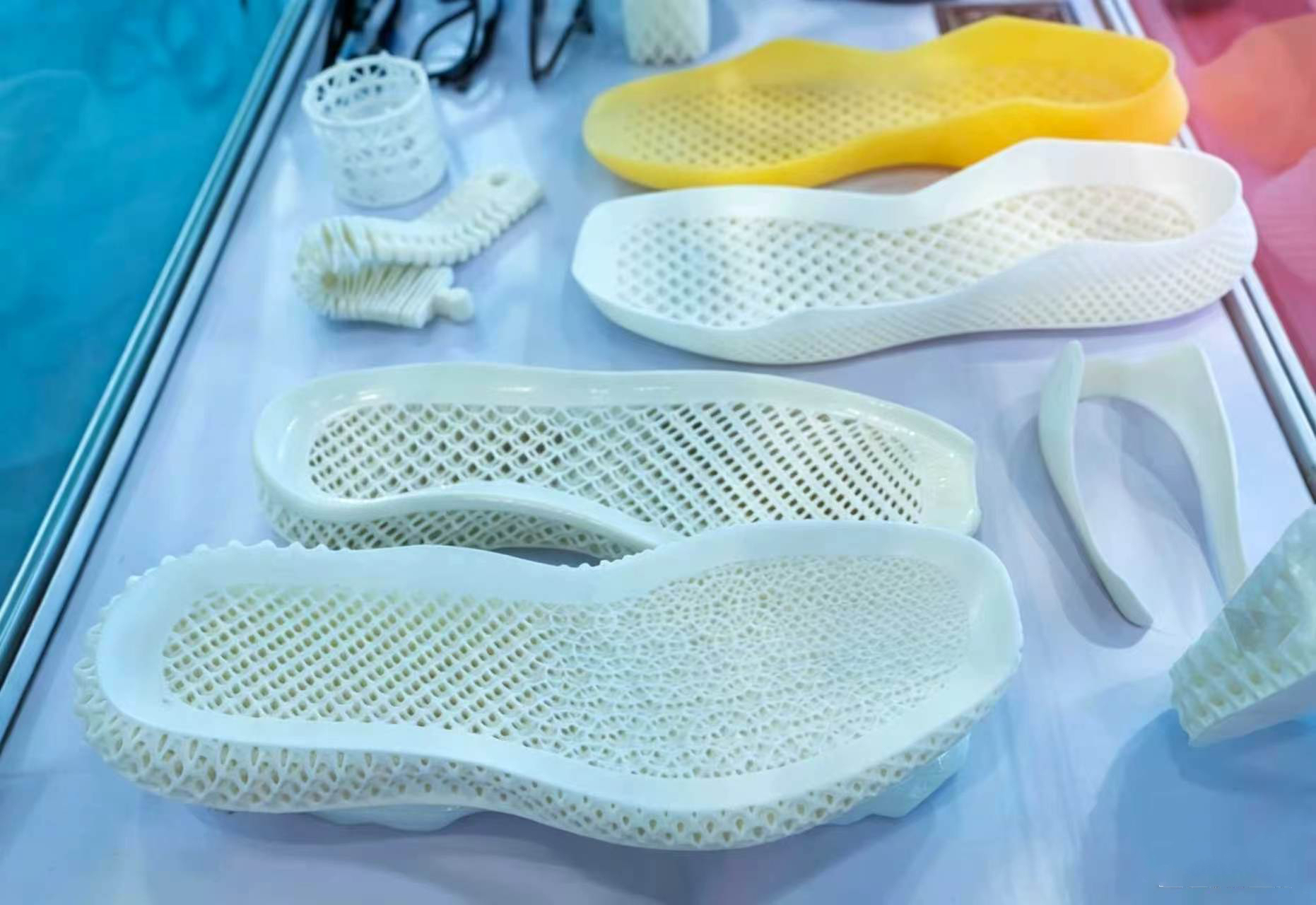
For footwear brands and manufacturers, 3D printing can be an integral part of the complete sole development process:
Design → 3D Modeling → 3D Printing → Prototype Testing → Mold Development → T1 Sample → Testing → Mass Production. Professional sole manufacturers can provide clients with one-stop OEM/ODM shoe sole development services, from 3D modeling and rapid prototyping to mold development and mass production.
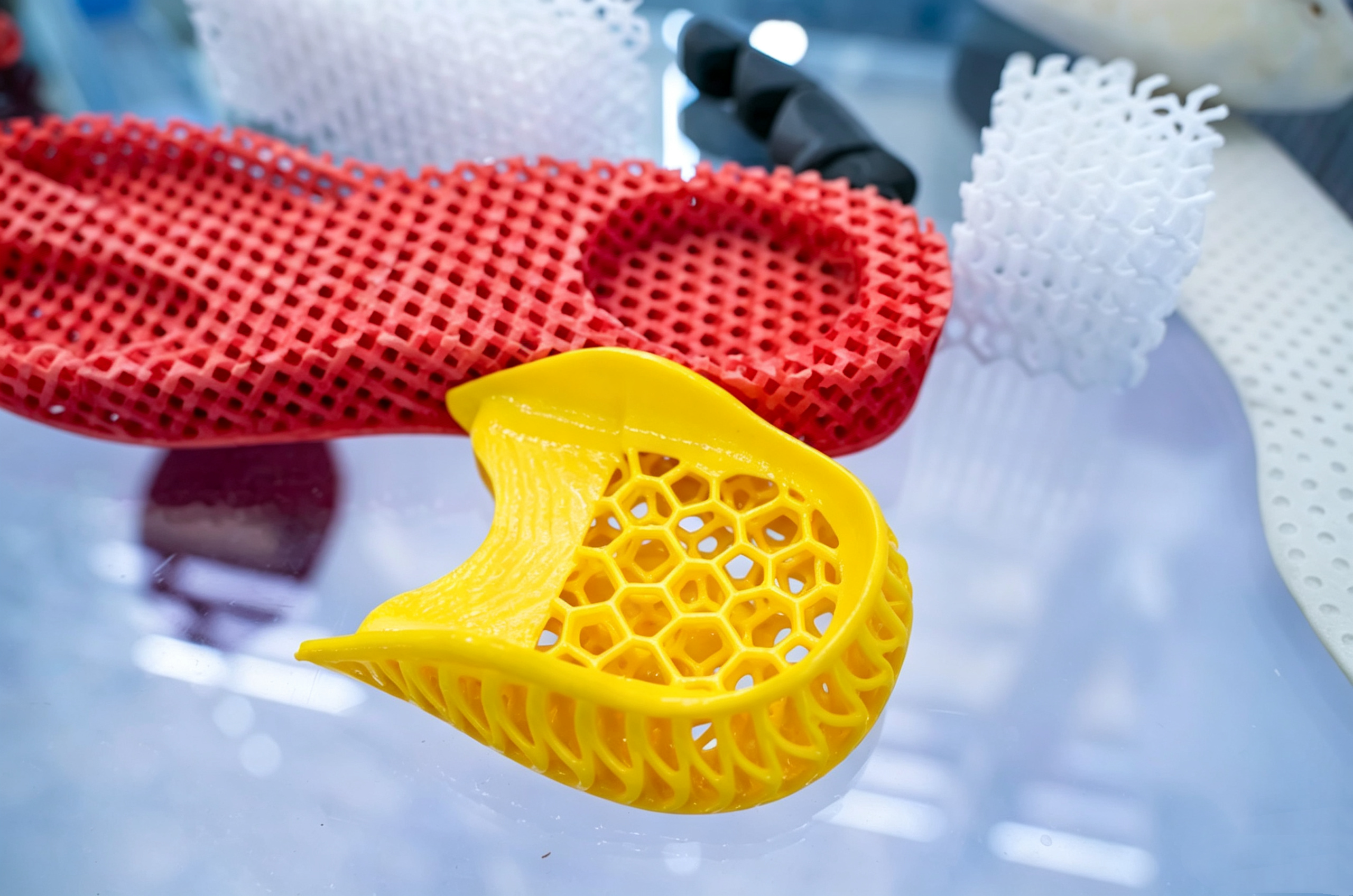
3D printing is changing the way traditional soles are developed. It helps brands and shoe factories validate designs faster, reduce upfront trial-and-error costs, and achieve more complex and personalized sole structures.
For new product development and customization projects, 3D printing is particularly suitable as a rapid prototyping technology before traditional mold development; for large-volume orders, it can be used to transition to mature EVA, rubber, TPU, TPR, or PU production processes after design validation.
If you are developing custom 3D printed shoe soles, sports shoe soles, or functional shoe soles, you can provide sole images, drawings, or 3D files. We can evaluate suitable materials, 3D printing solutions, and subsequent mass production processes based on your product requirements.
They can support rapid prototyping, checking sole dimensions and appearance, exploring complex structures and developing customized footwear before investing in production tooling.
Options include TPU, TPE and photosensitive resins, depending on the printer and project. The material should be selected for the purpose of the sample, such as flexible testing or appearance and dimensional checks.
A prototype should not be assumed to have the same performance as the final production sole. Suitability for wear depends on the material, printing process, design and test results for the intended application.
Not necessarily. For many OEM/ODM projects, printing is used for design development and verification, followed by a suitable molded production process once the design, material and order requirements are confirmed.
Useful inputs include sole images, 2D drawings, 3D files, reference samples and shoe last information, together with size, thickness, tread, logo and functional requirements.


