
Views: 2 Author: Site Editor Publish Time: 2026-08-07 Origin: Site


A public fitness track has a different working day from a competition venue. It may receive morning walkers before office hours, faster runners in the evening and families at weekends. The users do not arrive with the same pace, footwear or training plan, so the surface has to feel predictable without demanding constant attention from the operator.
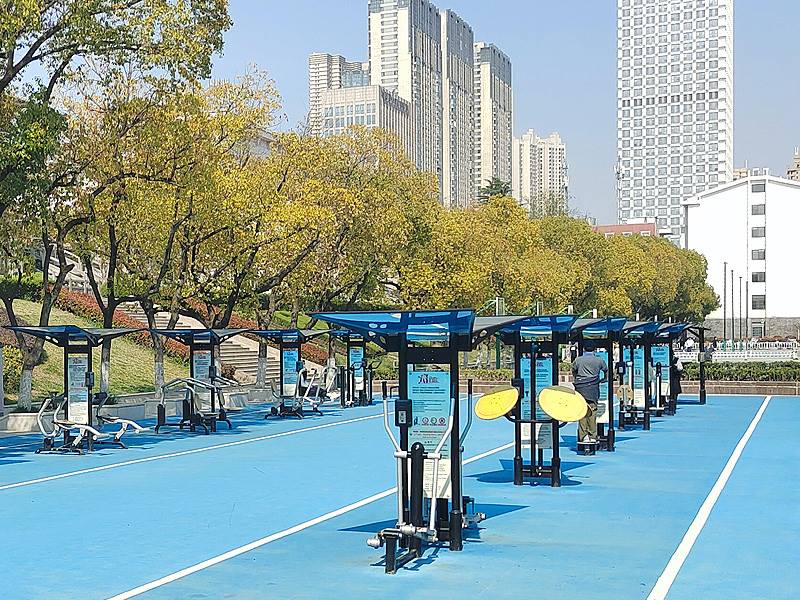
Huadong Track lists the Anhui Provincial Sports Bureau National Fitness Center as a 2023 showcase project. The project image shows an outdoor blue sports surface integrated with exercise equipment and circulation space. That combination matters: this is not an isolated athletics oval, but part of a broader public fitness setting.
Mixed use changes the design question
For a training base, performance discussions often begin with sprint response or competition requirements. At a public fitness center, the first questions are more practical. Can people understand where to run and where to walk? Are the edges clear around equipment and access points? Will repeated daily use create difficult maintenance zones?
Anhui's wider public-fitness programme has focused on bringing facilities closer to residents. That policy context does not tell us the specification of this particular track, but it explains why accessibility, durability and simple operation are central to this type of project.
Colour can organise movement
The blue surface in the project view gives the activity zone a strong visual identity. Colour also helps separate movement areas from equipment pads and surrounding paths. On a busy site, that visual order is useful before any technical performance is considered.
What the Surface System Has to Control
Consistency across the route
People notice abrupt changes underfoot. A public track therefore benefits from a surface with steady thickness, firm bonding and carefully finished joints. Corners, transitions and drainage edges deserve the same attention as the long straight sections because these are the places where small installation errors become visible first.
Outdoor exposure is continuous
Unlike a track used only for scheduled events, a community facility spends every day in the weather. Sun, rain, standing water and dirt brought in from adjacent areas all affect how the surface ages. A good installation starts below the coloured layer: the base must be dry, stable and within tolerance before rolls are bonded.
Why a Prefabricated System Fits This Kind of Project
Prefabricated rubber track material arrives with its main structure formed under controlled factory conditions. On site, the work shifts toward checking the base, planning the roll layout, applying adhesive, closing joints and finishing edges. This does not remove the need for skilled installation. It makes each site-control step easier to define and inspect.
Huadong Track offers several prefabricated running-track systems rather than one universal specification. For a public fitness center, the final choice should follow expected traffic, base condition, local climate, maintenance plan and the applicable project standard. The project archive does not identify a specific product model for this site, so one should not be inferred from the photograph alone.
Lessons for Similar Public Fitness Projects
The useful lesson from the Anhui project is not simply the blue colour. It is the way a running surface becomes part of a larger daily-use environment. Designers and owners should review pedestrian flow, equipment zones, drainage outlets, edge details and maintenance access together, rather than approving the track as a separate item.
Before ordering material, the project team should also record base moisture, flatness and repair areas. Those notes make the installation plan more realistic and reduce decisions made after the rolls have already arrived.
1.Is a prefabricated running track suitable for a public fitness center?
Yes, provided the selected system matches the expected traffic, base condition, climate and maintenance plan. Public use does not eliminate technical requirements; it changes which requirements receive the most attention.
2.Can the product model be identified from a project photograph?
No. Colour and surface appearance are not enough to confirm a model, thickness or certification. Those details should come from the project specification or delivery record.
3.What should be checked before installation begins?
The essential checks include base strength, flatness, moisture, drainage, repaired areas, layout dimensions and the condition of transitions and edges.


