
Views: 6 Author: Site Editor Publish Time: 2026-10-14 Origin: Site


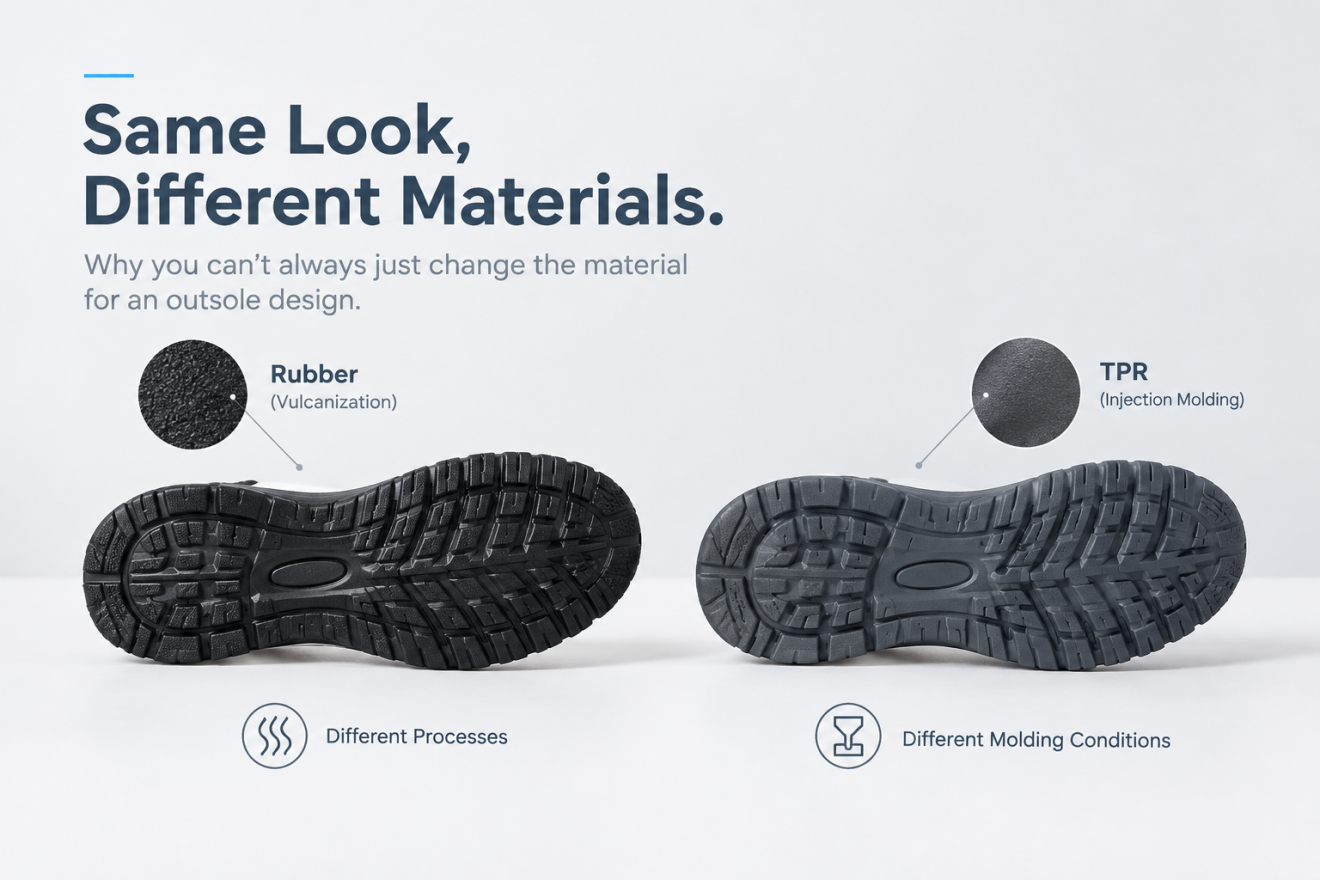
In footwear development, we often receive a question from customers:
“We like this rubber outsole design. Can you make the same outsole in TPR instead?”
Or:
“We have an EVA sole design. Can we produce it in ETPU or PU?”
These questions sound simple. After all, if the shape is already available, why can’t we just change the material?
The reality is that an outsole is not just a shape. It is the result of material properties, manufacturing processes, mold design, and product performance requirements working together.
Let’s look at why changing the material is often more complicated than it seems.
The first and most important consideration is the manufacturing process.
Different outsole materials are not necessarily processed in the same way. Even if two materials look similar in the final product, their production methods can be completely different.
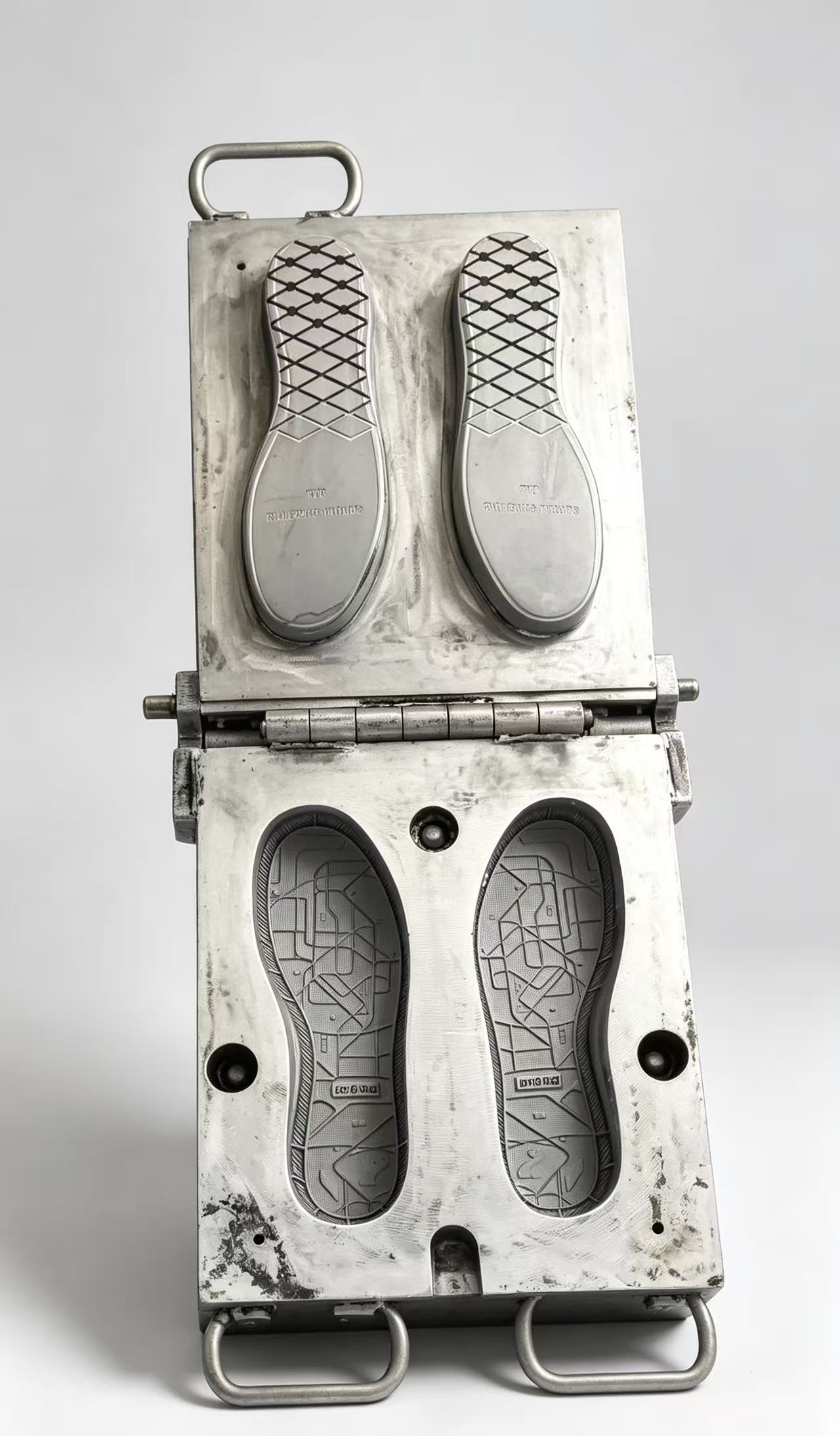
This is one of the most common questions we receive.
Conventional rubber outsoles are generally produced through a vulcanization process. The rubber compound is placed into a mold and cured under controlled heat, pressure, and time to develop its final properties.
TPR, on the other hand, is commonly processed through injection molding. The material is heated until it can flow into the mold, then cooled to form the required shape.
These are two fundamentally different manufacturing processes.
A rubber outsole mold is designed around rubber molding and vulcanization, while a TPR outsole mold must accommodate injection flow, filling, cooling, and other process requirements.
Therefore, we cannot simply put TPR material into a conventional rubber outsole mold and expect it to produce the same result.
The original mold may need substantial modifications, or a new mold may be necessary.
Even when two materials can be processed using similar equipment, their processing conditions may still differ significantly.
Each material has its own requirements for temperature, pressure, curing or cooling time, and material flow.
For example:
Rubber: Requires an appropriate vulcanization cycle to achieve the desired physical properties.
TPR: Requires suitable injection and cooling conditions to fill the mold and achieve stable dimensions.
EVA: Depending on the formulation and process, may require compression molding, foaming, or specialized injection and expansion processes.
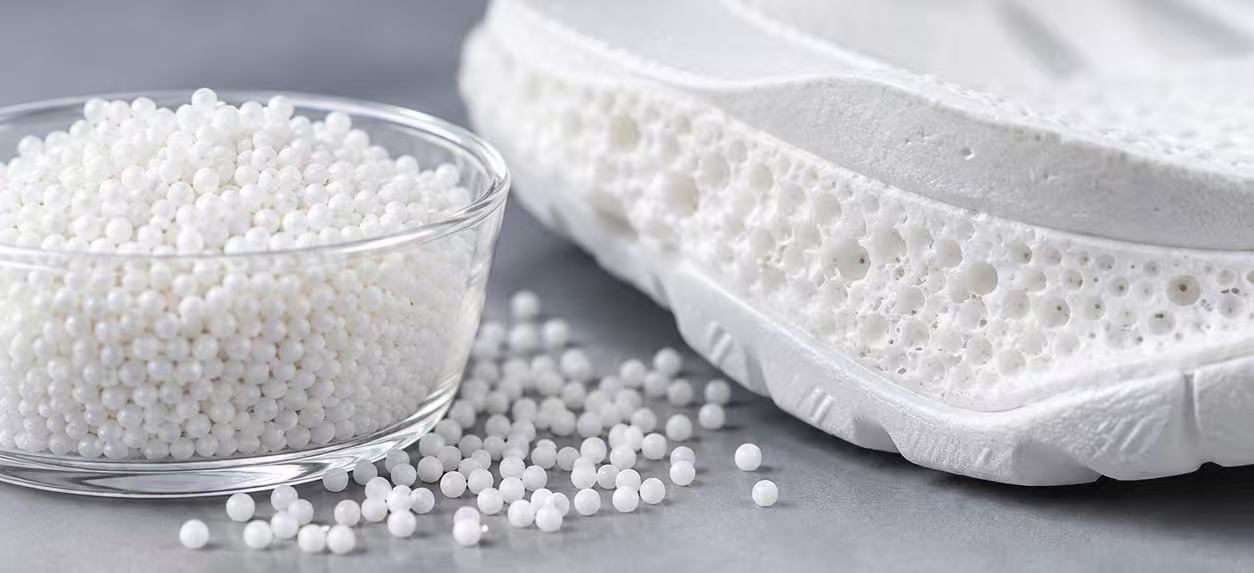
ETPU: Commonly uses expanded TPU beads that are formed and fused through a specialized steam-chest molding process.
PU: Can be produced through pouring or reaction injection processes, depending on the product and manufacturing system.
These processes are not interchangeable simply because the final products share a similar appearance.
If the processing conditions do not match the material and mold design, the result may include incomplete filling, poor surface details, deformation, dimensional inconsistency, or inadequate material properties.
Another important factor is material behavior.
Different materials have different levels of hardness, flexibility, density, elasticity, abrasion resistance, and dimensional stability.
For example, replacing a rubber outsole with TPR may change its grip, abrasion resistance, flexibility, and overall wearing performance.
Replacing a conventional EVA midsole with ETPU may require a different approach to cushioning, resilience, bead fusion, and structural support.
PU also has its own formulation-dependent properties and processing requirements.
This means that even if two materials can theoretically produce a similar shape, the finished soles may not deliver the same performance.
The outsole design may need to be adjusted to suit the new material and the intended application.
An outsole mold is not simply a cavity that copies a design.
It must also work with the material and manufacturing process.
When developing a mold, engineers need to consider factors such as:
Material flow and filling behavior
Mold temperature and cooling requirements
Shrinkage and dimensional compensation
Venting and air release
Wall thickness and structural details
Surface texture, logos, and fine patterns
Demolding and production efficiency
For example, an injection-molded TPR outsole requires appropriate provisions for material flow and air release.
A rubber outsole mold must be designed around its vulcanization process and the behavior of the rubber compound.
ETPU bead-molding structures have different requirements again, particularly for steam penetration, bead expansion, and fusion.
A mold that works well for one material and process does not automatically work well for another.
Even if the external shape remains unchanged, the mold may need to be redesigned to achieve stable production.
There is one situation where a material substitution may sometimes be worth exploring during the sampling stage.
PVC and TPR can both be processed through injection molding, although their formulations and processing conditions differ.
If a customer wants to evaluate the appearance of a PVC outsole quickly, it may be possible to try PVC in an existing TPR mold as an initial experiment.
However, this is only a trial possibility, not a universal solution.
Whether it works depends on several factors, including:
The outsole’s design and structural complexity
Its thickness and material flow requirements
The mold’s gate, venting, and temperature-control design
The specific PVC and TPR formulations
The compatibility of the molding conditions
A thin outsole with complex patterns may behave very differently from a thick, relatively simple design.
Even if a trial produces a recognizable shape, it does not mean the mold is suitable for stable mass production. The sample may still require adjustments, and the final product must be evaluated against the required specifications.
Therefore, this approach may help us assess an early concept, but it cannot replace proper material and mold validation.
Our recommendation is to consider both together from the beginning.
If you already have an outsole design, we can assess whether it is suitable for your preferred material and manufacturing process.
If you have already decided on the material, we can help evaluate the appropriate outsole structure and mold-development approach.
Before starting development, it is useful to clarify:
The reference design: An existing outsole, drawing, or 3D CAD file.
The target material: Rubber, TPR, EVA, TPU, PU, ETPU, or another material.
The intended performance: Grip, abrasion resistance, cushioning, flexibility, weight, or other requirements.
The production plan: Expected order quantity and intended manufacturing process.
With this information, we can evaluate the feasibility, identify potential design changes, and determine whether the existing mold can be used, modified, or needs to be developed from scratch.
This helps avoid unnecessary sampling costs, delays, and unrealistic expectations during development.
Choosing an outsole material is not simply a matter of changing one raw material for another.
The material, manufacturing process, mold design, and final product performance must all work together.
At Huadong Holdings, we specialize in outsole mold development and customized outsole solutions. We work with different materials and manufacturing processes to help customers evaluate the right approach for their footwear projects.
If you have an outsole design and want to explore a different material, share your reference design, target material, and performance requirements with us.
Let’s evaluate the possibilities together before moving into production.
Huadong Holdings — Exploring New Possibilities in Outsole Materials and Mold Development.
It may be possible, but the design and tooling need an engineering review. Conventional rubber vulcanization and TPR injection molding have different requirements, so mold modifications or new tooling may be necessary.
Some projects may allow an initial trial, depending on the formulation, equipment, gates, vents and temperature control. A successful-looking sample does not establish suitability for stable mass production.
It is not usually a direct material swap. ETPU bead molding involves different processing and tooling requirements, and the sole structure should be reviewed for cushioning, dimensions and support.
Not necessarily. Compare material cost together with tooling, design changes, sampling, production yield and testing. A lower raw-material price may be offset by development costs.
Provide the reference outsole or CAD file, current and target materials, size range, performance requirements and expected quantity. Existing mold information and sample test results also help determine a feasible development route.


