
Views: 6 Author: Site Editor Publish Time: 2026-09-28 Origin: Site


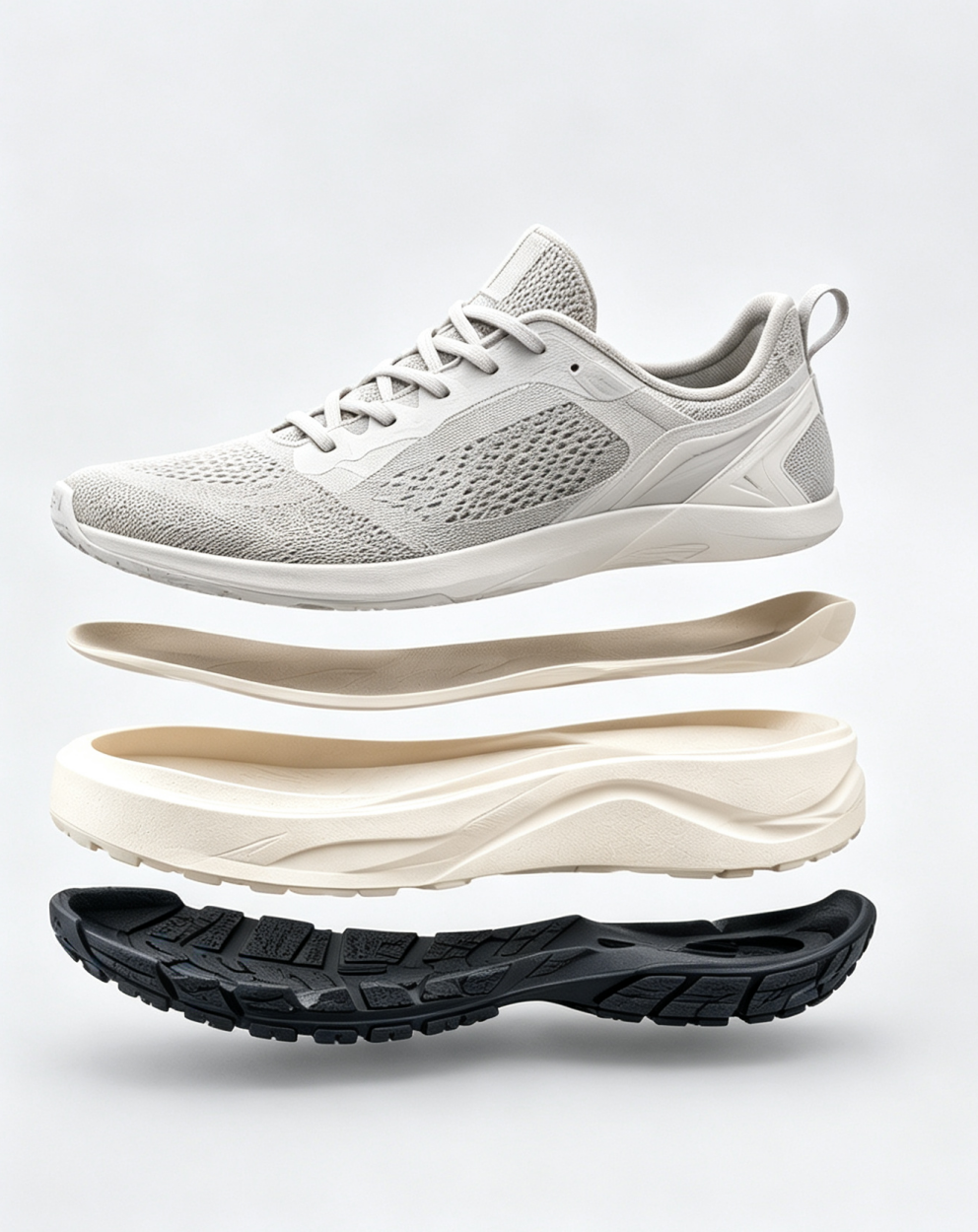
Footwear construction is becoming more sophisticated.
Instead of relying on a single material for the entire sole, many modern footwear designs combine different materials and layers to achieve a better balance of cushioning, flexibility, durability, stability, weight, and appearance.
This is where DESMA direct injection technology and multi-layer sole construction can offer interesting possibilities.
By combining different sole components in one footwear construction, manufacturers can assign different functions to different layers — for example, a soft cushioning layer in the middle, a durable outsole at the bottom, and a PU bonding layer connecting the upper with the sole.
A multi-layer sole is a footwear construction that combines two or more different materials or functional layers into one sole system.
A typical construction may include:
Upper
↓
PU bonding / connecting layer
↓
Midsole
↓
Outsole / bottom layer
The exact structure can vary depending on the footwear design, materials, and production process.
The key idea is simple:
Different materials perform different functions.
Instead of asking one material to provide cushioning, bonding, flexibility, abrasion resistance, and grip at the same time, each layer can be designed for a specific purpose.
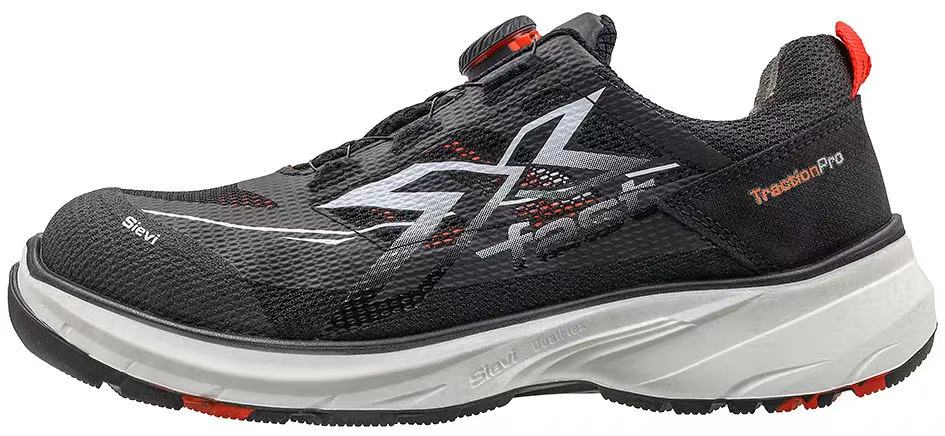
Different areas of a shoe have different performance requirements.
For example, the midsole generally focuses more on:
Cushioning
Lightweight construction
Energy return
Flexibility
Shock absorption
The outsole, on the other hand, may need to provide:
Abrasion resistance
Grip
Stability
Ground contact durability
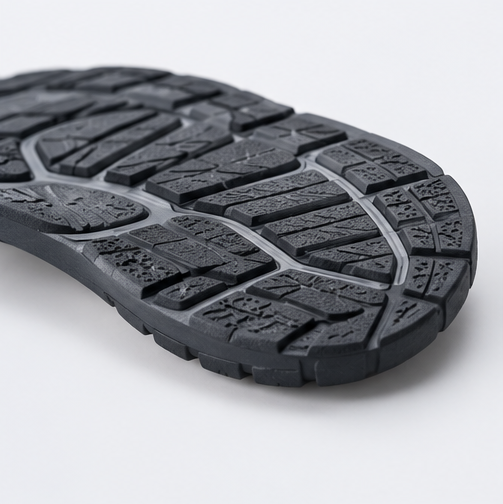
The connection between the upper and sole also requires reliable bonding and processing.
A multi-layer construction allows footwear developers to combine these different requirements instead of compromising on one material.
One shoe, different functions.
This is one of the main advantages of multi-material sole construction.
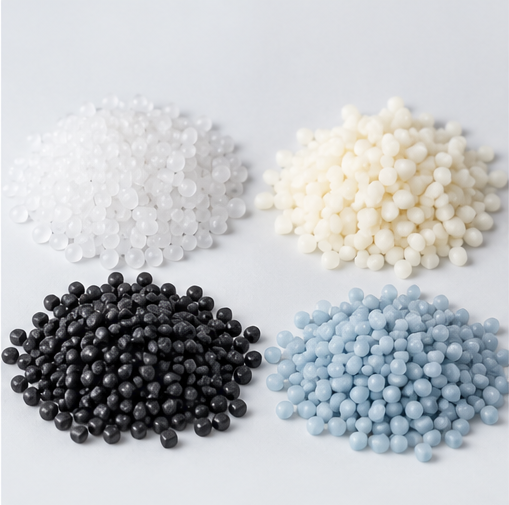
The midsole is one of the most important components in a multi-layer sole.
Depending on the target footwear category and performance requirements, different materials can be considered.
EVA is one of the most widely used materials for lightweight midsoles.
It offers:
Low weight
Good cushioning
Good flexibility
Relatively efficient processing
A wide range of hardness and density options
EVA is therefore commonly used in sports shoes, casual footwear, and other lightweight applications.
For cost-sensitive products, conventional EVA can provide a practical balance between performance and manufacturing cost.
ETPU is another option for performance-oriented footwear.
Compared with conventional EVA, ETPU can offer a different cushioning and resilience profile, making it attractive for running and sports footwear.
Its bead-foam structure can provide:
High resilience
Lightweight cushioning
Good compression recovery
A distinctive cushioning feel
ETPU is particularly interesting when the product requires a combination of light weight and high rebound.
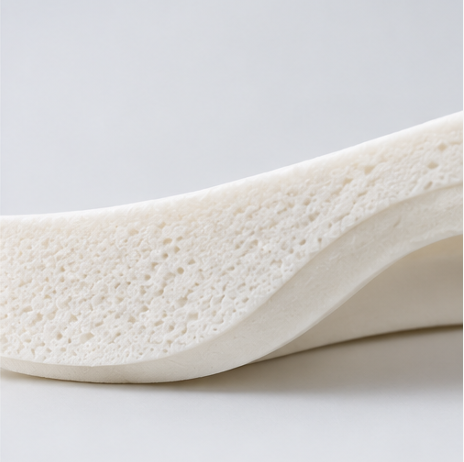
As footwear brands continue to look for lighter and more responsive soles, supercritical foaming technology has become an important area of material development.
Supercritical foaming can be applied to different polymer systems, including materials such as:
SC-EVA
SC-TPU
SC-TPEE
SC-PEBA
The exact material selection depends on the required combination of density, rebound, flexibility, durability, and cost.
For example, a supercritical midsole can be designed to reduce density while maintaining a relatively high level of cushioning and resilience.
This creates another possibility for DESMA multi-layer footwear:
A direct-injected sole construction combined with a lightweight supercritical foam midsole.
The combination can be interesting because the two technologies can address different performance requirements.
The supercritical foam midsole can focus on:
Lightweight cushioning
Energy return
Softness
Resilience
While the bottom outsole layer can focus more on:
Grip
Abrasion resistance
Ground contact
Stability
A PU layer can then provide the connection between the upper and the sole construction.
This creates a functional structure in which each material has a defined role.
Cushioning on the inside.
Durability underneath.
Secure connection to the upper.
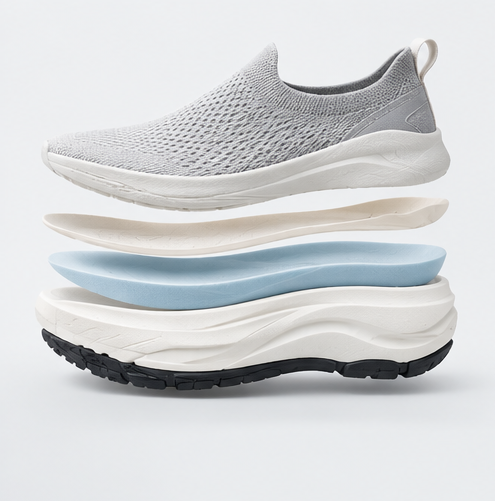
For example, a performance-oriented shoe could be developed with a structure such as:
Upper
→ Designed for fit, breathability, and appearance
PU Connecting Layer
→ Provides the connection between the upper and lower sole construction
Supercritical EVA / TPU or ETPU Midsole
→ Focuses on lightweight cushioning and resilience
Rubber / TPU / TPR Outsole
→ Provides grip, abrasion resistance, and ground contact durability
The actual material combination should be selected according to the shoe category and performance requirements.
A running shoe, safety shoe, casual sneaker, and outdoor shoe may require completely different material combinations.
DESMA technology is particularly relevant when manufacturers want to integrate direct-injection processes into modern footwear construction.
Depending on the machine configuration and footwear design, direct-injected materials can be used to form bonding or sole layers around a pre-positioned shoe upper and other sole components.
This can help create a more integrated sole construction.
However, multi-layer footwear is not simply about putting several materials together.
The interface between different materials is critical.
Developers need to consider:
Material compatibility
Bonding performance
Processing temperature
Shrinkage
Hardness
Density
Dimensional stability
Mold design
Surface treatment
Production sequence
A good design on paper still needs to work in actual production.
Multi-layer construction also creates additional requirements for mold development.
The mold needs to accommodate the geometry of each layer while maintaining accurate positioning and dimensional consistency.
For example, when a lightweight midsole is combined with another sole layer, the developer needs to consider:
Layer thickness
Positioning accuracy
Interface geometry
Edge definition
Logo and pattern details
Shrinkage of different materials
Final sole dimensions
This is particularly important when different materials have different shrinkage behavior.
Therefore, multi-layer sole development is not only a material project — it is also a mold development project.
The evolution of midsole materials is opening more possibilities for multi-layer footwear.
A conventional EVA midsole may already provide a good balance between weight, cushioning, and cost.
For more performance-oriented footwear, developers may consider:
Conventional EVA, ETPU, or supercritical EVA / TPU / TPEE / PEBA
Each material has its own performance characteristics and cost considerations.
There is no single material that is ideal for every footwear application.
The right choice depends on the product positioning and the required performance.
When developing a multi-layer sole, it is important not to select the material first and then try to fit the shoe around it.
Instead, start with the final requirements.
For example:
What is the target density?
What level of rebound is required?
What hardness is needed?
How much abrasion resistance is required?
What type of grip is needed?
What is the target shoe weight?
What is the target cost?
Once these requirements are clear, the appropriate material combination can be evaluated.
This approach helps avoid unnecessary material upgrades that do not provide meaningful benefits to the final product.
The goal of a multi-layer sole is not simply to use more materials.
It is about using the right material in the right position.
A lightweight supercritical midsole may improve cushioning and reduce weight, while a rubber outsole can provide the durability and traction required for ground contact.
At the same time, the direct-injected PU layer can provide the necessary connection between the upper and the sole system.
The result is a sole construction designed around the performance requirements of the finished shoe.
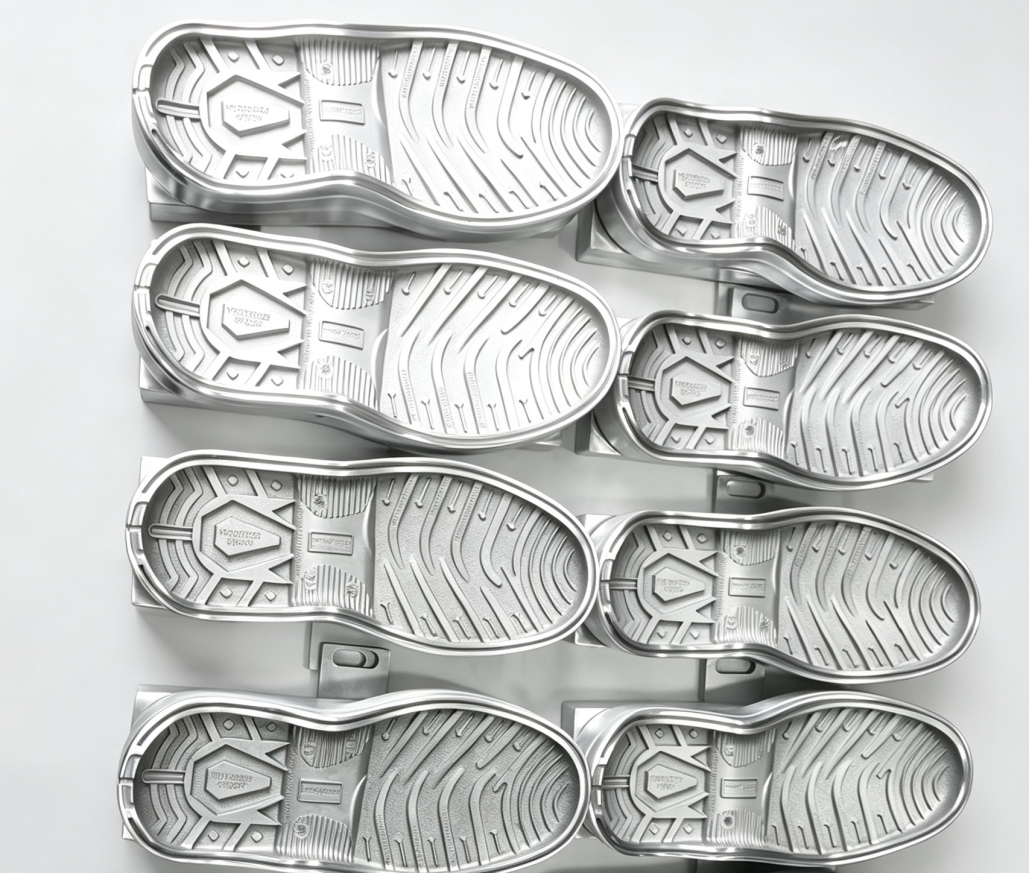
Developing a multi-layer sole requires cooperation between material selection, footwear construction, mold engineering, and production technology.
At Huadong, our experience in outsole mold development and sole manufacturing allows us to work with different sole materials and construction concepts, including:
EVA
ETPU
Rubber
TPR
TPU
PU
Supercritical foam materials
Whether the project requires a conventional outsole or a more complex multi-layer construction, the development process starts with understanding the footwear structure and the performance requirements.
The right material.
The right structure.
The right mold.
That is the foundation of a successful sole development project.
Material properties and bonding results depend on the formulation, machine configuration, component design and processing conditions. Confirm compatibility and performance through agreed sample testing before production.
It combines functional layers such as a direct-injected PU connecting layer, a cushioning midsole and a ground-contact outsole. The exact structure depends on the footwear design and machine configuration.
Options discussed here include conventional EVA, ETPU and supercritical foam based on EVA, TPU, TPEE or PEBA. Select a formulation against the required density, hardness, resilience and cost.
Compatibility should not be assumed. Processing temperature, surface preparation, shrinkage and bonding performance need to be checked for the selected materials and construction.
Layer thickness, component positioning, interface geometry and different material shrinkage affect the final dimensions. Mold engineering needs to account for these factors together.
Provide the footwear category, reference drawings or samples, size range, layer structure, target weight, density and hardness, plus the required bonding, durability and traction tests.


