
Views: 70 Author: Site Editor Publish Time: 2026-07-22 Origin: Site


Both injection EVA soles and IP (Injection Phylon) soles are widely used lightweight footwear solutions. Although they are both made from EVA-based materials, they differ significantly in manufacturing process, performance, appearance, and applications. Understanding these differences can help footwear brands choose the right sole for their products.
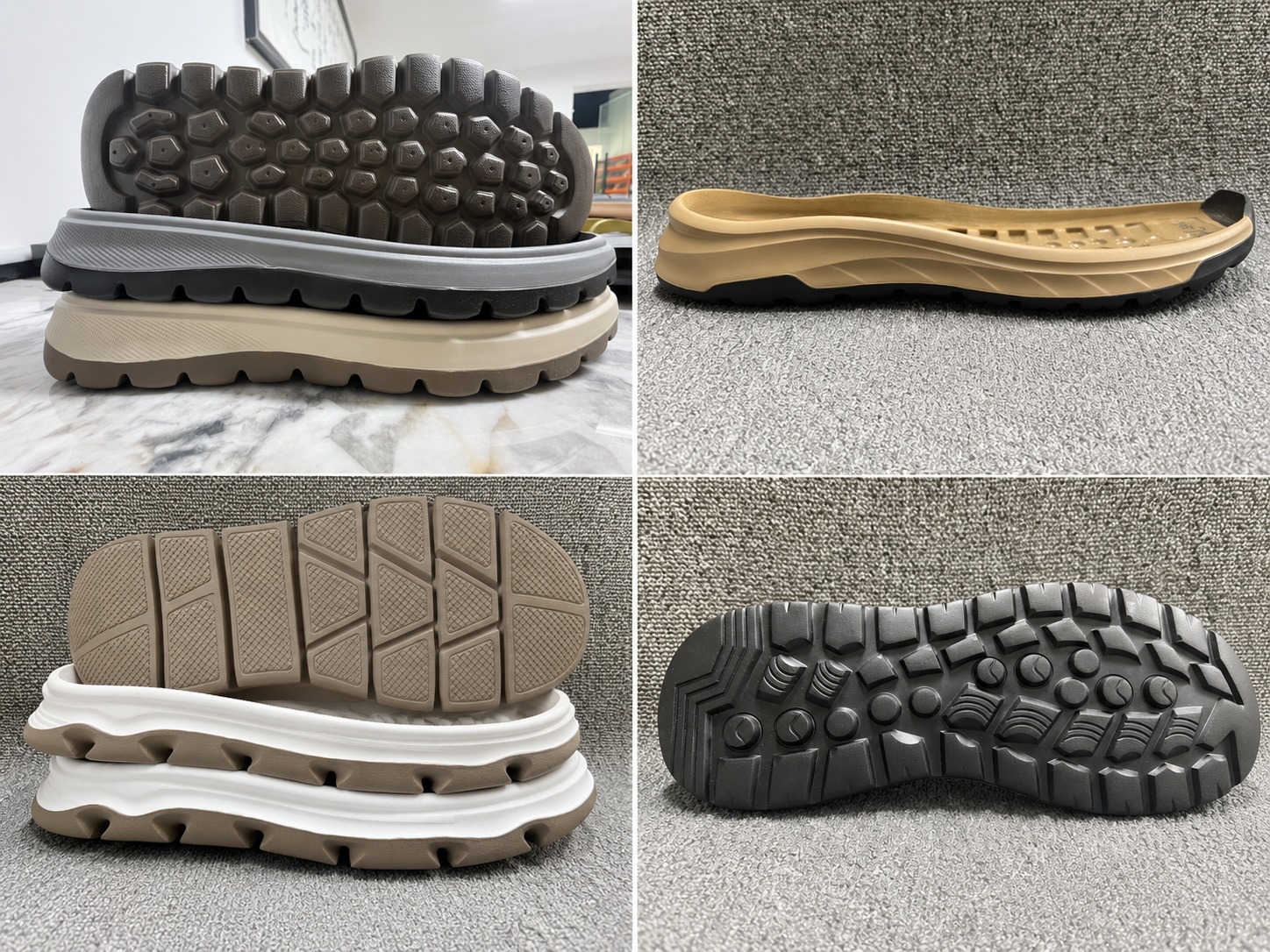
Injection EVA Sole
The typical production process is:
EVA Compound → Mixing → Sheet Cutting → Compression Molding → Foaming → Trimming
Features:
Simple manufacturing process
Lower mold investment
Shorter production cycle
Ideal for large-volume production
This process is commonly used for slippers, sandals, nursing clogs, and casual footwear.
IP Sole (Injection Phylon)
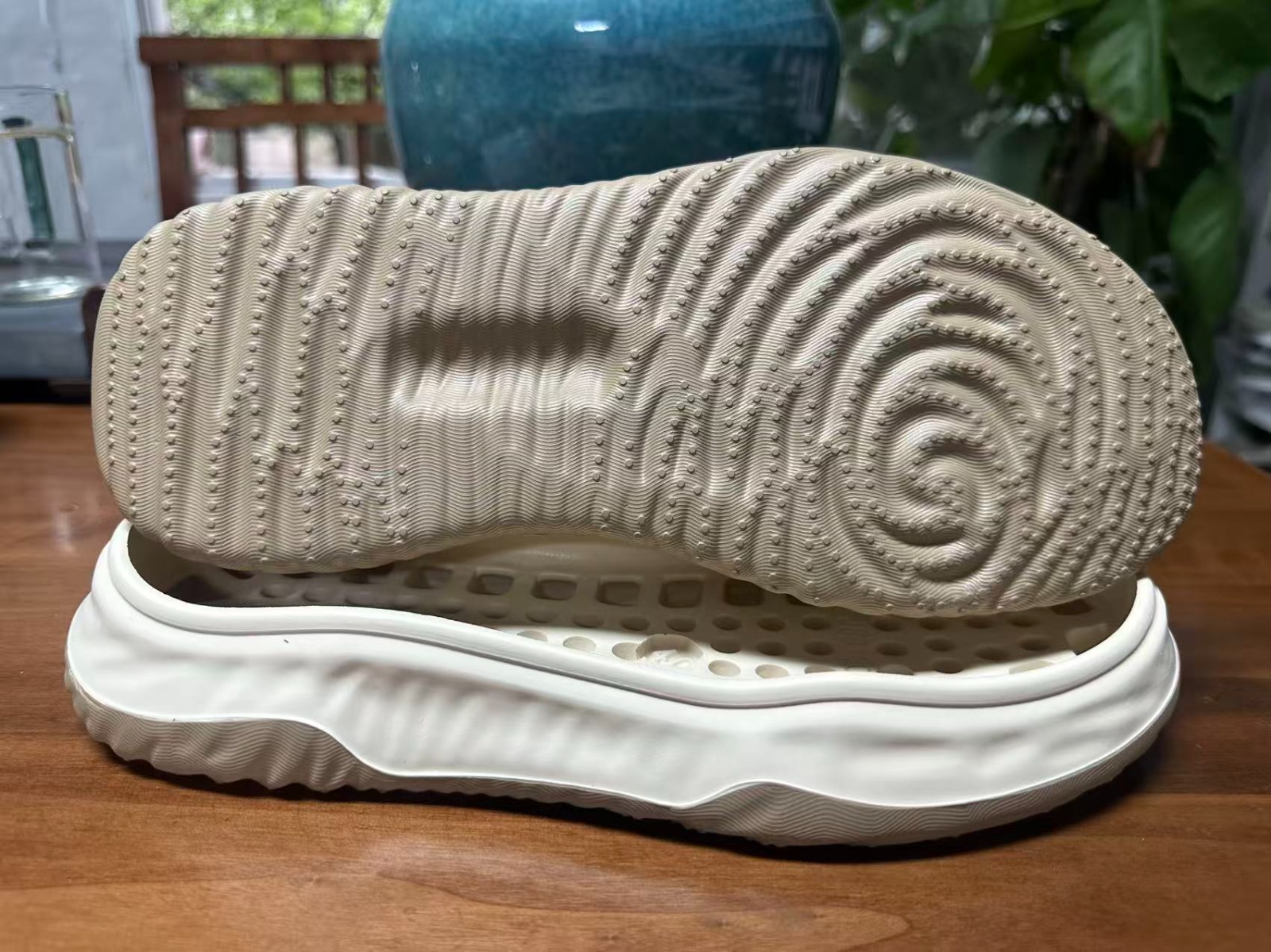
The production process is:
EVA Pellets → Injection Molding → Foaming → Cooling → Demolding
Features:
Highly automated production
Better dimensional consistency
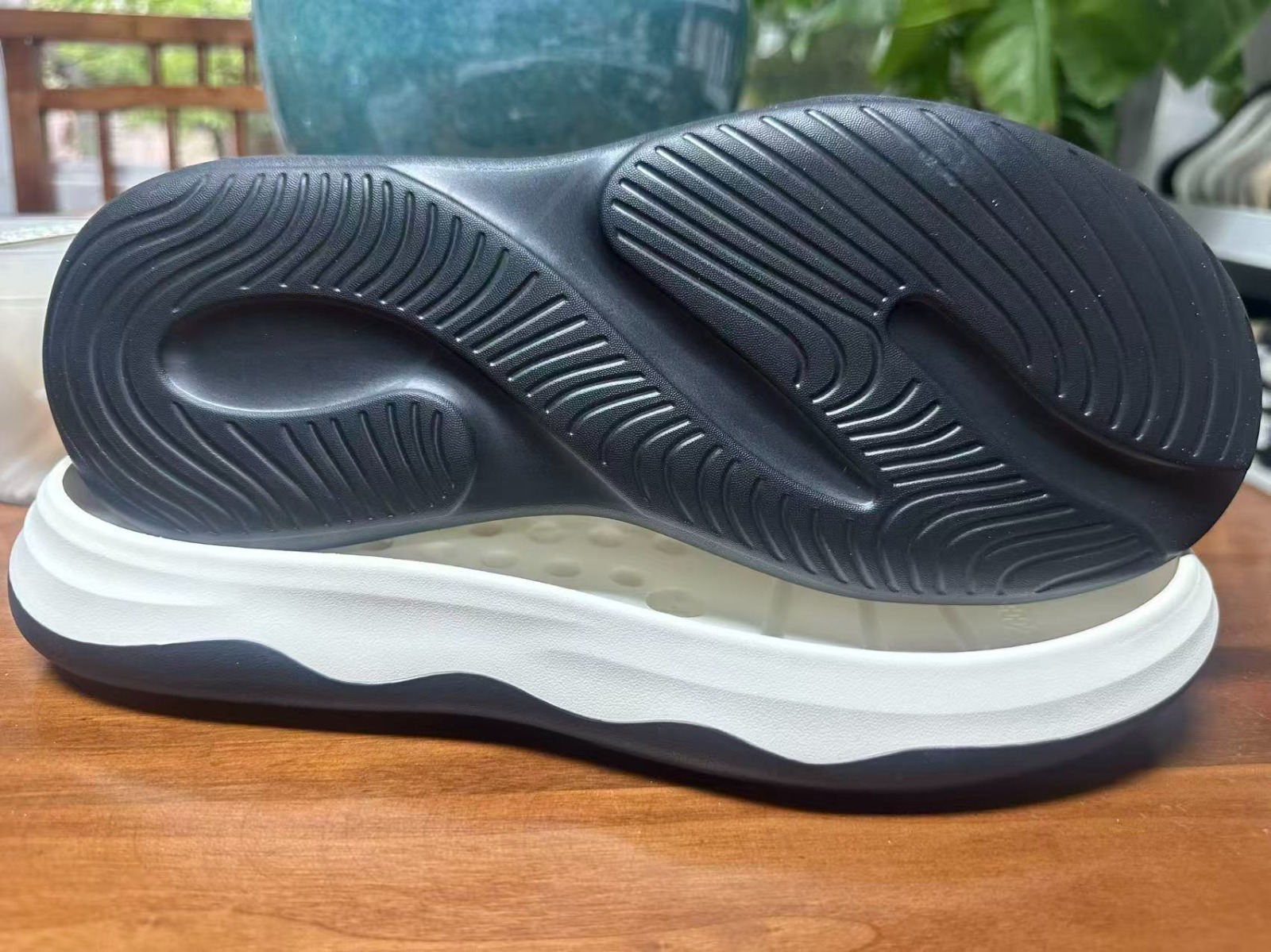
Higher manufacturing precision
Smoother and more refined surface finish
IP technology is widely used for athletic shoe midsoles and premium casual footwear.
For soles of the same size:
Injection EVA Sole
Typical density: 0.20–0.30 g/cm³
IP Sole
Typical density: 0.15–0.25 g/cm³
As a result, IP soles are generally lighter than traditional One-Shot EVA soles, making them an excellent choice for lightweight footwear.
Injection EVA Sole
Advantages
Soft and comfortable
Cost-effective
Suitable for everyday footwear
Limitations
Moderate rebound performance
More prone to compression after long-term use
IP Sole
Advantages
Superior cushioning
Higher energy return
Better shock absorption
Greater comfort during extended wear
This is one of the reasons why many sports footwear brands prefer IP midsoles.
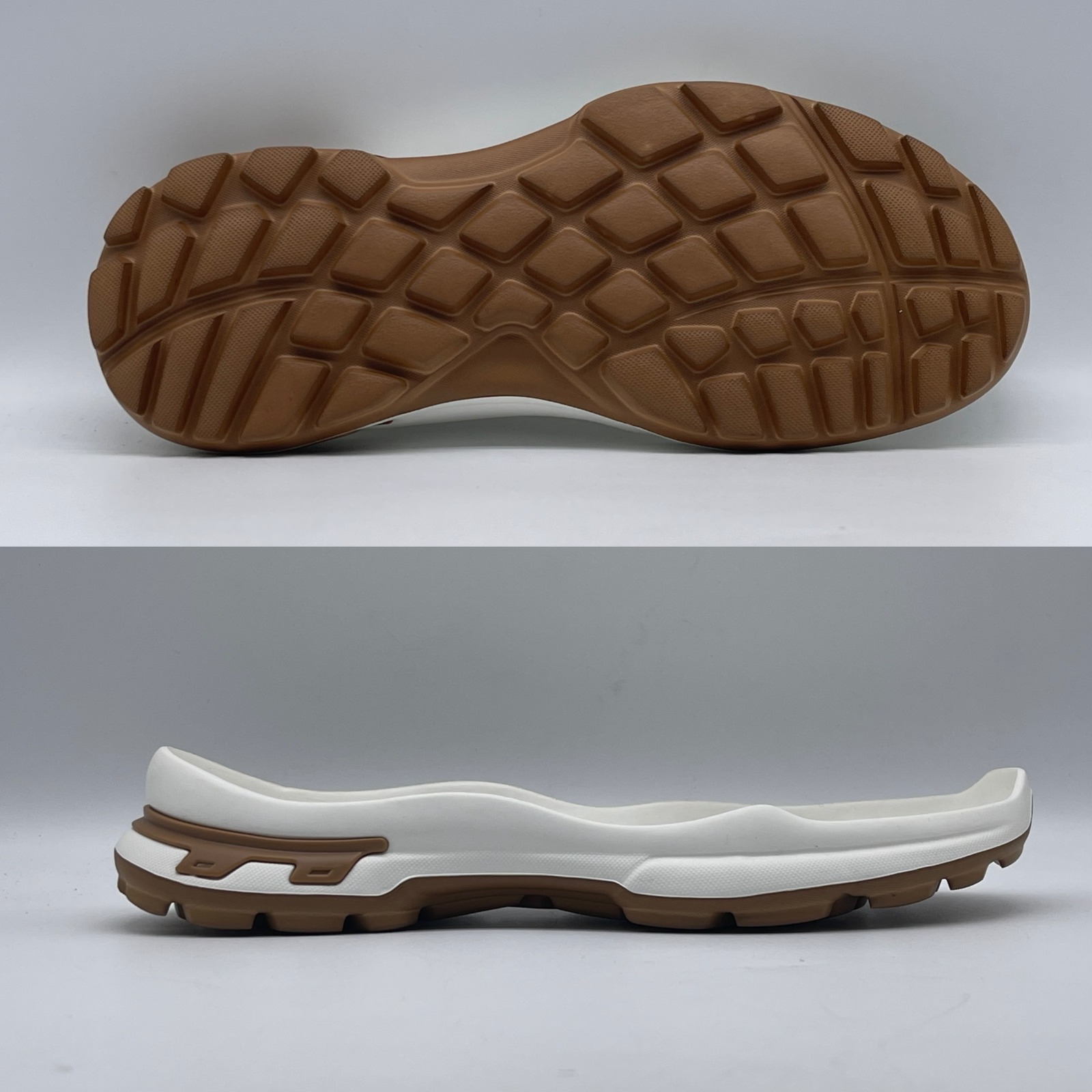
One-Shot EVA Sole
Slightly rougher surface
Foaming texture may be visible
Simple molded appearance
IP Sole
Smoother surface finish
Cleaner edges and sharper details
More premium appearance
Many European and American footwear brands prefer IP soles because of their refined look and high-quality finish.
Property | Injection EVA Sole | IP Sole |
|---|---|---|
Compression Resistance | Good | Excellent |
Shape Retention | Good | Better |
Service Life | Standard | Longer |
IP soles generally maintain their cushioning performance and shape better over time.
Injection EVA soles are typically the more economical option.
Since IP soles require:
Advanced injection molding equipment
Higher automation
More sophisticated manufacturing technology
Greater process control
their production cost is generally 10–30% higher than injection EVA soles, depending on density, design complexity, and order quantity.
Injection EVA Sole
Slippers, Sandals,Nursing shoes,Beach footwear,Home slippers,Casual shoes
IP Sole
Running shoes,Walking shoes,Hiking shoes,Sports shoes,Lifestyle sneakers,Outdoor footwear (often combined with rubber outsoles)
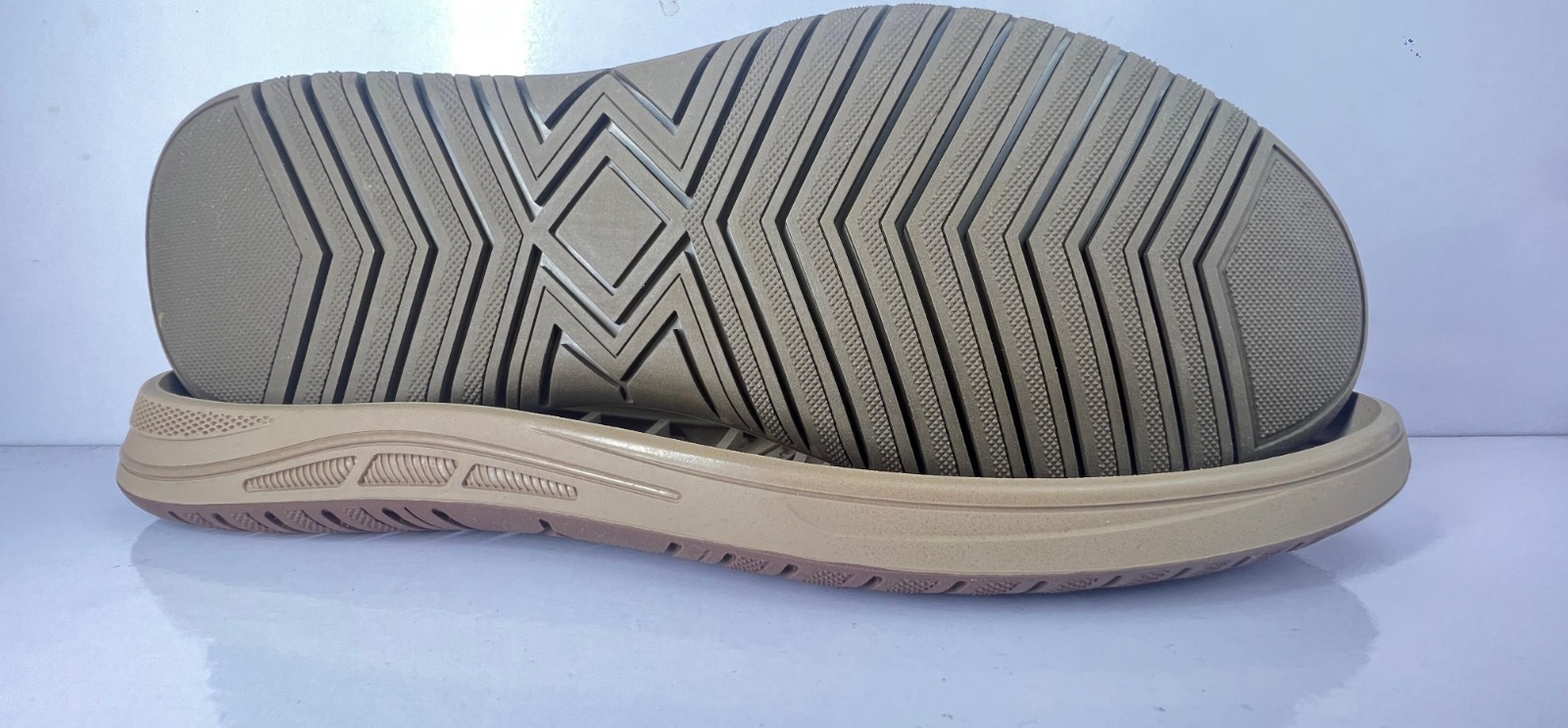
If your priority is cost efficiency, the One-Shot EVA sole is an excellent choice. It offers lightweight comfort and reliable performance at an affordable price.
If you are looking for lighter weight, better cushioning, improved durability, and a premium appearance, the IP sole is the better solution.
For athletic and performance footwear, IP soles are often the preferred choice among international footwear brands. For slippers, nursing shoes, sandals, and casual footwear, One-Shot EVA soles remain the most cost-effective option.
At our factory, we offer both One-Shot EVA and IP sole manufacturing services, with full OEM and ODM support. From design and mold development to mass production, we help footwear brands bring innovative sole solutions to market with consistent quality and reliable delivery.
Q1: Are Injection EVA and IP (Injection Phylon) the same material?
No. Although both are made from EVA-based materials, their manufacturing processes are completely different. Injection EVA uses compression molding & foaming, while IP (Injection Phylon) uses injection molding & foaming. This results in clear differences in density, performance, appearance, and cost.
Q2: Why are IP soles lighter than Injection EVA soles?
Because the IP process achieves more thorough and uniform foaming. For the same size sole, Injection EVA typically has a density of 0.20–0.30 g/cm³, while IP soles have a density of only 0.15–0.25 g/cm³, making IP noticeably lighter.
Q3: How much more expensive are IP soles compared to Injection EVA soles?
IP soles generally cost 10–30% more than Injection EVA soles, depending on density requirements, design complexity, and order quantity. IP requires advanced injection equipment, higher automation, and stricter process control.
Q4: Which sole offers better cushioning performance?
IP soles provide significantly better cushioning. They offer higher energy return, superior shock absorption, and longer-lasting comfort. That is why sports footwear brands widely prefer IP for midsoles. Injection EVA is soft and comfortable but has lower rebound resilience and is more prone to compression set over time.
Q5: Do Injection EVA soles compress or flatten after extended use?
Yes. Injection EVA is more susceptible to compression deformation after long-term use, and its cushioning performance gradually declines. IP soles have much better compression resistance and shape retention, leading to a longer service life.
Q6: How can I tell the two soles apart by appearance?
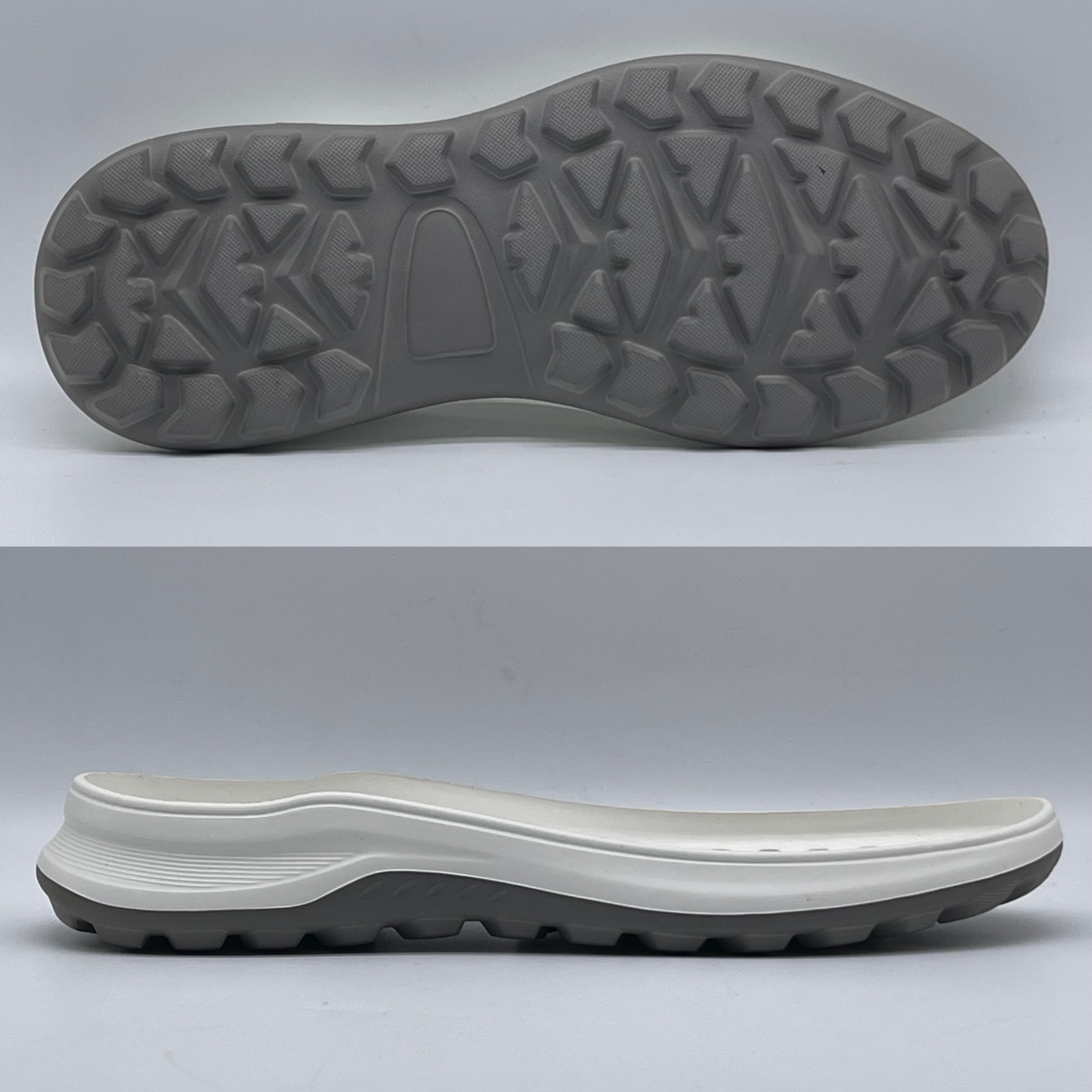
Injection EVA: Slightly rougher surface, visible foaming texture, simpler molded details.
IP sole: Smoother surface finish, cleaner edges, sharper details, and a more premium overall look.
Many European and American brands prefer IP soles precisely because of their refined, high-quality appearance.
Q7: What types of footwear are each sole best suited for?
| Sole Type | Typical Applications |
|---|---|
| Injection EVA | Slippers, sandals, nursing shoes/clogs, beach footwear, home slippers, casual shoes |
| IP (Injection Phylon) | Running shoes, walking shoes, hiking shoes, sports shoes, lifestyle sneakers, outdoor footwear (often combined with rubber outsoles) |
Q8: Which sole should I choose for my product?
It depends on your product positioning:
If cost efficiency is your priority, and you are making slippers, sandals, or basic casual footwear → Injection EVA is an economical and reliable choice.
If you seek lighter weight, better cushioning, greater durability, and a premium appearance for sports or performance footwear → IP soles are the better solution.
Q9: Can IP soles be combined with rubber outsoles?
Yes. IP midsole + rubber outsole is a classic combination for sports shoes and outdoor footwear – IP provides lightweight cushioning, while rubber delivers grip and abrasion resistance.
Q10: Do you manufacture both types of soles?
Yes. We offer OEM and ODM services for both Injection EVA and IP (Injection Phylon) soles, covering everything from design and mold development to mass production, with consistent quality and reliable delivery.


