


Winter collections bring the outsole back into focus
As footwear buyers prepare cold-weather ranges, the outsole becomes a central part of the product story. A winter shoe may encounter wet pavement, loose snow and frozen sections during the same journey. That variety makes a simple slip-resistant label less useful than a clear explanation of the conditions the sole was developed and evaluated for.
An October 14, 2026 Icebug collection announcement illustrates this focus. The brand presented winter running models using either studded BUGrip constructions or non-studded RB9X rubber options, with different cushioning systems across the range. The announcement shows that brands can segment winter footwear by the intended route and traction approach instead of treating winter grip as a single specification. [1]
For shoe sole buyers, the opportunity is to make that segmentation explicit in the development brief. The analysis below concerns specification and sourcing choices. A new outsole concept still needs testing in its intended conditions before a brand makes a performance claim.
Define the surface before choosing the sole
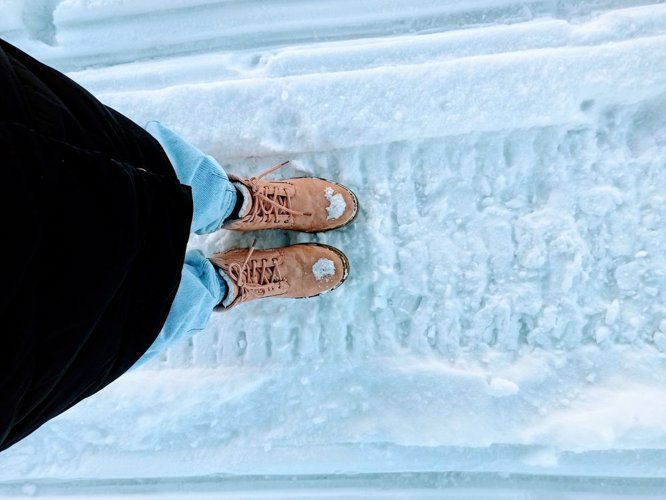
Start by describing where the customer will walk or run. A city commuter crossing wet paving has a different brief from a runner expecting regular ice, while a trail user may need a combination of uneven-ground contact and clearance for loose material. Ask which surfaces are frequent, which are occasional and which the product will not be intended to address.
Record the expected temperature range, wearing duration and movement type. Include transitions into shops, transport or workplaces if those are part of the route. These details affect how the team should compare samples and whether a specialized construction fits the customer experience. A sole that performs well in one evaluation should not inherit a general claim for all winter environments.
Translate the use description into a test matrix with the supplier or a competent laboratory. Name the surface, contamination, temperature, loading and movement conditions to be examined. Include relevant worn or aged samples where the product brief requires them. This approach produces a more useful comparison than asking several factories for their best anti-slip rubber without defining what the phrase means.
Compare rubber systems and studded constructions
Winter traction concepts can combine specialized rubber, contact geometry and, for some uses, studs. These are different design routes with different evaluation needs. A non-studded concept should be assessed on its own evidence. A studded version adds questions about placement, retention and behavior when the wearer moves from the target surface to other parts of a normal route.
Vibram describes Arctic Grip All Terrain as a combination of a wet-ice-focused compound with XS Trek Evo and a corresponding lug pattern for broader surface use. This is a useful example of a manufacturer presenting compound selection and geometry as one outsole system. It is not a performance guarantee for a different supplier compound or an independently developed design. [2]
For an original project, request drawings that identify each material zone and any inserted component. Agree on how the finished part will be checked after flexing, wear and conditioning. Where studs are proposed, include their attachment and retention in the validation plan. Inspect the whole assembly rather than approving the appearance of an isolated rubber sample.
Design the tread around the intended route
A tread drawing should specify lug positions, contact areas, channels and transitions. The right geometry depends on the use case and the rest of the shoe. Review how the outsole supports contact during landing, standing, turning and push-off, then test the actual design instead of assuming a deeper or more aggressive pattern must always provide a better result.
Mixed routes can create competing priorities. Discuss stability, walking feel, flexibility and expected wear alongside traction. A development sample should be judged against all of the agreed criteria, because solving one problem can create a different issue elsewhere in the construction. Keep the comparison set small enough that the team can identify which geometry change affected the outcome.
Manufacturing review should happen before the tread is finalized. Ask the toolmaker and compound supplier to review feature thicknesses, transitions and inspection access. Produce representative samples before approving a full size range. Establish reference points for dimensional checks so a repeat production batch can be assessed against the approved design rather than against a catalog photograph.
Specify repeatable performance and accurate claims
Ask for a technical file that connects the exact compound and outsole version to the available results. A report for another tread, material grade or construction may provide background, but it does not automatically approve the current project. Confirm the identity of the submitted samples and agree on which changes will require another review.
Plan wear evaluation around the customer journey. Record how the outsole looks and behaves after a defined trial, and investigate differences between samples. If the product will be used in cold conditions, ensure that cold-weather evaluation is part of the plan rather than relying entirely on room-temperature checks. State the conditions of the evidence in product communications.
Winter outsole development is a useful seasonal opportunity for suppliers who can turn a broad traction request into a precise specification. For a discussion with Huadong, prepare your target market, route conditions, shoe sample, desired construction and purchase schedule. A focused brief gives the development team a clearer basis for comparing alternatives and building a winter footwear range with an accurate product story.
Frequently asked questions
Can one outsole provide the same grip on wet pavement and ice?
Do not assume so. Those surfaces should be evaluated separately under defined conditions. A result for one surface, temperature or movement does not establish identical performance elsewhere, even when the same shoe is used.
Are studs necessary for all winter footwear?
No. The decision depends on the intended route, customer and validated construction. Buyers should compare a studded option with an appropriate non-studded option where relevant, while also considering route transitions, component retention and the complete wearing experience.
Does deeper tread automatically mean better winter traction?
No. Lug shape, contact area, material and the surface conditions all belong in the assessment. Choose a measurable performance brief and compare finished designs. Tread depth alone cannot substantiate a broad grip claim.
What should an outsole supplier receive before quoting?
Provide the intended surfaces, temperature range, activity, size range, drawings or samples, test expectations and expected volume. Identify any required studded construction or material restrictions, and ask the supplier to separate tooling, development and production assumptions.
Sources
Icebug winter collection announcement dated October 14 2026
Vibram Arctic Grip All Terrain technology description accessed November 23 2026


